Sunday, July 26, 2026
Home Blog Page 70

Moody’s downgrades Turkey’s sovereign debt rating to ‘junk’ level

0

Ratings agency Moody’s cut Turkey’s long-term issuer and senior unsecured bond ratings by one notch to the speculative or "junk" level of Ba1 with a "stable" outlook late Sept. 23, citing risks related to the country's sizeable funding requirements and slowing down in its GDP growth and institutional strength.

S&P Global Ratings downgraded Turkey in July, following a failed coup attempt in the country, and now only Fitch remains as a major agency keeping Turkey above junk.

Moody’s, which had previously delayed its decision, cited two key reasons for the downgrade:

1. The increase in the risks related to the country’s sizeable external funding requirements.

2. The weakening in previously supportive credit fundamentals, particularly growth and institutional strength.

The agency said it expects that the deterioration in Turkey’s credit rating will continue over the next two to three years.

" Turkey continues to operate in a fragile financial and geopolitical environment and that its external vulnerability has risen, both over the past two years and more recently as a result of unpredictable political developments and volatile investor perception. This has credit implications for Turkey given its dependence on foreign capital. The risk of a sudden, disruptive reversal in foreign capital flows, a more rapid fall in reserves and, in a worst-case scenario, a balance of payments crisis has increased," said the rating agency.

Moody's said a fall in tourism receipts, which represent 4.4 percent of the economy, due to Russia's sanctions last year and a rise in bomb attacks inside the country had weakened its balance of payments.

"More recently, the government's response to the unsuccessful coup attempt raises further concerns regarding the predictability and effectiveness of government policy and the rule of law going forward. This has consequences for both institutional and economic strength,"it noted, adding that the prospect of sustained reform implementation that decisively moves the economy from consumption- and external capital-driven growth to a more balanced growth model is low.

Moody’s also said it sees Turkey’s real GDP growth averaging 2.7 percent between 2016 and 2019.

It added that the stable outlook reflected “the government’s robust balance sheet, which would allow for the absorption of shocks and flexible responses."

First reactions to decision

First reaction to Moody's decision came from Deputy Prime Minister Mehmet Şimşek.

"The best reaction to rating agencies is to accelerate structural reforms further and to maintain our fiscal discipline," he tweeted, noting that the economic fundamentals of Turkey are robust and resistant to shocks.

Şimşek also said that Turkey's economy achieved to grow 5.2 percent after the global economic crisis.

Economy Minister Nihat Zeybekci also reacted to the agency's decision, noting that the decision do not reflect the realities of the Turkish economy.

"Turkey's economy grew 3.9 percent in the first half of the year, although the global economy slowed down. At the same time, our current account deficit declined and our budget gave a surplus, although many other economic posted budget deficit," he tweeted.

Zeybekci also said that there was not any deterioration in foreign financing conditions of the private sector and the public sector.

"We will continue to make reforms which will improve the doing business climate by maintaining our political stability and market-friendly approach," he added.

Prime Minister Binali Yıldırım also criticized the rating agency's decision, reminding its recent statement regarding Turkey's economy after the attempted coup.

"This rating agency said two days ago that the shock to Turkey's economy had largely dissipated. What changed in two days? We could not understand it," Yıldırım told reporters in Istanbul, noting that the country would not bring into line according to the reports of "a couple of rating agencies."

The premier also added that they did not believe that the rating agency was impartial.

ES Morning Update September 28th 2016

0

f98b9b74-5783-4040-8bc4-4983e817544b

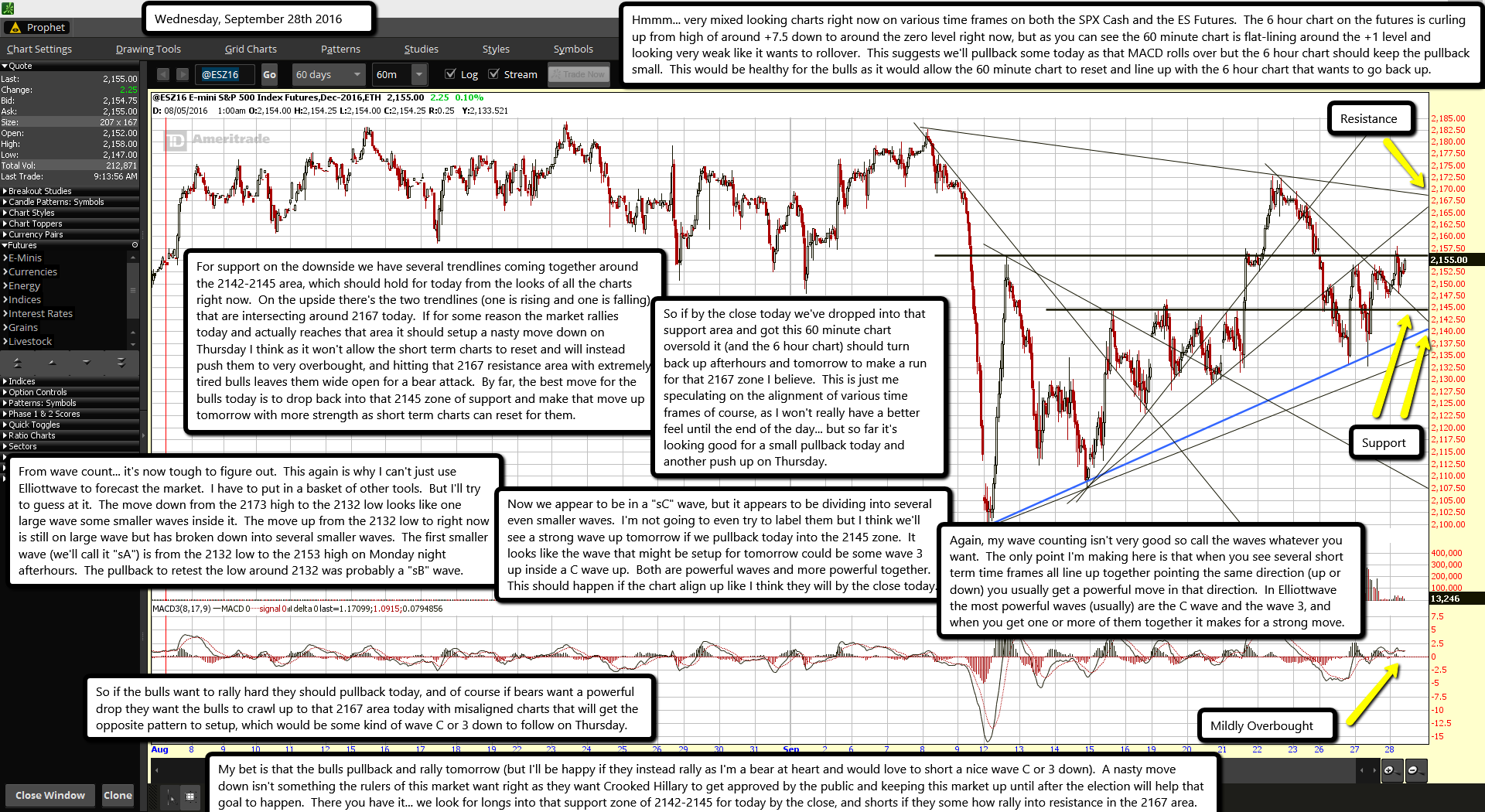
Hmmm... very mixed looking charts right now on various time frames on both the SPX Cash and the ES Futures.  The 6 hour chart on the futures is curling up from high of around +7.5 down to around the zero level right now, but as you can see the 60 minute chart is flat-lining around the +1 level and looking very weak like it wants to rollover.  This suggests we'll pullback some today as that MACD rolls over but the 6 hour chart should keep the pullback small.  This would be healthy for the bulls as it would allow the 60 minute chart to reset and line up with the 6 hour chart that wants to go back up.

For support on the downside we have several trendlines coming together around the 2142-2145 area, which should hold for today from the looks of all the charts right now.  On the upside there's the two trendlines (one is rising and one is falling) that are intersecting around 2167 today.  If for some reason the market rallies today and actually reaches that area it should setup a nasty move down on Thursday I think as it won't allow the short term charts to reset and will instead push them to very overbought, and hitting that 2167 resistance area with extremely tired bulls leaves them wide open for a bear attack.  By far, the best move for the bulls today is to drop back into that 2145 zone of support and make that move up tomorrow with more strength as short term charts can reset for them.

So if by the close today we've dropped into that support area and got this 60 minute chart oversold it (and the 6 hour chart) should turn back up afterhours and tomorrow to make a run for that 2167 zone I believe.  This is just me speculating on the alignment of various time frames of course, as I won't really have a better feel until the end of the day... but so far it's looking good for a small pullback today and another push up on Thursday.

From wave count... it's now tough to figure out.  This again is why I can't just use Elliottwave to forecast the market.  I have to put in a basket of other tools.  But I'll try to guess at it.  The move down from the 2173 high to the 2132 low looks like one large wave some smaller waves inside it.  The move up from the 2132 low to right now is still on large wave but has broken down into several smaller waves.  The first smaller wave (we'll call it "sA") is from the 2132 low to the 2153 high on Monday night afterhours.  The pullback to retest the low around 2132 was probably a "sB" wave.

Now we appear to be in a "sC" wave, but it appears to be dividing into several even smaller waves.  I'm not going to even try to label them but I think we'll see a strong wave up tomorrow if we pullback today into the 2145 zone.  It looks like the wave that might be setup for tomorrow could be some wave 3 up inside a C wave up.  Both are powerful waves and more powerful together.  This should happen if the chart align up like I think they will by the close today.

Again, my wave counting isn't very good so call the waves whatever you want.  The only point I'm making here is that when you see several short term time frames all line up together pointing the same direction (up or down) you usually get a powerful move in that direction.  In Elliottwave the most powerful waves (usually) are the C wave and the wave 3, and when you get one or more of them together it makes for a strong move.

So if the bulls want to rally hard they should pullback today, and of course if bears want a powerful drop they want the bulls to crawl up to that 2167 area today with misaligned charts that will get the opposite pattern to setup, which would be some kind of wave C or 3 down to follow on Thursday.

My bet is that the bulls pullback and rally tomorrow (but I'll be happy if they instead rally as I'm a bear at heart and would love to short a nice wave C or 3 down).  A nasty move down isn't something the rulers of this market want right as they want Crooked Hillary to get approved by the public and keeping this market up until after the election will help that goal to happen.  There you have it... we look for longs into that support zone of 2142-2145 for today by the close, and shorts if they some how rally into resistance in the 2167 area.

Switzerland votes in favour of greater surveillance

0

Bill wins almost 70% of vote in victory for government who argued that intelligence agencies relied too heavily on other nations

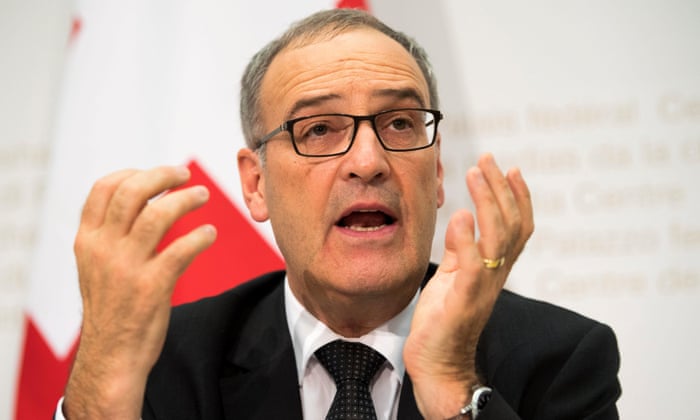
Defense minister Guy Parmelin said the new measures would allow Switzerland to ‘leave the basement and come up to the ground floor by international standards’.

Swiss voters have approved a new surveillance law, after the government argued that security services needed enhanced powers in an increasingly volatile world.

The proposed law won 65.5% support, final results on Sunday showed.

Switzerland’s police and intelligence agencies have had limited investigative tools compared with other developed countries. Phone tapping and email surveillance were previously banned, regardless of circumstance.

The government insisted it was not aiming to set up a vast data-gathering apparatus, similar to the one developed by the US National Security Agency that came into the public eye in part through the revelations of former contractor Edward Snowden.

“This is not generalized surveillance,” Yannick Buttet, the Christian Democratic party vice president, told public broadcaster RTS as results were coming in. “It’s letting the intelligence services do their job.”

The Swiss defense minister, Guy Parmelin, said Switzerland was “leaving the basement and coming up to the ground floor by international standards”.

Parmelin insisted the Swiss system was not comparable “to the United States or other major powers” that have struggled to find the right balance between privacy and security. Phone or electronic surveillance of a suspect will only be triggered with approval by a federal court, the defense ministry and the cabinet, according to the law.

Bern has said these measures would be used only a dozen times a year to monitor only the highest-priority suspects, especially those implicated in terrorism-related cases.

The law was approved by parliament in 2015, but an alliance of opponents, including the Socialist and Green parties, commanded enough signatures to force Sunday’s referendum. The poll was part of Switzerland’s direct democracy system, in which votes are held on a wide range of national issues four times a year and even more frequently at regional and municipal levels.

Just 43% of voters took part in Sunday’s poll, a slightly lower mark than recent referendums when flashpoint issues such as immigration were on the ballot.

Overshadowing the vote was a scandal dating back to 1989 and the dying days of the cold war, when Swiss citizens learned that the security services had opened files on 900,000 individuals, detailing their political and trade union affiliations. The revelations sparked outrage in a country where people fiercely guard their privacy and led to significant curbs on police intelligence measures.

The vote highlights how public attitudes have shifted, with the law’s proponents invoking the string of recent attacks across Europe in Brussels, Nice and Paris.

Green party lawmaker Lisa Mazzone told RTS that the law’s approval was won through “a campaign about fear of attacks”.

Rights group Amnesty International said it regretted Sunday’s result, arguing that the new law would allow “disproportionate” levels of surveillance and that it posed “a threat to freedom of expression”.

Buttet argued that Swiss intelligence agencies had become too reliant on help from other nations because they were deprived of using the full range of modern investigative tools. “We were naive,” he said.

malcom-x-re-newspapers

ES Morning Update September 27th 2016

0

b1c0128d-4f71-471b-aeb2-0c151696b131

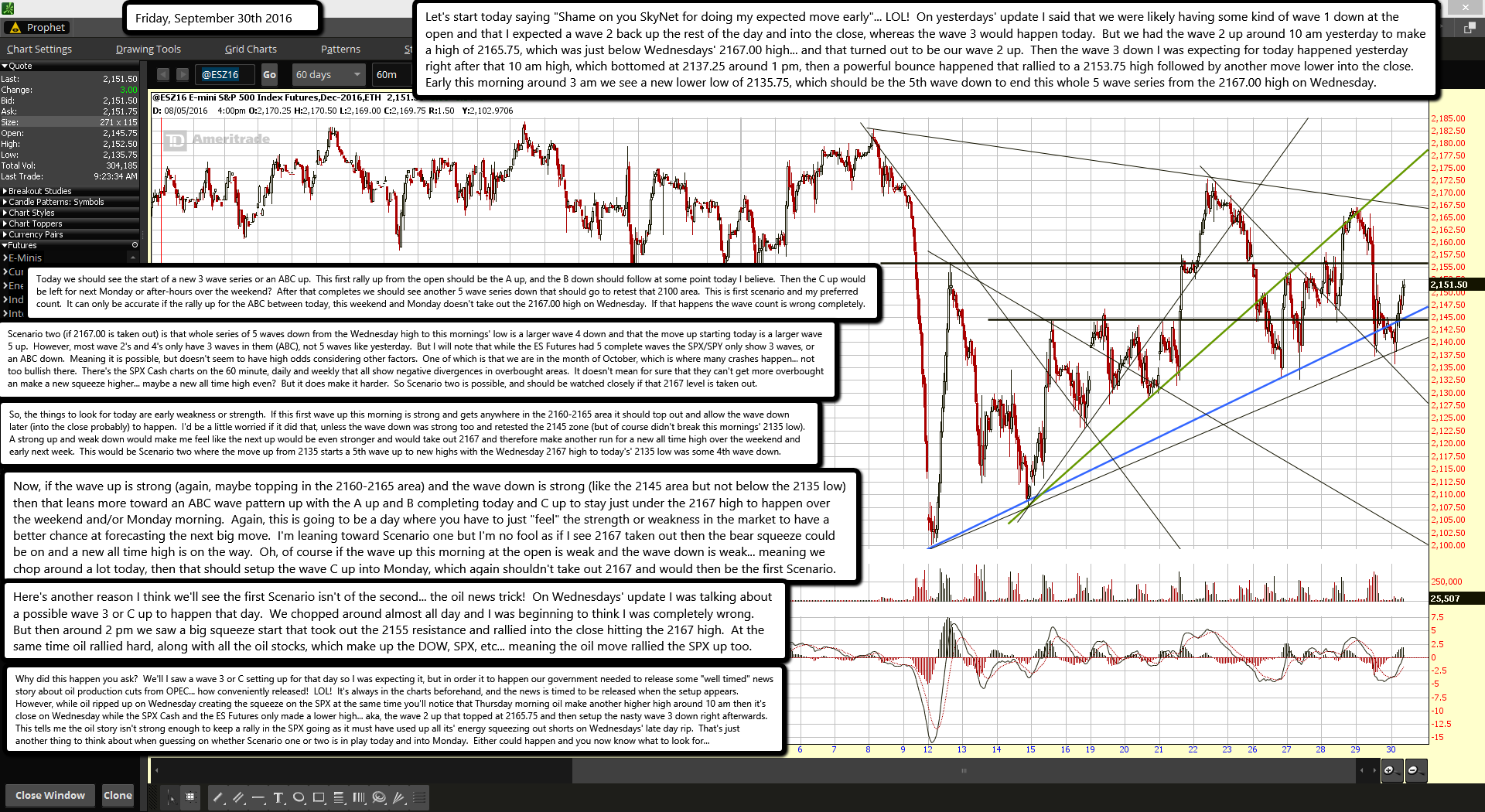
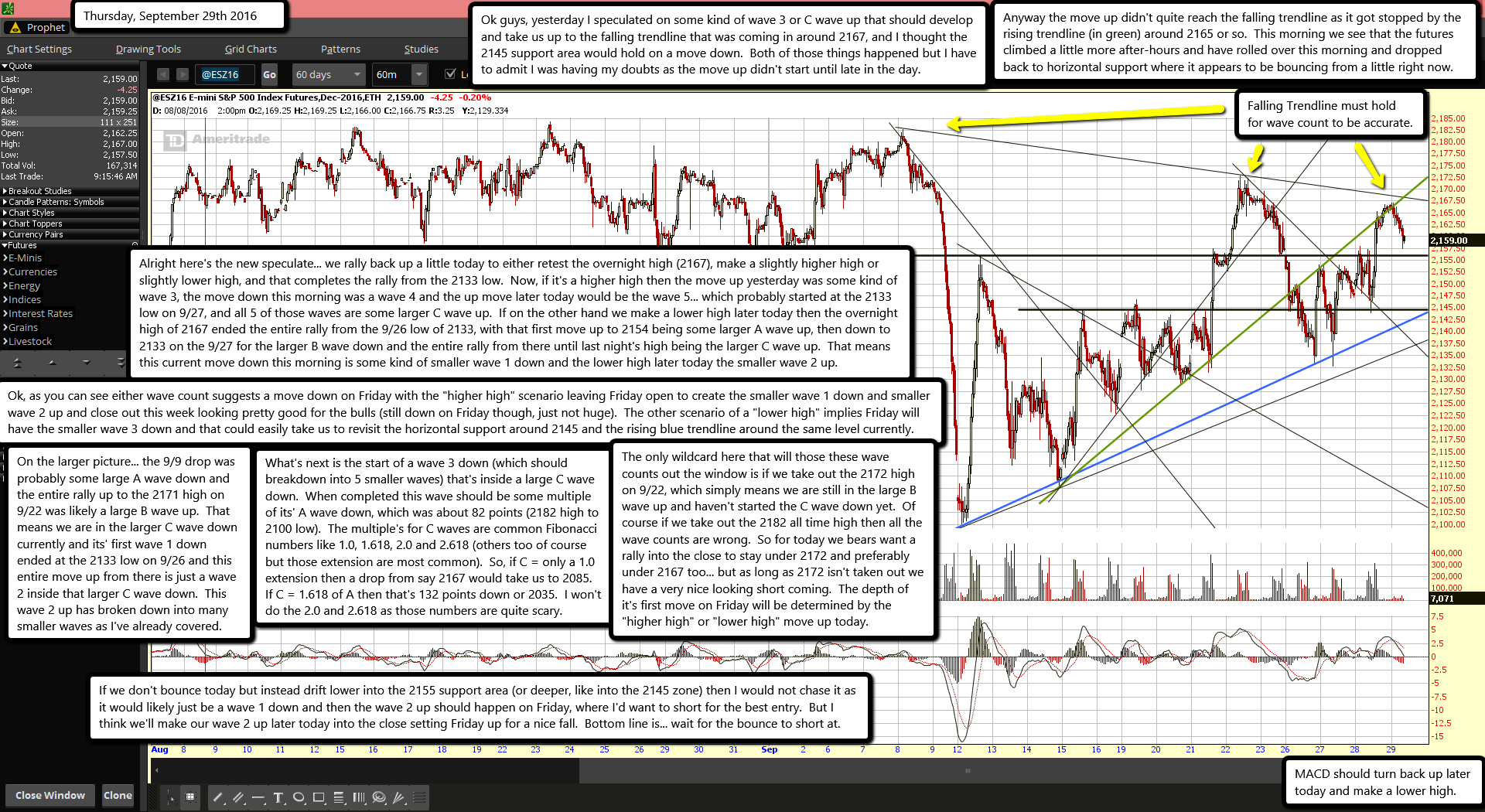
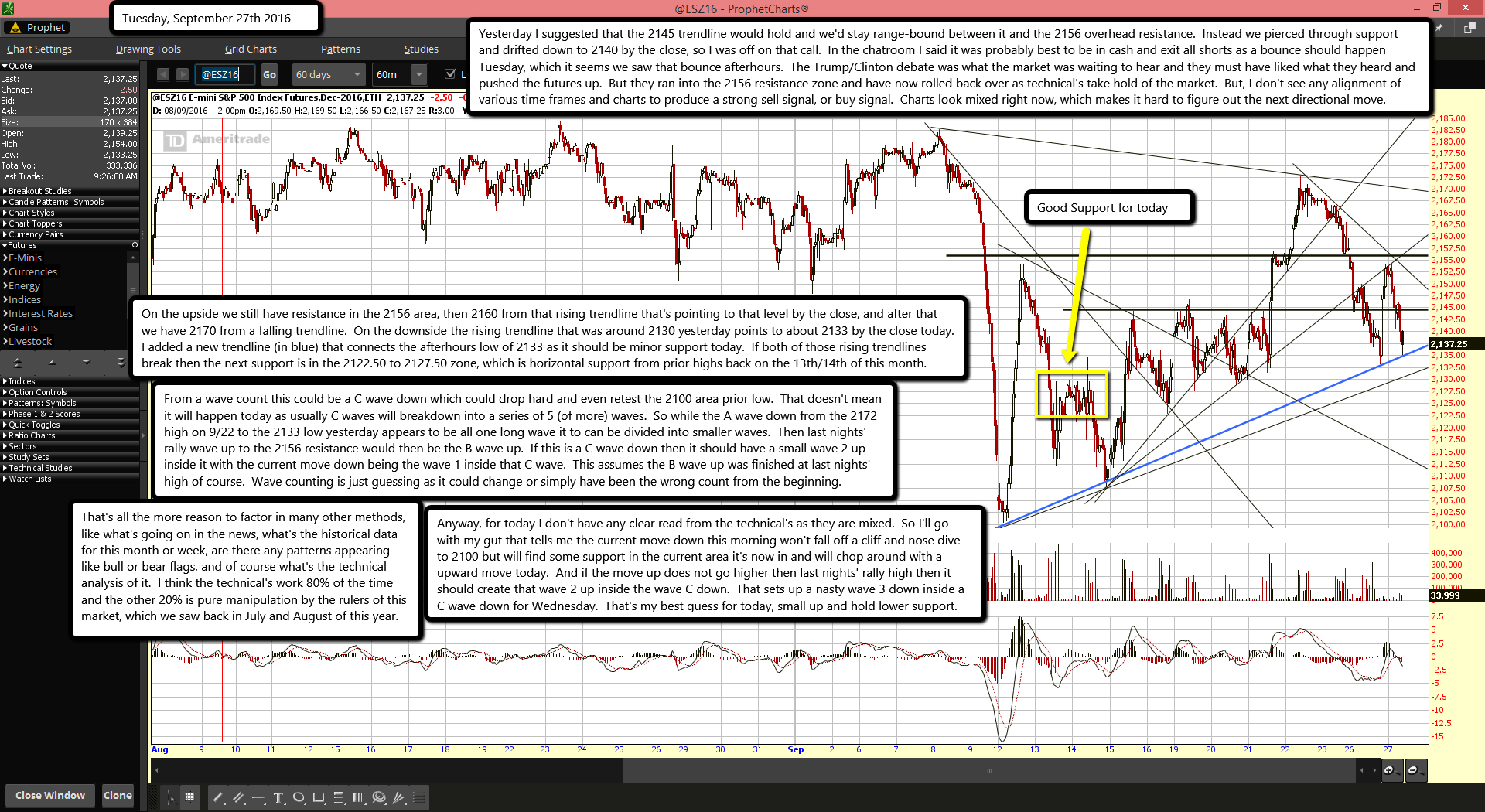
Yesterday I suggested that the 2145 trendline would hold and we'd stay range-bound between it and the 2156 overhead resistance.  Instead we pierced through support and drifted down to 2140 by the close, so I was off on that call.  In the chatroom I said it was probably best to be in cash and exit all shorts as a bounce should happen Tuesday, which it seems we saw that bounce afterhours.  The Trump/Clinton debate was what the market was waiting to hear and they must have liked what they heard and pushed the futures up.  But they ran into the 2156 resistance zone and have now rolled back over as technical's take hold of the market.  But, I don't see any alignment of various time frames and charts to produce a strong sell signal, or buy signal.  Charts look mixed right now, which makes it hard to figure out the next directional move.

On the upside we still have resistance in the 2156 area, then 2160 from that rising trendline that's pointing to that level by the close, and after that we have 2170 from a falling trendline.  On the downside the rising trendline that was around 2130 yesterday points to about 2133 by the close today.  I added a new trendline (in blue) that connects the afterhours low of 2133 as it should be minor support today.  If both of those rising trendlines break then the next support is in the 2122.50 to 2127.50 zone, which is horizontal support from prior highs back on the 13th/14th of this month.

From a wave count this could be a C wave down which could drop hard and even retest the 2100 area prior low.  That doesn't mean it will happen today as usually C waves will breakdown into a series of 5 (of more) waves.  So while the A wave down from the 2172 high on 9/22 to the 2133 low yesterday appears to be all one long wave it to can be divided into smaller waves.  Then last nights' rally wave up to the 2156 resistance would then be the B wave up.  If this is a C wave down then it should have a small wave 2 up inside it with the current move down being the wave 1 inside that C wave.  This assumes the B wave up was finished at last nights' high of course.  Wave counting is just guessing as it could change or simply have been the wrong count from the beginning.

That's all the more reason to factor in many other methods, like what's going on in the news, what's the historical data for this month or week, are there any patterns appearing like bull or bear flags, and of course what's the technical analysis of it.  I think the technical's work 80% of the time and the other 20% is pure manipulation by the rulers of this market, which we saw back in July and August of this year.

Anyway, for today I don't have any clear read from the technical's as they are mixed.  So I'll go with my gut that tells me the current move down this morning won't fall off a cliff and nose dive to 2100 but will find some support in the current area it's now in and will chop around with a upward move today.  And if the move up does not go higher then last nights' rally high then it should create that wave 2 up inside the wave C down.  That sets up a nasty wave 3 down inside a C wave down for Wednesday.  That's my best guess for today, small up and hold lower support.

Former Kissinger CEO says the world is run by 30 families

0

Former Kissinger CEO Says The World Is Run By 30 Families – A former CEO for Henry Kissinger has said that he believes just 30 families run the world, and that these families are the driving force behind the New World Order. David Rothkopf, author of ‘Superclass: The Global Power Elite and the World They Are Making,’ and former CEO of Kissinger Associates, says that 30 families and their 6,000 minions control the entire human race of six billion people.

His findings mirror a study conducted by the Federal Institute of Technology in Zurich which found that a mere 147 corporations (out of 40,000 studied) had real power and influence in the world economy. All of these 147 companies had interlocking Boards of Directors.

Currently, this One World Corporatocracy uses the United States and the European Union to consolidate and wield power over the entire globe. But there are vulnerabilities in the world of Wall Street Globalism. The EU appears to be disintegrating. The ECB (European Central Bank) under the ex-Goldman Sachs VP Mario Draghi seems to be as suicidal as His Japanese counterpart. And America is stretched thin by its constant warfare. Russia Today said the US had military operations in 134 countries in 2014. Wikileaks, Snowden and others have revealed way more truth than the public can digest. The US has been funding Al Qaeda and ISIS. And now Putin has shown his superiority by being able to actually find ISIS and bomb them into oblivion.

The only economic and military advantage America had is about to disappear. Dr Michael Hudson wrote Super Imperialism in 1972. That was the year after Nixon closed the Gold Window on August 15, 1971 and the year before Henry Kissinger’s invention of the Petrodollar in 1973 after the Arab-Israeli war. Hudson went to the Pentagon and the State Department in 1972 to explain that the US was making nations overseas pay for their occupation by American troops by accepting worthless Federal Reserve Notes in exchange for real goods and services.

When an American general finally understood what Dr Hudson was saying about foreigners paying for their own occupation, he exclaimed, “We’re ripping people off.”

The days when The Federal Reserve could print stacks of dollars to the moon and the Saudis could fund the US budget deficit with their oil revenues are rapidly coming to an end. Very soon American politicians will have to recognize that we can no longer afford all of those wars and forget about over 700 military bases overseas.

The American consumer will have to deal with the doubling of the price of imported goods. Of course that will mean a drastic drop in the American standard of living which will lead to instability at home. This cold light of economic reality will force America to either start WW III or go home. Most sane people would like to avoid either a thermonuclear war with Russia or a conventional one as they have far superior weapons. American politicians and the Pentagon spent $400 billion on the F-35 which does not work. Russia is too poor to spend trillions of dollars on failed projects so the Elite can line their pockets at our expense.

What would be nice is for American voters to join with the citizens of Europe, Asia, Latin America, Africa and the Mideast in their revolt against Globalism. That is to say the workers of the world unite to end Global Occupation by Bankers.

The following describes an eleven point program to undo what has been done to us by design. But first I need to explain what causes Depressions.

Ask your friends what a Depression is. Most answers will describe the effects, such as, unemployment, starvation and bankruptcies. Depressions are solved by cancellation of debts either through discharge in bankruptcy court or by inflation devaluing the real value of the burden of debt. The third alternative would be for the government to void Unpayable Debts as the Kings of ancient Babylon and Sumer did. We would need to devise a more sophisticated plan as those were relatively simpler agricultural societies. I would like to make 11 suggestions which can both end a Depression and take down our Banker Occupied government.

1) Offer $25,000 in debt cancellation to every adult US citizen who is not institutionalized. This should be an international effort so people in foreign countries will get equivalent amounts in pounds, euros and other local currencies. This is to be financed by seizing the assets of financial war criminals that were stashed in Liechtenstein, the Cayman Islands and other such offshore money laundering centers. We need to get the assets of the private banks and the account numbers of all the corporations and the trusts the criminals who declared war against us. Only this will stop both World War III and this Depression.

2) Seize all the assets of war criminals. A lot of assets have been converted into real estate. In America we also have problems with mortgages. To evade taxes and to intentionally create clouded titles to homes the war criminals created the Mortgage Electronic Registration System (MERS). I would suggest that MERS be made illegal and require all mortgages be registered at reduced rates at the local county courthouse. I would give everyone 90 days to register for a clear title.

I would also challenge the title to every property to show that it did not belong to a corporation or trust fund owned by a war criminal. For example, if a shopping mall is owned by a corporation, the actual people who own the shares must identify themselves.

The World Bank did a study of 213 banking scandals and found that 150 were traced bank to offshore trusts linked either to drug cartels or to the 30 or so families whose wealth has been fully invested in slave trading, drug smuggling and other crimes against humanity for centuries. All of these assets need to be seized so we can cancel debts and get the economy moving again. We also need to take away their assets not just because they were stolen from us but to reduce their ability to wage war against us to zero.

We can take the seized real estate and use it to fund Social Security and stolen pension funds.

The seized stock and bond assets should also be used to fund public and private pensions and to cancel government debts. I would also use the tens of trillions of dollars in government agency assets listed at http://www.CAFR1.com to cancel debts and fund pensions.

3) All federal, sate and local government debt should be made illegal. President Lincoln issued Greenbacks which bore no interest. Greenbacks eliminated the need for bonds to be issued.

4) I would issue a non-interest bearing currency in America and require the same of any foreign country that would want our assistance to cancel their government and personal debts. It was the Federal Reserve Act of 1913 that allowed bankers to create money out of nothing and charge us interest. That interest was designed to transfer all wealth from us to the bankers. It created Unpayable Debts which grow at exponential rates due to the law of compound interest.

Since prices are a ratio of the Money Supply to goods and services for sale, if we increase both at the same rate, we would have price stability. We could at current rates spend 535 billion dollars a year into circulation. We could create 535 billion dollars and spend it without raising taxes to pay for it. If we increased the GDP and the Money Supply to twice our current levels, then we could spend a trillion dollars a year into circulation while maintaining stable prices.

5) I would spend 200 billion dollars a year to repair America’s infrastructure. We have spent too much money on foreign wars so our infrastructure is collapsing. I would divide up 100 billion dollars a year amongst the 50 states on a proportional basis so a state with 2% of the US population would get 2 billion dollars to spend on bridges, roads, dams, levees, water purification plants, sewers and school buildings. This would be matched by another 100 billion dollars in federal infrastructure repair.

6) I would make pensions illegal. A pension is a promise to pay you something in 20 or 30 years. These pension funds currently attract maggots seeking to feed on your retirement funds. I would pass a law saying that your employer must pay you this year for any money that was intended to be set aside for your retirement. This money would go into a retirement account in your name at a local cooperative trust. Neither politicians nor anyone from Wall Street should ever be allowed to touch your retirement funds.

7) Use those cooperative trusts to overpower Wall Street and the City of London. Allow them to offer low interest credit cards and consumer loans. Let them issue simple life, fire and auto insurance. Plow the profits back into retirement funds. Commercial banks would be geared to small businesses.

8) To boost the economy release all of the secret government technology to new corporations that would receive the patents and a 5 billion dollar grant to bring cheap and abundant energy and other advances onto the market. If needed, they could trade patent rights for regions overseas in exchange for the machinery needed to produce products in America. Shares should be issued to American citizens who are over 35. If a stock valued at $50 splits 6 times in 20 years, then it will be worth $3,200 and ten original shares would be valued at $32,000. They will need the extra growth in their stock portfolio more than couples 18 to 30 who have longer growth curves and can expect to retire with a million dollars in stocks.

Young people would no longer contribute to Social Security. Their employer would pay into their retirement account at their cooperative trust but they would pay nothing to Social Security.

If a married couple making no more than the minimum wage were able to set aside everything they paid into Social Security into a mutual fund, they would retire at age 65 with a million dollars. That had to be said for the benefit of those who do not understand money and compound growth.

9) Make fractional reserve banking illegal. In 1348 the people of Venice were on a gold standard. If you deposited one gold coin, the banker could loan 50 certificates said to be equal to 50 gold coins. The banker was allowed to collect interest on that paper note as if it were 50 gold coins. This system collapsed even though the people had a gold standard. Bankers pay people to spread false doctrines about the gold standard. The bankers have stolen most of the gold and would love a return to the gold standard. But to function as money the medium of exchange must be plentiful enough so everyone can buy and sell. The only way a gold standard could work is if we allowed bankers to loan out 100 or more paper certificates in exchange for each gold coin. That would impoverish us with interest payments on money the Bankers created out of nothing. Sound familiar?

10) Make property taxes on a primary residence illegal. A home should be one of the primary savings plans for retirement. Taxing homes harms taxpayers. It should no longer be the policy of the government to do harm to us. Property tax revenues would be more than balanced by the cancellation of state and local debts and 200 billion dollars a year in federal capital grants. And all those new infrastructure workers will be paying taxes.

11) Establish an incomes policy. My goal is self-determination for the working class. The current government is bankrupting small businesses and the middle class while encouraging welfare dependency.

I would make the first $30,000 a year on a single person or $60,000 for a married couples tax free. I would give the custodial parent $600 a month for the first child and $400 a month for the second child. Nothing for additional children except in cases of twins and triplets.

I would also change the name of the IRS to Internal Revenue and Benefits Services. I would also take away their armed agents and their police powers. A separate police force would be responsible for arresting tax cheats. The IRS has killed too many innocent Americans for them to survive without a serious overhaul.

I would also pass a negative income tax. Under this system a person making $8.50 an hour would be paid $1.50 an additional hour by the employer from federal sources. Under this plan a married couple both working 40 hours a week would earn a guaranteed $40,160 a year tax free. If they had 2 children, they would receive $1,000 a month or $12,000 a year for a total of $52,160 tax free.

I would pay for this in part by ending the wars and the surveillance state. Someone said we spent 7 trillion dollars on wars we did not need after we allowed Israel to blow up the World Trade Center. I also would no longer allow bankers to steal 3 billion or more dollars a week from unaudited federal spending.

We should also eliminate a lot of federal, state and local jobs and even entire departments. We currently have 30 million federal, state and local government workers if you count contractors.

I would eliminate most tax deductions. I would trade your interest rate deduction on a home mortgage for the elimination of property taxes on a principal residence. And I would trade your tax exemptions for children by paying you $12,000 a year for the first two children. Eliminating tax deductions would pay for a greater part of the reforms we need. Any deduction that gives you a thousand dollars gives others $100,000 in tax breaks. An oil man once paid $17.95 in federal income tax on an income of $75,000,000. That was when tax rates were higher but deductions still shifted the burden to the middle class. By giving married couples $12,000 for children, we will make the flat rate tax fair for the middle class.

We need strong middle and working classes to counter the power of Wall Street. By creating our own currency and making home ownership more affordable and getting control of our retirement funds and savings in co-operative trusts, we will guarantee that the Elite stop all this nonsensical talk of killing a few billion of the common people.

ES Morning Update September 26th 2016

0

789137e9-3a69-46fd-a03b-9d57156cae26

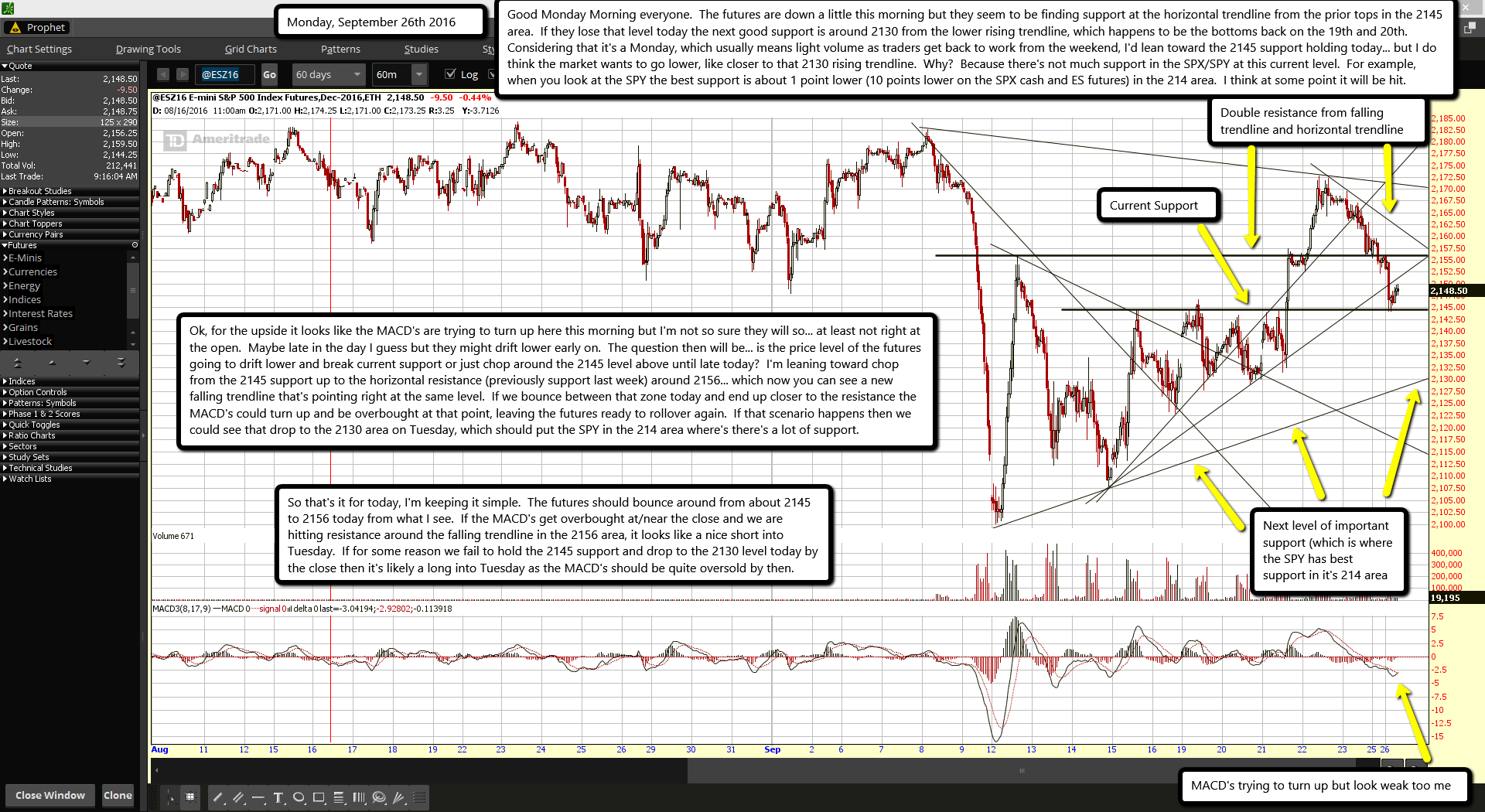
Good Monday Morning everyone.  The futures are down a little this morning but they seem to be finding support at the horizontal trendline from the prior tops in the 2145 area.  If they lose that level today the next good support is around 2130 from the lower rising trendline, which happens to be the bottoms back on the 19th and 20th.  Considering that it's a Monday, which usually means light volume as traders get back to work from the weekend, I'd lean toward the 2145 support holding today... but I do think the market wants to go lower, like closer to that 2130 rising trendline.  Why?  Because there's not much support in the SPX/SPY at this current level.  For example, when you look at the SPY the best support is about 1 point lower (10 points lower on the SPX cash and ES futures) in the 214 area.  I think at some point it will be hit.

Ok, for the upside it looks like the MACD's are trying to turn up here this morning but I'm not so sure they will so... at least not right at the open.  Maybe late in the day I guess but they might drift lower early on.  The question then will be... is the price level of the futures going to drift lower and break current support or just chop around the 2145 level above until late today?  I'm leaning toward chop from the 2145 support up to the horizontal resistance (previously support last week) around 2156... which now you can see a new falling trendline that's pointing right at the same level.  If we bounce between that zone today and end up closer to the resistance the MACD's could turn up and be overbought at that point, leaving the futures ready to rollover again.  If that scenario happens then we could see that drop to the 2130 area on Tuesday, which should put the SPY in the 214 area where's there's a lot of support.

So that's it for today, I'm keeping it simple.  The futures should bounce around from about 2145 to 2156 today from what I see.  If the MACD's get overbought at/near the close and we are hitting resistance around the falling trendline in the 2156 area, it looks like a nice short into Tuesday.  If for some reason we fail to hold the 2145 support and drop to the 2130 level today by the close then it's likely a long into Tuesday as the MACD's should be quite oversold by then.

ES Morning Update September 23rd 2016

0

c7d512a2-4227-4bd1-bae5-5d0ec8b0a032

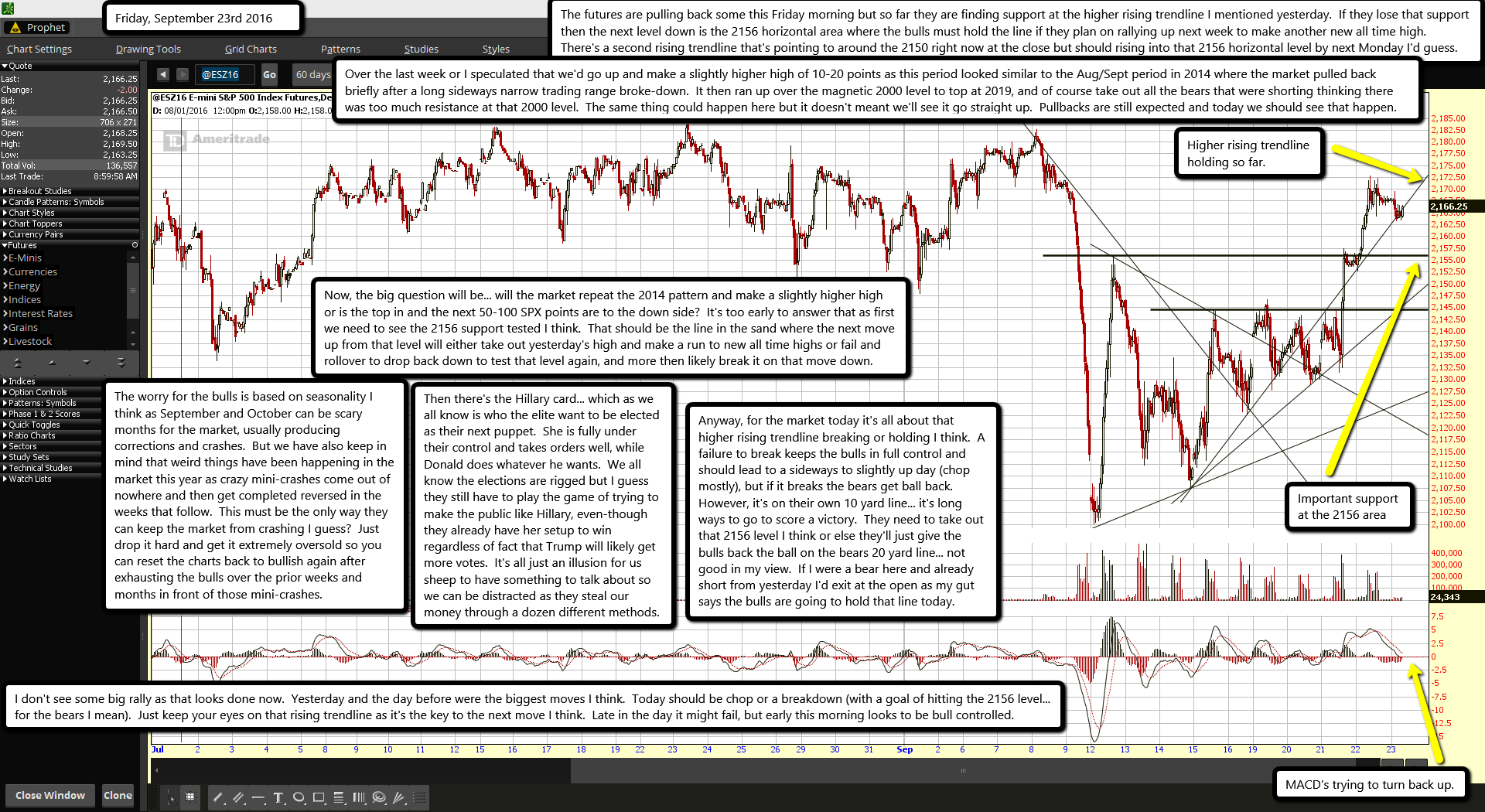
The futures are pulling back some this Friday morning but so far they are finding support at the higher rising trendline I mentioned yesterday.  If they lose that support then the next level down is the 2156 horizontal area where the bulls must hold the line if they plan on rallying up next week to make another new all time high.  There's a second rising trendline that's pointing to around the 2150 right now at the close but should rising into that 2156 horizontal level by next Monday I'd guess.

Over the last week or I speculated that we'd go up and make a slightly higher high of 10-20 points as this period looked similar to the Aug/Sept period in 2014 where the market pulled back briefly after a long sideways narrow trading range broke-down.  It then ran up over the magnetic 2000 level to top at 2019, and of course take out all the bears that were shorting thinking there was too much resistance at that 2000 level.  The same thing could happen here but it doesn't meant we'll see it go straight up.  Pullbacks are still expected and today we should see that happen.

Now, the big question will be... will the market repeat the 2014 pattern and make a slightly higher high or is the top in and the next 50-100 SPX points are to the down side?  It's too early to answer that as first we need to see the 2156 support tested I think.  That should be the line in the sand where the next move up from that level will either take out yesterday's high and make a run to new all time highs or fail and rollover to drop back down to test that level again, and more then likely break it on that move down.

The worry for the bulls is based on seasonality I think as September and October can be scary months for the market, usually producing corrections and crashes.  But we have also keep in mind that weird things have been happening in the market this year as crazy mini-crashes come out of nowhere and then get completed reversed in the weeks that follow.  This must be the only way they can keep the market from crashing I guess?  Just drop it hard and get it extremely oversold so you can reset the charts back to bullish again after exhausting the bulls over the prior weeks and months in front of those mini-crashes.

Then there's the Hillary card... which as we all know is who the elite want to be elected as their next puppet.  She is fully under their control and takes orders well, while Donald does whatever he wants.  We all know the elections are rigged but I guess they still have to play the game of trying to make the public like Hillary, even-though they already have her setup to win regardless of fact that Trump will likely get more votes.  It's all just an illusion for us sheep to have something to talk about so we can be distracted as they steal our money through a dozen different methods.

Anyway, for the market today it's all about that higher rising trendline breaking or holding I think.  A failure to break keeps the bulls in full control and should lead to a sideways to slightly up day (chop mostly), but if it breaks the bears get ball back.  However, it's on their own 10 yard line... it's long ways to go to score a victory.  They need to take out that 2156 level I think or else they'll just give the bulls back the ball on the bears 20 yard line... not good in my view.  If I were a bear here and already short from yesterday I'd exit at the open as my gut says the bulls are going to hold that line today.

I don't see some big rally as that looks done now.  Yesterday and the day before were the biggest moves I think.  Today should be chop or a breakdown (with a goal of hitting the 2156 level... for the bears I mean).  Just keep your eyes on that rising trendline as it's the key to the next move I think.  Late in the day it might fail, but early this morning looks to be bull controlled.

ES Morning Update September 22nd 2016

0

806425d6-6ccc-4639-9084-3dcf75de580b

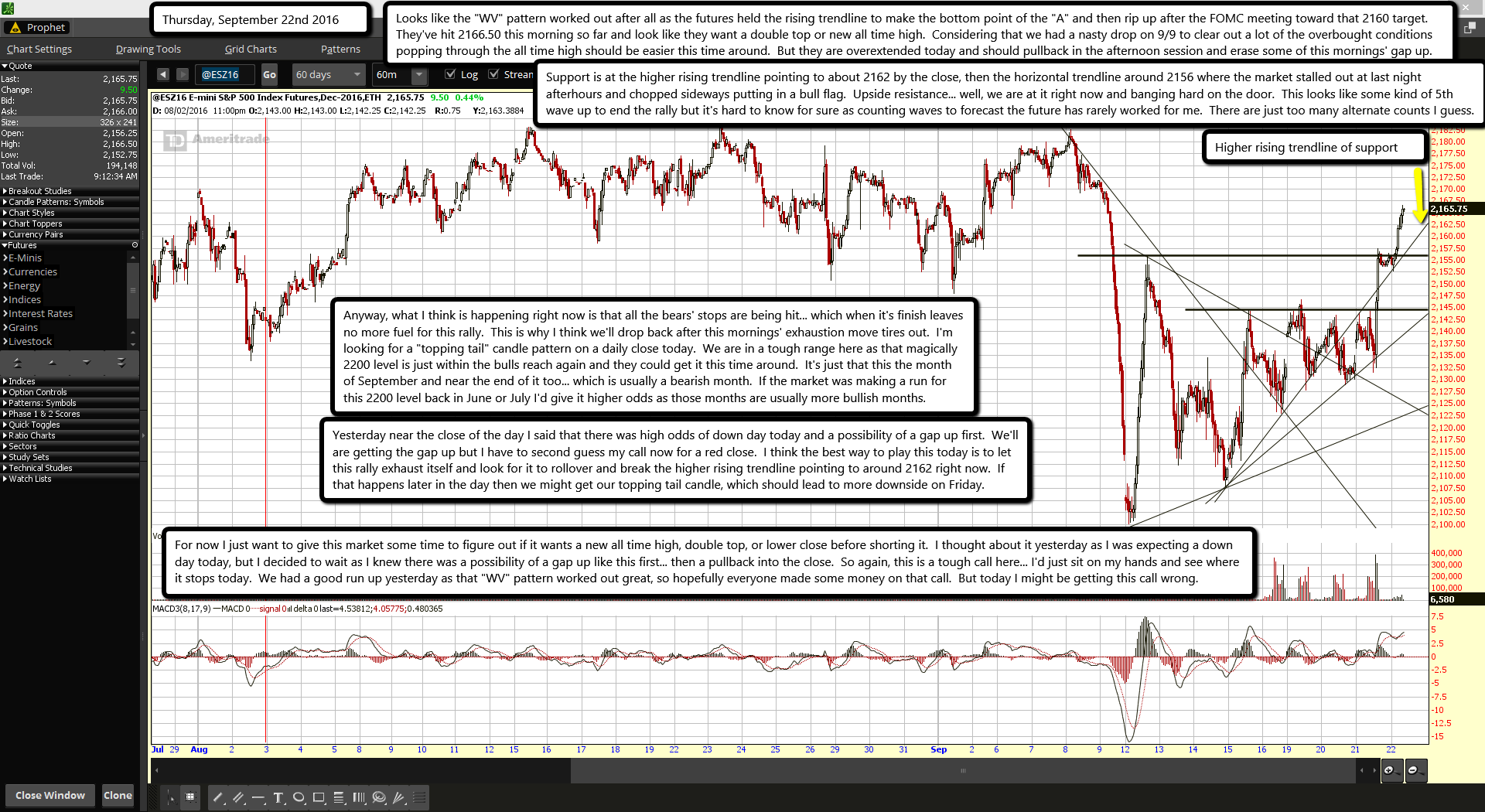
Looks like the "WV" pattern worked out after all as the futures held the rising trendline to make the bottom point of the "A" and then rip up after the FOMC meeting toward that 2160 target.  They've hit 2166.50 this morning so far and look like they want a double top or new all time high.  Considering that we had a nasty drop on 9/9 to clear out a lot of the overbought conditions popping through the all time high should be easier this time around.  But they are overextended today and should pullback in the afternoon session and erase some of this mornings' gap up.

Support is at the higher rising trendline pointing to about 2162 by the close, then the horizontal trendline around 2156 where the market stalled out at last night afterhours and chopped sideways putting in a bull flag.  Upside resistance... well, we are at it right now and banging hard on the door.  This looks like some kind of 5th wave up to end the rally but it's hard to know for sure as counting waves to forecast the future has rarely worked for me.  There are just too many alternate counts I guess.

Anyway, what I think is happening right now is that all the bears' stops are being hit... which when it's finish leaves no more fuel for this rally.  This is why I think we'll drop back after this mornings' exhaustion move tires out.  I'm looking for a "topping tail" candle pattern on a daily close today.  We are in a tough range here as that magically 2200 level is just within the bulls reach again and they could get it this time around.  It's just that this the month of September and near the end of it too... which is usually a bearish month.  If the market was making a run for this 2200 level back in June or July I'd give it higher odds as those months are usually more bullish months.

Yesterday near the close of the day I said that there was high odds of down day today and a possibility of a gap up first.  We'll are getting the gap up but I have to second guess my call now for a red close.  I think the best way to play this today is to let this rally exhaust itself and look for it to rollover and break the higher rising trendline pointing to around 2162 right now.  If that happens later in the day then we might get our topping tail candle, which should lead to more downside on Friday.

For now I just want to give this market some time to figure out if it wants a new all time high, double top, or lower close before shorting it.  I thought about it yesterday as I was expecting a down day today, but I decided to wait as I knew there was a possibility of a gap up like this first... then a pullback into the close.  So again, this is a tough call here... I'd just sit on my hands and see where it stops today.  We had a good run up yesterday as that "WV" pattern worked out great, so hopefully everyone made some money on that call.  But today I might be getting this call wrong.

WARREN BUFFETT: I won’t comment on the Wells Fargo scandal until November

0

Warren Buffett is waiting until after the election to weigh in on Wells Fargo.

Buffett told Fox Business' Liz Claman that he will not comment on the bank's scandal until November. Buffett is the largest shareholder of Wells Fargo and recently petitioned the Federal Reserve to increase his ownership stake above 10%.

"If I start commenting on that or anything else, it will lead down too many paths so I will wait until November to speak about it, the election or any other subject," Buffett told Claman.

Wells Fargo recently settled with regulators for $185 million after it came to light that employees had opened around 2 million accounts without the knowledge of customers. About 5,300 of the bank's employees were fired as a result of the scandal.

This has led to a Senate hearing and calls for the resignation of CEO John Stumpf, most notably by Sen. Elizabeth Warren.

Despite the growing scandal, Buffett will remain silent for now.

Wells Fargo has one heck of a scandal on its hands

wells fargo john stumpfWells Fargo CEO John Stumpf endured a nearly three-hour questioning from the US Senate banking committee on Tuesday.
Stumpf was constantly taken to task by senators, both Democratic and Republican, for the scandal in which Wells Fargo employees opened roughly 2 million checking and credit accounts without customers' knowledge.

During the financial crisis, Wells Fargo was generally thought of as the bank that got off looking the cleanest.

The bank had few bad loans, as it managed to maintain comparatively strong lending standards that kept it out of the worst of the crisis and allowed it to acquire the troubled Wachovia.

In 2016, however, Wells Fargo and CEO John Stumpf find themselves in the middle of the perfect storm of Wall Street scandals. After Tuesday's Senate hearing, it has become clear that with an easy-to-understand issue, a political firestorm, and missteps by the bank that exemplify Americans' worst notions of Wall Street, everything that could go wrong for Wells Fargo did.

It's an easy-to-understand scandal

Since the financial crisis, which focused America's microscope squarely on Wall Street, there have been a number of scandals, but Wells Fargo's is different. For Wells, the transgressions are simple, and its an easy line for Americans to draw directly to their own financial situations.

For instance, it may be hard for people without a reasonably intimate knowledge of the financial system to understand JPMorgan's "London Whale" trading scandal in 2012 or the Barclays Libor-rigging scandal in 2014. Even the most popular explainer in recent years of the financial crisis — "The Big Short" — had to employ non sequiturs with celebrities explaining ideas like mortgage-backed securities and credit default swaps to communicate how it happened.

On the other hand, Wells Fargo's scandal deals with checking accounts and credit cards — financial instruments that nearly every American has. When people understand how the scandal affects them, it makes them less likely to ignore the problem.

Millions of people in the US have had to get a credit check for a mortgage, so when senators suggest that Wells Fargo employees opening and closing a credit card without a customer's knowledge may affect a credit score and lead to a higher interest rate, it's simple to understand the direct ramification.

It's a Main Street scandal with a Wall Street face.

Caught in the middle of politics

Not only is the Wells Fargo scandal easy to grasp for the average American — it's a slam-dunk issue for politicians as well.

In an election season marked by increasing partisanship, it was certainly an odd sight to see senators from both sides of the aisle agreeing with colleagues from the other party and attacking Stumpf relentlessly.

Democrats like Elizabeth Warren, who called for Stumpf to be criminally investigated, and Republicans like Richard Shelby, who said that the bank has seriously broken the public's trust, both seemed to be in agreement (to varying degrees) that there was significant wrongdoing at Wells.

Senators also spent a significant amount of time reading letters from constituents about the effects of the scandal on their own lives, which not only looks bad for Stumpf and Wells Fargo, but also allows the politicians an easy opportunity to prove that they are working for the people who elect them.

So you have an easy case for politicians from both parties to look tough and bipartisan, and as though they're working for their constituents. Given all of these dynamics, it's simple to see why Stumpf was so thoroughly raked through the coals.

A tough tightrope

Stumpf also has a difficult task before him: showing that he is accountable without bearing the brunt of the blame.

Essentially, Stumpf's argument is that he accepts responsibility for the scandal, but that senior executives did not create a culture that encouraged the type of behavior that led to employees opening 2 million false accounts.

Part of Wells Fargo's success over the years has been its ability to get existing customers to sign up for new products — a practice called cross-selling. Stumpf has long lauded cross-selling as a reason the bank had been so successful (as Warren brutally pointed out by reading transcripts of earnings calls in which Stumpf touted the tactic).

Included in this cross-selling, however, were incentives for lower-level employees to sign people up for new products. Throughout the hearings, senators described a "pressure cooker" environment in which employees were forced to meet sales targets or face discipline.

Stumpf has said that the culture was not to blame and that employees were not pushed to oversell, but the bank also suspended these incentives for employees following its $185 million settlement with regulators.

Wells Fargo

It's a tough line to walk, especially while testifying for hours at a time, and Stumpf certainly stumbled a few times, saying that the actions weren't "random." It also opened Stumpf up to tough lines of attack from senators — that he was laying the blame on struggling employees who were trying to make aggressive sales targets to get by.

Thus Stumpf has to defend the bank's overall culture while explaining how over 5,000 employees violated that culture over multiple years.

By having to accept responsibility while not implicating himself directly, Stumpf has created a nearly impossible situation.

An easy target

Finally, Wells and Stumpf have to defend the entire pay structure of Wall Street.

Carrie Tolstedt, the head of the community banking division, was the executive directly responsible for overseeing the retail banking sector of the company, where the fake accounts were created.

In July, Tolstedt retired from Wells Fargo, holding roughly $96.6 million in various stock awards. Numerous times during the testimony on Tuesday, Stumpf was asked why Tolstedt wasn't fired and whether the bank would use its clawback provision to take back some of that compensation.

To be fair, stock-based compensation isn't new — and it's used in many industries like banking, tech, and media — so it's not as if how Tolstedt was paid is out of the ordinary. Additionally, the level of compensation is in line with the ordinary for a senior banking executive.

But in an environment in which income inequality is becoming an important issue, and when Stumpf talks about the 5,300 employees who were fired from "good-paying jobs" were making $37,000 to $60,000 a year, the size of Tolstedt's compensation raises eyebrows.

It looks terrible for the bank, and, as Warren said, it appears to her as though "a giant bank cheats the little guys, and the executives line their own pockets." Even if the stock-based compensation is a standard for many industries, the compensation is a public relations nightmare and another headache for a bank that already has plenty of them.

So you've got an easy-to-understand scandal that directly affected hundred of thousands of Americans, a slam-dunk political target in an election season, and a poster child for frustration about Wall Street's pay.

ES Morning Update September 21st 2016

0

1e21480f-4808-465d-8966-e08d3fcd8b7d

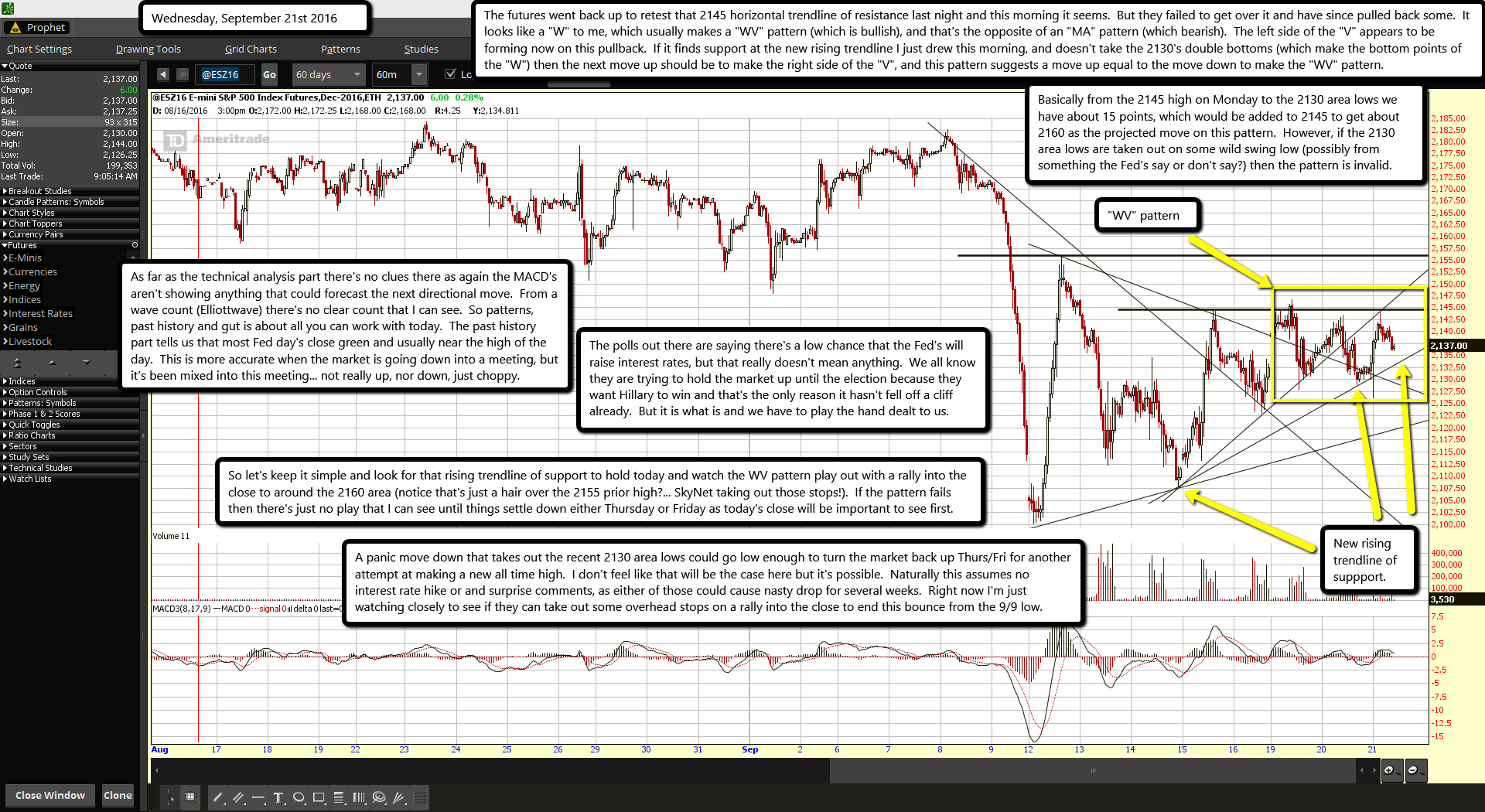
The futures went back up to retest that 2145 horizontal trendline of resistance last night and this morning it seems.  But they failed to get over it and have since pulled back some.  It looks like a "W" to me, which usually makes a "WV" pattern (which is bullish), and that's the opposite of an "MA" pattern (which bearish).  The left side of the "V" appears to be forming now on this pullback.  If it finds support at the new rising trendline I just drew this morning, and doesn't take the 2130's double bottoms (which make the bottom points of the "W") then the next move up should be to make the right side of the "V", and this pattern suggests a move up equal to the move down to make the "WV" pattern.

Basically from the 2145 high on Monday to the 2130 area lows we have about 15 points, which would be added to 2145 to get about 2160 as the projected move on this pattern.  However, if the 2130 area lows are taken out on some wild swing low (possibly from something the Fed's say or don't say?) then the pattern is invalid.

As far as the technical analysis part there's no clues there as again the MACD's aren't showing anything that could forecast the next directional move.  From a wave count (Elliottwave) there's no clear count that I can see.  So patterns, past history and gut is about all you can work with today.  The past history part tells us that most Fed day's close green and usually near the high of the day.  This is more accurate when the market is going down into a meeting, but it's been mixed into this meeting... not really up, nor down, just choppy.

The polls out there are saying there's a low chance that the Fed's will raise interest rates, but that really doesn't mean anything.  We all know they are trying to hold the market up until the election because they want Hillary to win and that's the only reason it hasn't fell off a cliff already.  But it is what is and we have to play the hand dealt to us.

So let's keep it simple and look for that rising trendline of support to hold today and watch the WV pattern play out with a rally into the close to around the 2160 area (notice that's just a hair over the 2155 prior high?... SkyNet taking out those stops!).  If the pattern fails then there's just no play that I can see until things settle down either Thursday or Friday as today's close will be important to see first.

A panic move down that takes out the recent 2130 area lows could go low enough to turn the market back up Thurs/Fri for another attempt at making a new all time high.  I don't feel like that will be the case here but it's possible.  Naturally this assumes no interest rate hike or and surprise comments, as either of those could cause nasty drop for several weeks.  Right now I'm just watching closely to see if they can take out some overhead stops on a rally into the close to end this bounce from the 9/9 low.

Donald Trump: The Federal Reserve Is Rigged!

0

After an economic speech in New York, the GOP nominee said for the second time this week that the Federal Reserve is a tool of the Obama administration—a claim economists have widely panned.

NEW YORK — It was classic Jekyll & Hyde Donald Trump.

After delivering an economic speech from a teleprompter promising a lofty 25 million new jobs in the next decade, Trump sat down for a brief Q&A at the ritzy grand ballroom in the Waldorf Astoria, during which he made a peculiar unscripted observation.

“I think the Fed is being totally controlled,” Trump said in response to a question about interest rates. “They’re not raising rates. And they’re being controlled politically.”

His suggestion, that the Federal Reserve System, which operates as an independent agency, was rigged by the Obama administration to allow the president to look successful as he leaves office this year, is as strange as it is false.

“It seems to me that Mr. Trump is trying to bend the narrative about the economy in a way that will promote conspiracy theories,” Peter Conti-Brown, a professor of legal studies and business ethics at the Wharton School of Business (Trump’s alma mater), told The Daily Beast.

And, as with many Trump’s outlandish statements, it’s not the first time he’s made the claim. But given the crowd he was speaking to—The Economic Club of New York, a who’s who of top business and finance executives—it was particularly puzzling.

In a phone interview with CNBC earlier this week, Trump said that U.S. Federal Reserve Chair Janet Yellen should be “ashamed” of what she’s doing to the country financially and that “she’s obviously political and she’s doing what Obama wants her to do.” He has not provided any evidence as to how the president could be putting pressure on her to do this. What’s more is that in May, he told CNBC that he was “for low interest rates, and I think we keep them low,” adding to the utter confusion surrounding these remarks.

The U.S. central bank has only raised interest rates once since cutting them to zero in response to the 2008 financial crisis. It has indicated that there might be a rise of .25 percent but that the rate of growth would be slow in the future.

In the immediate aftermath of his remarks on CNBC, Harvard professor and former Treasury secretary Larry Summers said Trump had absolutely no idea what he was talking about.

“I have my differences with aspects of Fed policy. But Trump is talking nonsense,” Summers told Politico. “Janet Yellen is the least political person in Washington. The Fed has been driven in its decision making by the reality that we have been below target inflation for eight years and inflation expectations are falling. That, not politics, explains the Fed’s choices.”

Conti-Brown, who wrote a book entitled The Power and Independence of the Federal Reserve, added that skepticism about the functioning of the institution is a good thing but that Trump’s remarks amounted to blind guesswork. But the danger is that it could be an effective argument.

“If Donald Trump purports to identify a villain responsible for economic hardship and you are somebody who experiences economic hardship, his message resonates with you,” Conti-Brown said.

A key facet of Trump’s rhetoric overall is hinged on sowing distrust in major institutions and in turn saying that he alone can fix them. He peddles conspiracies with ease and frequency and even proudly took credit for a recent poll indicating that the public trust’s of media was at an all-time low. Trump has also often suggested that the election will be rigged, a mantra that has led many of his supporters in recent polling to believe that a Hillary Clinton victory is in fact false.

The freewheeling nature of Trump’s response to these questions undermines his ability to remain on message when teleprompters are no longer around.

And once again, as has been his role in the past, vice presidential candidate Indiana Gov. Mike Pence attempted to clean up the controversial statement during an appearance on CNN later in the day.

But he fell short of agreeing with the unfounded claim that Yellen was manipulating the system to benefit the Obama administration.

“I think it’s hard to understand why the Fed continues to advance policies that really work for hedge fund managers on Wall Street, here in New York City, but really aren’t working for working families on Main Street,” Pence said. “I think Donald Trump is saying that it’s time that we brought forward the kind of economic policies that will allow interest rates to return to a rational point.”

Trump’s stance on the issue, outside of recent assertions of a political conspiracy, are confusing at best.

As recently as April, Trump asserted that low interest rates were a good thing.

“The best thing we have going for us is that interest rates are so low,” he told Fortune just five months ago.

This kind of waffling on key issues underscores the freewheeling, and sometimes hollow nature, of Trump’s campaign.

And even as he can hold his own as a candidate with a script in front of him, the true Trump comes out when the teleprompter disappears.

Federal Reserve Meeting This Week: No Action Expected

0

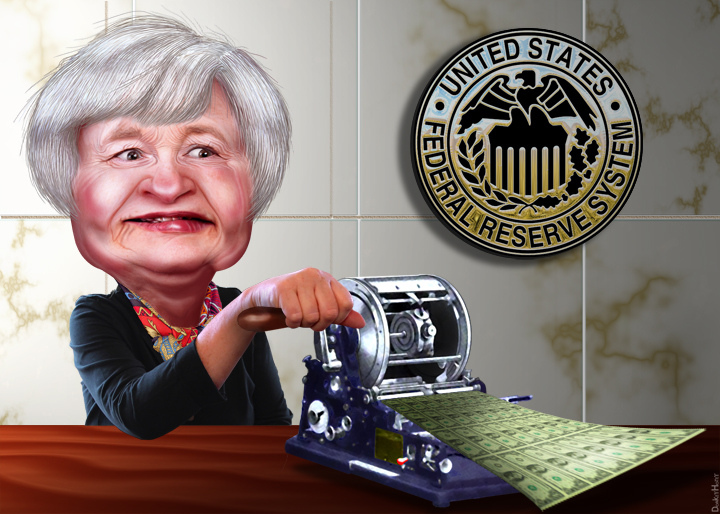
janet-yellen-printing-money

Analysts and investors are generally not expecting the Federal Reserve to raise its policy rate of interest this week.

The latest speech by a Federal Reserve Governor, Governor Lael Brainard called for prudence in considering any interest rate increase at this time.

Review of the Fed's balance sheet seems to indicate that Fed officials have not been preparing the banking system for such an increase as it did before the December move.

The Federal Open Market Committee of the Federal Reserve System meets on Tuesday and Wednesday of this week to determine the future path of monetary policy. The meeting has garnered lots and lots of attention as analysts and investors await the decision about whether or not the FOMC will raise the Fed's policy interest rate this week.

The betting seems to be that the Fed will keep its policy rate where it is. The final piece of evidence supporting this feeling was the speech given by Fed Governor Lael Brainard about a week ago. Ms. Brainard recommended "prudence" at this time.

Since then the "data driven" Federal Reserve has received additional "soft" economic data that provided no support to the officials that want to raise the rate. The additional evidence that supports the view that the Fed will not raise its policy rate at this week's meeting comes from the Fed's balance sheet.

As readers of this blog know, I look for signs of Fed actions in the way the Fed is managing its balance sheet. In my last post on this issue, I could find no evidence that the Fed was preparing the market for a rise in its policy rate.

In the Fed's last interest rate move, the Fed seemed to have been working for about two months to quietly remove excess reserves from the banking system so as to make markets a little bit tighter so as to support the rise in the rate.

After the increase took place in the middle of December, the Fed then backed-off to avoid any excess tightness in liquidity that might disrupt the banking system. In the current situation, there is no similar evidence that the Federal Reserve is making an effort to prepare the markets for another increase.

Deutsche Bank’s Low Capital Makes It No. 1 for Risk in Study

0

Deutsche Bank AG’s status as the riskiest among its peers is worsening, based on a U.S. regulator’s measure of leverage, adding to the lender’s woes as it braces for a settlement over mortgage securities.

Leverage ratio -- a lender’s capital measured against its assets -- at Deutsche Bank lags behind the rest of the world’s major banks, according to data released Tuesday by Federal Deposit Insurance Corp. Vice Chairman Thomas Hoenig. A lower ratio means the German bank has less of a cushion if a crisis arises. The figure was 2.68 percent as of June 30, down from a year earlier and about half the average of the eight biggest U.S.-based firms including JPMorgan Chase & Co. and Citigroup Inc.

Hoenig -- among the loudest advocates for stronger bank-capital requirements -- every six months releases a tally of capital levels at more than two dozen of the largest banks doing business in the U.S. While it’s not an official scoring by the FDIC, Hoenig’s calculations put more emphasis on derivatives exposure, which he’s said is the best way to figure out the riskiness of each institution. The regulator has said before that Deutsche Bank’s capital ratio is too low.

“As markets have recovered and as central banks around the world continue quantitative easing programs, the incentives for increasing financial leverage have intensified,” Hoenig said in a statement.

Renee Calabro, a spokeswoman for Deutsche Bank, declined to comment.

Headlines that the Justice Department might seek as much as $14 billion in sanctions against the bank’s mortgage-backed securities business sparked analyst comments that the lender could become significantly under-capitalized in the event of a big settlement and may need to raise capital.

The bank’s investors welcomed recent indications that the Frankfurt-based firm was considering the sale of some of its asset management operations. Chief Executive Officer John Cryan earlier this month told staff that the asset-management business will remain an “essential part” of the firm.

Hoenig’s tally of leverage uses the International Financial Reporting Standards, which he has said weighs derivatives in a “more complete” way than calculations used by the banking agencies.

His report notes that another measure of leverage -- the one used in existing capital rules -- has Deutsche Bank at 3.4 percent, though that’s still lowest among its peers. The bank said in a document released this month that it’s aiming for 5 percent by 2020.

ES Morning Update September 20th 2016

0

8650b2d2-adee-467d-a382-12f0960c692a

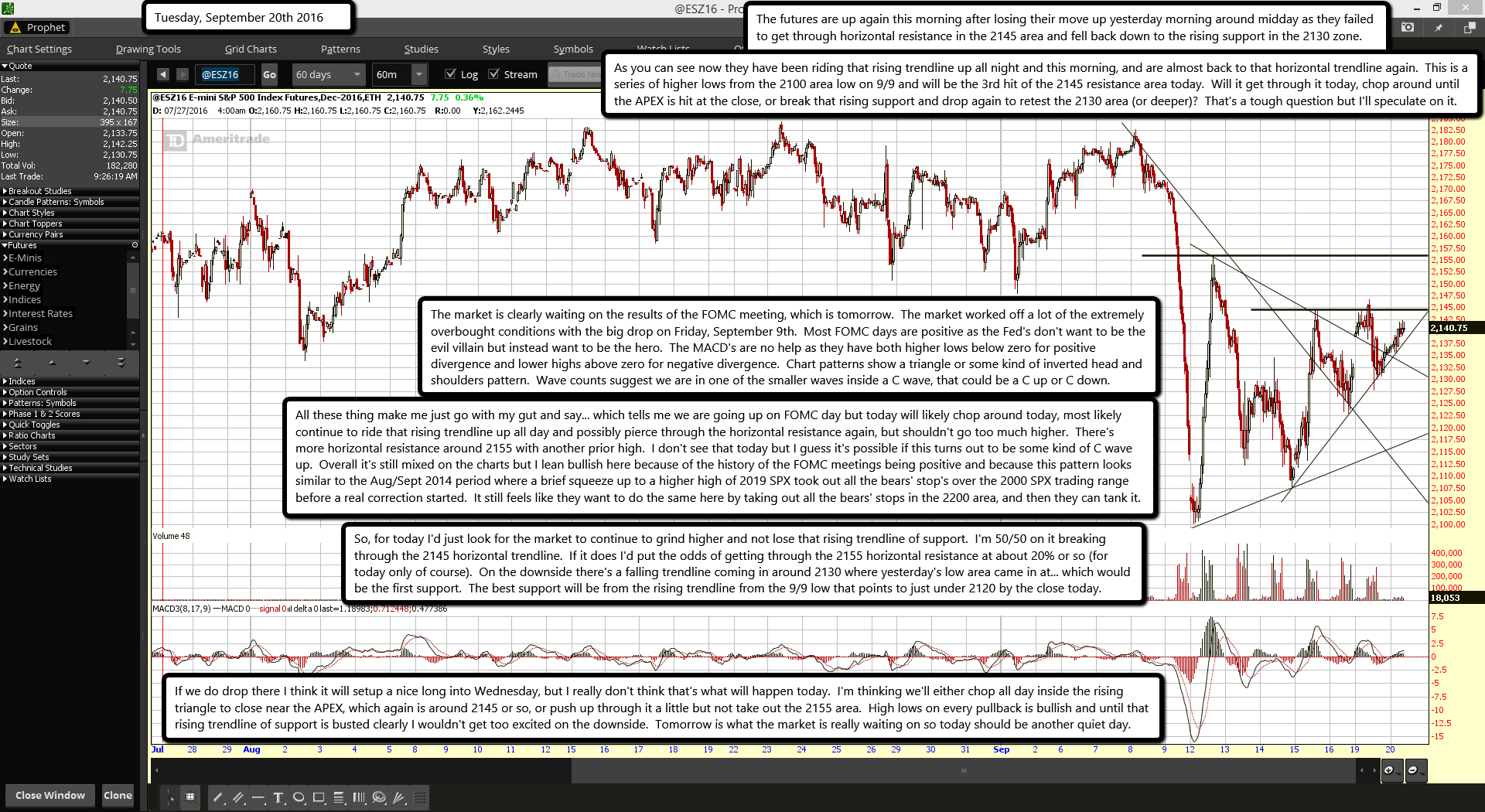
The futures are up again this morning after losing their move up yesterday morning around midday as they failed to get through horizontal resistance in the 2145 area and fell back down to the rising support in the 2130 zone.

As you can see now they have been riding that rising trendline up all night and this morning, and are almost back to that horizontal trendline again.  This is a series of higher lows from the 2100 area low on 9/9 and will be the 3rd hit of the 2145 resistance area today.  Will it get through it today, chop around until the APEX is hit at the close, or break that rising support and drop again to retest the 2130 area (or deeper)?  That's a tough question but I'll speculate on it.

The market is clearly waiting on the results of the FOMC meeting, which is tomorrow.  The market worked off a lot of the extremely overbought conditions with the big drop on Friday, September 9th.  Most FOMC days are positive as the Fed's don't want to be the evil villain but instead want to be the hero.  The MACD's are no help as they have both higher lows below zero for positive divergence and lower highs above zero for negative divergence.  Chart patterns show a triangle or some kind of inverted head and shoulders pattern.  Wave counts suggest we are in one of the smaller waves inside a C wave, that could be a C up or C down.

All these thing make me just go with my gut and say... which tells me we are going up on FOMC day but today will likely chop around today, most likely continue to ride that rising trendline up all day and possibly pierce through the horizontal resistance again, but shouldn't go too much higher.  There's more horizontal resistance around 2155 with another prior high.  I don't see that today but I guess it's possible if this turns out to be some kind of C wave up.  Overall it's still mixed on the charts but I lean bullish here because of the history of the FOMC meetings being positive and because this pattern looks similar to the Aug/Sept 2014 period where a brief squeeze up to a higher high of 2019 SPX took out all the bears' stop's over the 2000 SPX trading range before a real correction started.  It still feels like they want to do the same here by taking out all the bears' stops in the 2200 area, and then they can tank it.

So, for today I'd just look for the market to continue to grind higher and not lose that rising trendline of support.  I'm 50/50 on it breaking through the 2145 horizontal trendline.  If it does I'd put the odds of getting through the 2155 horizontal resistance at about 20% or so (for today only of course).  On the downside there's a falling trendline coming in around 2130 where yesterday's low area came in at... which would be the first support.  The best support will be from the rising trendline from the 9/9 low that points to just under 2120 by the close today.

If we do drop there I think it will setup a nice long into Wednesday, but I really don't think that's what will happen today.  I'm thinking we'll either chop all day inside the rising triangle to close near the APEX, which again is around 2145 or so, or push up through it a little but not take out the 2155 area.  High lows on every pullback is bullish and until that rising trendline of support is busted clearly I wouldn't get too excited on the downside.  Tomorrow is what the market is really waiting on so today should be another quiet day.

Hacked Colin Powell Email: Bohemian Grove Attendees Will Vote Against Trump, Some Support Third Party Candidate

0

NEW YORK – Conspiracy theorists are going to have a field day with this one.

Chip Somodevilla/Getty Images

An email hacked from Colin Powell’s Gmail account has him writing that he had just returned from the famed Bohemian Grove — a place the Washington Post once described as “where the rich and powerful go to misbehave” — and that most attendees there will not vote for Donald Trump and find him to be a “disaster.” Powell further reported that “quite a few will not vote for Hillary and will vote for a third party candidate.”

Here is Powell’s full July 24, 2016 email, which was hacked by DCLeaks and accessed by Breitbart News via a password provided to this reporter by the hacking group:

Peter, I am back from the Bohemian Grove. Surprise, surprise, I sat next
to Stephen Harper a couple of times and had a nice discussion.  Grove
attendees know that Trump is a disaster. Most will vote against, but quite
a few will not vote for Hillary and will vote for a third party candidate.
Strange doings down here. Otherwise all is well with the Powells. We’ll
sneak away for a few days in August. Of course I’d love to see you. Let me
know your dates.  I told Stephen that you seemed quite content in your new
place in life.

All the best, Colin

The email was addressed to Canadian politician and lawyer Peter Gordon MacKay, a former Canadian Member of Parliament, who also served as Minister of Justice and Attorney General, Minister of National Defense, and Minister of Foreign Affairs

Stephen Harper, referenced in the email, served as Canada’s prime minister from February 6, 2006 to November 4, 2015.

Bohemian Grove is a 2,700-acre campground in Monte Rio, Calif that has served as a meeting place for top politicians and businessmen.  The site’s major annual secretive meeting takes place for two weeks in July, with Powell writing that he was present at last July’s event.

In a previous email to MacKay, Powell wrote about the policy of not bringing communication devices to Bohemian Grove.

“I am racing out of town to the California Redwoods for the weekend,” Powell wrote, referring to the Grove. “No phones, email or even Kindles.”

In a 2011 profile, the Washington Post reported thusly on the annual July event:

Every July, some of the richest and most powerful men in the world gather at a 2,700 acre campground in Monte Rio, Calif., for two weeks of heavy drinking, super-secret talks, druid worship (the group insists they are simply “revering the Redwoods”), and other rituals.

Their purpose: to escape the “frontier culture,” or uncivilized interests, of common men.

The people that gather at Bohemian Grove — who have included prominent business leaders, former U.S. presidents, musicians, and oil barons — are told that “Weaving Spiders Come Not Here,” meaning business deals are to be left outside. One exception was in 1942, when a planning for the Manhattan Project took place at the grove, leading to the creation of the atom bomb.

Aaron Klein is Breitbart’s Jerusalem bureau chief and senior investigative reporter. He is a New York Times bestselling author and hosts the popular weekend talk radio program, “Aaron Klein Investigative Radio.” Follow him on Twitter @AaronKleinShow. Follow him on Facebook.

ES Morning Update September 19th 2016

0

f3af77b2-b3d2-4725-b81f-da48dc805346

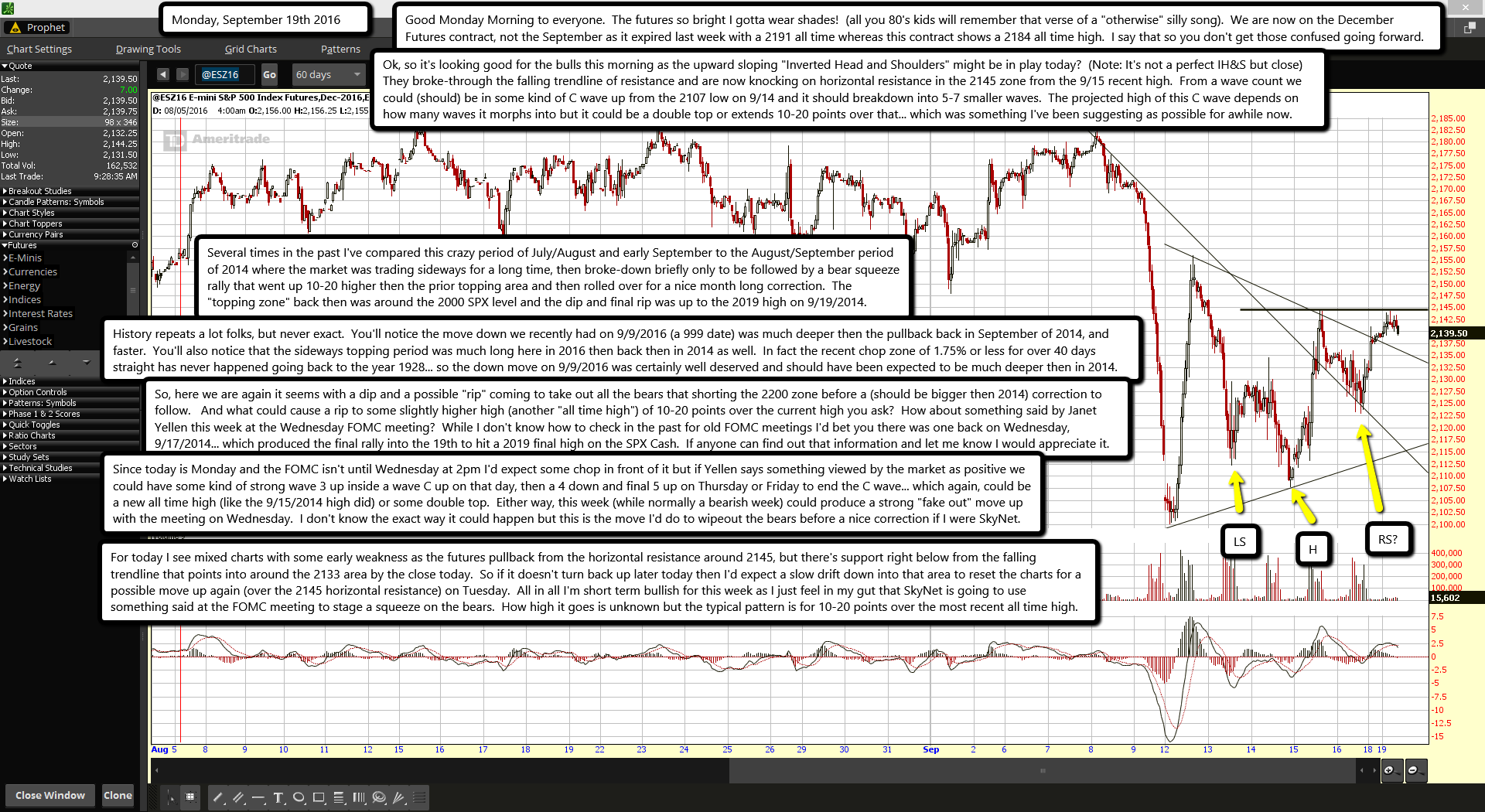
Good Monday Morning to everyone.  The futures so bright I gotta wear shades!  (all you 80's kids will remember that verse of a "otherwise" silly song).  We are now on the December Futures contract, not the September as it expired last week with a 2191 all time whereas this contract shows a 2184 all time high.  I say that so you don't get those confused going forward.

Ok, so it's looking good for the bulls this morning as the upward sloping "Inverted Head and Shoulders" might be in play today?  (Note: It's not a perfect IH&S but close)  They broke-through the falling trendline of resistance and are now knocking on horizontal resistance in the 2145 zone from the 9/15 recent high.  From a wave count we could (should) be in some kind of C wave up from the 2107 low on 9/14 and it should breakdown into 5-7 smaller waves.  The projected high of this C wave depends on how many waves it morphs into but it could be a double top or extends 10-20 points over that... which was something I've been suggesting as possible for awhile now.

Several times in the past I've compared this crazy period of July/August and early September to the August/September period of 2014 where the market was trading sideways for a long time, then broke-down briefly only to be followed by a bear squeeze rally that went up 10-20 higher then the prior topping area and then rolled over for a nice month long correction.  The "topping zone" back then was around the 2000 SPX level and the dip and final rip was up to the 2019 high on 9/19/2014.

History repeats a lot folks, but never exact.  You'll notice the move down we recently had on 9/9/2016 (a 999 date) was much deeper then the pullback back in September of 2014, and faster.  You'll also notice that the sideways topping period was much long here in 2016 then back then in 2014 as well.  In fact the recent chop zone of 1.75% or less for over 40 days straight has never happened going back to the year 1928... so the down move on 9/9/2016 was certainly well deserved and should have been expected to be much deeper then in 2014.

So, here we are again it seems with a dip and a possible "rip" coming to take out all the bears that shorting the 2200 zone before a (should be bigger then 2014) correction to follow.   And what could cause a rip to some slightly higher high (another "all time high") of 10-20 points over the current high you ask?  How about something said by Janet Yellen this week at the Wednesday FOMC meeting?  While I don't know how to check in the past for old FOMC meetings I'd bet you there was one back on Wednesday, 9/17/2014... which produced the final rally into the 19th to hit a 2019 final high on the SPX Cash.  If anyone can find out that information and let me know I would appreciate it.

Since today is Monday and the FOMC isn't until Wednesday at 2pm I'd expect some chop in front of it but if Yellen says something viewed by the market as positive we could have some kind of strong wave 3 up inside a wave C up on that day, then a 4 down and final 5 up on Thursday or Friday to end the C wave... which again, could be a new all time high (like the 9/15/2014 high did) or some double top.  Either way, this week (while normally a bearish week) could produce a strong "fake out" move up with the meeting on Wednesday.  I don't know the exact way it could happen but this is the move I'd do to wipeout the bears before a nice correction if I were SkyNet.

For today I see mixed charts with some early weakness as the futures pullback from the horizontal resistance around 2145, but there's support right below from the falling trendline that points into around the 2133 area by the close today.  So if it doesn't turn back up later today then I'd expect a slow drift down into that area to reset the charts for a possible move up again (over the 2145 horizontal resistance) on Tuesday.  All in all I'm short term bullish for this week as I just feel in my gut that SkyNet is going to use something said at the FOMC meeting to stage a squeeze on the bears.  How high it goes is unknown but the typical pattern is for 10-20 points over the most recent all time high.

ES Morning Update September 16th 2016

0

9bbf22fe-d1e8-4a79-bb0a-f9f7ec6e84ad

Yesterday I pointed out that there was a "possible" FP on the SPY from Tuesday showing 216.42 and we didn't quite make it up there hitting a high of only 215.73, but we did indeed rally instead of rolling over (which I thought the charts looked very bearish at the open yesterday).  So I'm not sure if that's a failed FP or it will be hit later, like today or early next week?  But right before the close Thursday we got another downside FP on the SPY of 213.16 and this morning in the pre-market we already hit it.  However, I believe this is just a "re-balance" of the ETF so it can be deceiving.

Into the close yesterday we hit many resistance levels and trendlines on the SPY, SPX Cash and E-mini Futures... as well as some stocks like Facebook, Google, Apple and Amazon.  That was a good sign to short going into Friday but the Quad Witching this week and monthly options expiration expiring today had me sitting on my hands and passing as the manipulation on expiration days gives me pause on trading it.

For today it looks like we'll have some early weakness as the MACD's are pointing down from rolling over last night, but I suspect they will turn back up after a few hours and erase a lot of the down move.  Now whether it goes green and rallies up past the 2151 high yesterday and the 2162 high on Monday is hard too say.  The various time frames of the charts (including the SPX Cash) are a little mixed and don't really support a big rally, nor a big sell off.  But if a rally gets going I'd look for those two targets as resistance where any longs taken could be exited.  Personally I don't see any good setups for a long or short this morning.  Maybe they will appear later in the day?

Now one other thing to remember is the Fed's have another FOMC meeting next Tuesday/Wednesday and the market currently puts the odds of a rate hike as very low.  However, that doesn't mean the market is going to get all excited and rally huge in front of the meeting, but instead suggests it won't sell off too much in front it because there's little fear of that interest rate hike.  More then likely it will be choppy in front the meeting with a downward bias as few traders will want to be buying new longs until the meeting is over and they know what is said about rate hikes.  Doesn't mean traders will sell heavy in front of the meeting either... just means it will be a "pause" period, where charts and technicals might actually be allowed to work?

Support on the downside is the rising trendline connecting the low on Monday of 2107 to the higher low on Wednesday of 2114, which comes in around the close today of 2120.  There's also horizontal support in the 2132-2135 area.  Upside resistance is from 2150 to 2145 from a falling trendline I just drew today.  Get through that and you have the 2152 prior top as well as another falling trendline (in blue/purple) and then the 2161 high on Monday.  Looks more like a triangle play for today where the ES Futures stays within the upper resistance down to the lower support.  Feels like it wants to rally (doesn't it always... LOL) so lets see what happens.

ES Morning Update September 15th 2016

0

a60200c0-5048-42fe-9271-f9c59c6cc902

Yesterday I proposed the idea that we'll make a positive divergence on the MACD's of this 2 hours ES Futures chart.  And again, while we should make a lower low on the futures actual price while making a higher low on the MACD's, I said that the futures will likely be manipulated so they have a higher low or possibly a double bottom.  So here we are this morning with just that... a higher low on the MACD's to make the positive divergence and a higher low on the futures.

This manipulation of technical analysis, patterns, wave counts, etc... isn't healthy for the market.  The whole reason for the lower low is to clear out the bulls that went long at Mondays' low by hitting their stops just below that 2107 area, and then a healthy rally can start.  When you don't do that you have bulls still on board that will sell on the way limiting the move, and you won't have as many bears to squeeze either as you didn't fulling load the boat with them by making a second lower low where they would have likely piled on short looking for a crash.

So here we are this morning with a small rally that has at least pushed through the falling trendline of resistance.  From what I see this rally up won't make it past the prior high on Mondays' bounce at 2162, and that assumes today's move up will be some strong C wave.  If it's anything less then a C wave the bulls are in trouble, as even-though there's a positive divergence on the MACD's it's not a very strong looking one... and the futures didn't make a lower low to validate that divergence either.

All in all it's not looking like a very bullish day this morning.  The falling trendline could be redrew to include the long topping tails and then the futures would NOT have pushed through it.  So that trendline is just a rough estimate and if you just "eyeball it" it looks like there's NO breakout of the trendline.  I get the feeling we'll rollover and make that lower low today.  Could be wrong of course I'm going against the Fed's manipulation... which is why I won't actually trade it short.  I'll just watch and hope that "possible" FP yesterday on the SPY plays out to the upside where I'll be interested more in a short.

My thoughts for today... toss a coin, it's 50/50 in the direction.  It looks more like a triangle pattern and the futures appear to be near the APEX of it (the end or point).  So it should breakdown (from a technical point of view) but with heavy interference from the Fed it just as easily could bust up... especially if that FP on the SPY is real.  The bottom-line is... it's a crap shoot today with no clear direction.

Dodd-Frank reversal bill has something for everyone, even progressive reformers

0

The House Financial Service Committee met Tuesday to debate Jeb Hensarling’s Financial Creating Hope and Opportunity for Investors, Consumers and Entrepreneurs Act, a bill unlikely to become law, but one that gives almost everyone, including reformers on both sides of the aisle, something to think about after the November election.

Although not a complete rewrite of Dodd-Frank, the legislation advocates for significant revisions or outright reversals of many of the financial crisis reform law’s most contentious provisions.

K& L Gates partner Dan Crowley says the so-called Financial Choice Act is, instead, a “political exercise” that sets the stage for potential financial reform legislation before the election and for discussions that will occur in the next Congress. “If Donald Trump is elected president, those discussions will happen pretty fast.”

In June, K&L Gates wrote clients that the proposal is not expected to advance as stand-alone legislation this year, but “it is likely to inform Dodd-Frank Act reform efforts going forward.”

Crowley said the most important reform contained in Dodd-Frank was Title 7, the section that creates a framework for the regulation of swap markets and limits counterparty risk by imposing centralized clearing on swaps. “This bill attempts to revise or reverse almost everything but Dodd-Frank’s swaps regulation.”

The bill will please behemoth banks by repealing the Volcker Rule, which restricts trading activities at banks. Plans to substitute simple leverage ratios for the Basel risk-weighted assets method for determining bank capital requirements has strong bipartisan political support from everyone but the banks.

“The banking lobby,” the Cato Institute’s Kevin Dowd wrote in May, “hate the leverage ratio because it is less easy to game” than Basel-based capital rules.

The House committee says that the Basel regime is “a highly politicized, deeply unreliable risk-based approach to measuring capital adequacy” with an almost mind-numbing level of complexity” that has resulted in the largest banks becoming “almost entirely opaque to their investors, creditors, and regulators.”

Leverage ratios measure funds available to absorb losses against the total balance sheet and some off-balance sheet assets. An election by a bank to take the “off-ramp” from the Dodd-Frank risk-based regulatory requirements would be available under the bill to financial institutions that maintain a leverage ratio of at least 10% and have a composite CAMELS rating, the regulatory measure based on inspections, of 1 or 2.

Dowd’s Cato colleague Mark Calabria, a former staffer to Sen Richard Shelby, a Republican of Alabama and ranking member of the Committee on Banking, Housing, and Urban Affairs, told MarketWatch in an interview that support for higher equity capital for banks has gained momentum. “In practice the risk-weighted Basel approach has not gone well,” said Calabria. “If you got rid of all the safety nets the biggest banks enjoy, the market would demand closer to 20% equity capital.”

The opportunity to use leverage ratios to measure capital adequacy in exchange for higher equity capital plays into the hands of reformers whose politics cross party lines, such as Stanford University’s Anat Admati. Admati has been pushing this approach since a 2010 letter to the Financial Times signed by her and 19 others that suggested a minimum required leverage ratio of at least 15% — at least five times greater than what’s required under Basel III.

Starting January 1, 2018, the Federal Reserve will impose a 5% minimum leverage ratio requirement on the 8 U.S. globally systemically important banks, or G-SIBs, and a 6% minimum leverage ratio on their federally insured subsidiaries.

The bill also eliminates the authority of the Financial Stability Oversight Council to designate risky non-banks and “financial market utilities” such as clearinghouses as “systemically important financial institutions”. The FSOC was created by the Dodd-Frank Act to review the systemic risk to the capital markets presented by large, global financial institutions. This provision is also popular with the financial services community and may have staying power after the November election.

MetLife Inc. MET, +0.09% recently beat federal regulators in court who sought to classify the insurer as too “systemically important” to fail. The designation would have subjected the organization to closer scrutiny by regulators and also give it access to the Federal Reserve discount window in case of financial stress. The bill retroactively repeals any previous SiFi designations of non-bank financial companies like MetLife. The Wall Street Journal reported that MetLife’s two main rivals, Prudential Financial Inc. PRU, +0.46% and American International Group Inc. AIG, +0.36% , which have also been designated systemically important, are expected to consider challenging their designation.

The bill also repeals the FSOC’s authority to break up a large financial institution if the Federal Reserve finds that the firm “poses a grave threat to the financial stability of the United States.” The Treasury’s Office of Financial Research, created by Dodd-Frank to support the FSOC, would also disappear.

Hensarling wants to restructure the Consumer Financial Protection Bureau and other agencies as bipartisan commissions and subject them to congressional appropriations. The CFPB would also be required to have a cost-benefit analysis performed by the Office of Economic Analysis to support all new rules. Although the CFPB has been the target of unrelenting criticism from the Republicans in the House and Senate, its recent largest ever fine against Wells Fargo & Co. for creating fraudulent bank and credit card accounts could generate the support it needs to withstand this latest challenge.

The bill also steps on recent rule-making by the Department of Labor regarding fiduciary standards of conduct for brokers-dealers who advise retirees. The Clinton Administration is expected to continue to strongly support this rule, if elected, and the Securities and Exchange Commission is readying its version of the rules that go beyond protection for retirees.

Hensarling’s bill also shuts down what the committee’s summary calls “two of the most misguided” Dodd-Frank provisions — regulations regarding limits of bank incentive-based compensation and public company CEO-to-worker pay ratio disclosures. Although the SEC has proposed final rules in both cases, they have yet to be approved and are vulnerable, especially if still pending after the election.

The bill’s most controversial provision is a reversal of the Durbin Amendment to Dodd-Frank that imposed a cap on “interchange fees”, the fees charged by a customer’s bank to a merchant’s bank when the customer uses a debit card. The banking lobby is strongly for going back to unrestricted fees, but consumer groups and the industry group representing convenience and fuel retailers says repealing debit fee reform “would allow the credit card Goliaths to resume price-fixing of debit-card fees and block smaller card networks from competing with them for business.

The Financial Choice Act also reaches back to the Sarbanes-Oxley Act of 2002 when it repeals provisions of that law that deny Congress access to information and keep disciplinary proceedings against auditors secret. That secrecy was built into the rules governing the Public Company Accounting Oversight Board, the audit regulator established by the law after the Enron scandal. Attempts to repeal these secrecy provisions of the Sarbanes-Oxley Act regarding auditors will continue to be proposed by those pushing for accountability and transparency, despite having been introduced jointly in 2011, 2013, and again in 2015 by Democrats and Republicans and subsequently dying after lobbying pressure from the accounting industry giants.

New CFTC proposal could jeopardize the IP lifeblood of many businesses

0

Countless companies around the world have developed and perfected sophisticated and multifaceted algorithms which are the intellectual property (IP) lifeblood of their business. Imagination and innovation have enabled thousands of these companies to conquer the free market and be prosperous. In the US, however, that extremely valuable commodity—intellectual property—could be jeopardized if a government agency (ironically, the Commodity Futures Trading Commission—CFTC) succeeds in doing what they propose.

Just think about how our world has changed with technology making our lives more efficient and effective due to sophisticated technological IP used every single day. Things we take for granted like a simple Google search use these proprietary algorithms—the underlying heart which is based upon something called “source code”. It is that source code (developed, many times, over years and costing millions of dollars) which makes things like weather forecasting and traffic predictions possible. It makes on-line shopping more convenient and expedient, and it provides health and safety protection to our citizens. Going into the future, source code will be utilized in digital currencies and block chain applications, drones, self-driving cars and many other facets of contemporary life.

Source code is also used in financial markets, which is where this little commodity agency that not many people know, comes into play. The CFTC has proposed that proprietary source code (even if protected by intellectual property and trade secret rights) be given to the government upon request as part of the regular books and records available for inspection. Source code is not only used by traders, banks and others to implement their many market methodologies, but by trading venues like the Chicago Mercantile Exchange (CME) and the New York Stock Exchange (NYSE) which provide the intensely intricate and important backbone fundamentals of our modern financial system.

The major problem with the government getting a hold of this highly-sensitive, proprietary source code IP is that it could be stolen or otherwise compromised in some fashion. Such a risky policy prescription could place at precarious peril the essence and basic existence of a company.

Why should companies trust government with such sensitive source code IP data? They should not. We have witnessed many cyber-attacks, hacks and the outright stealing of sensitive information from our government.

Even after repeated warnings of persistent system vulnerabilities and/or failings, last year the US Office of Personnel Management (OPM) was hacked and the criminals accessed 21.5 million records. I am, unfortunately, one of them. And, it wasn’t just simple DOB and Social Security data that was accessed. Those in highly-sensitive and national security-related jobs (like the one I had) file a Standard Form (SF)-86. The hackers had access to the SF-86s which include deets about financial holdings, family members and friends. No matter, the government offered a free credit score checking service (how nice!).

The OPM hack wasn’t the only security breach, of course. In fact, even the very Agency—the CFTC—which seeks to have access to source code was hacked in 2012. I was lucky, yet again. As a CFTC Commissioner at the time, criminals had access to my personal and sensitive private deets. At the time, we believed the data breach was limited to the roughly 700 CFTC employees, but we all knew that it would not have been a far fetch for the hackers to gain data and details on traders or exchanges. That is exactly why the CFTC’s current source code proposal is fundamentally fatally flawed.

Image result for Federal Deposit Insurance Corporation

Oh, and by the way, in recent months the Federal Reserve, Federal Deposit Insurance Corporation and even the Internal Revenue Service were all hacked. Can government keep data safe and secure? Sure. Not!

The adoption of the CFTC regulation would set a horrendous precedent for all company IP. After 30 years in government, one thing I know for sure is that if one department or agency institutes a policy (like having access to source code IP)…watch the heck out! Another, and another and another…will soon follow.

If companies want to ensure their source code IP is protected, they may take notice of this seemingly small, innocuous proposal. If there is an opportunity (which there might be) they may seek to have their voices heard.

s2Member®