Saturday, September 26, 2026
Home Blog Page 71

Federal Reserve Meeting This Week: No Action Expected

0

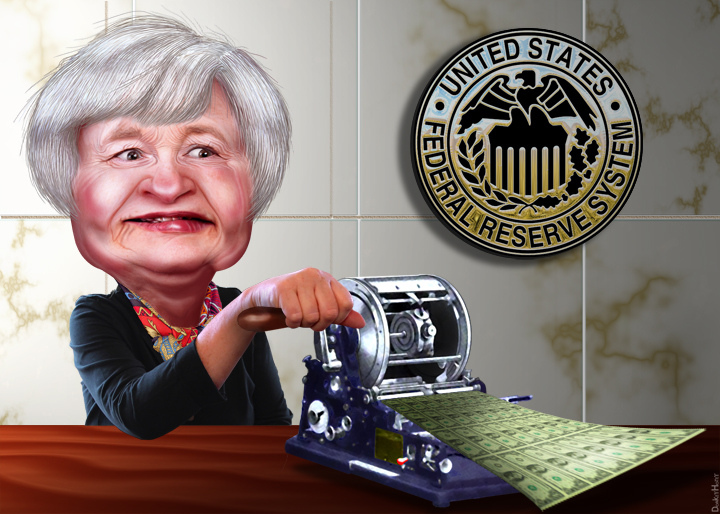
janet-yellen-printing-money

Analysts and investors are generally not expecting the Federal Reserve to raise its policy rate of interest this week.

The latest speech by a Federal Reserve Governor, Governor Lael Brainard called for prudence in considering any interest rate increase at this time.

Review of the Fed's balance sheet seems to indicate that Fed officials have not been preparing the banking system for such an increase as it did before the December move.

The Federal Open Market Committee of the Federal Reserve System meets on Tuesday and Wednesday of this week to determine the future path of monetary policy. The meeting has garnered lots and lots of attention as analysts and investors await the decision about whether or not the FOMC will raise the Fed's policy interest rate this week.

The betting seems to be that the Fed will keep its policy rate where it is. The final piece of evidence supporting this feeling was the speech given by Fed Governor Lael Brainard about a week ago. Ms. Brainard recommended "prudence" at this time.

Since then the "data driven" Federal Reserve has received additional "soft" economic data that provided no support to the officials that want to raise the rate. The additional evidence that supports the view that the Fed will not raise its policy rate at this week's meeting comes from the Fed's balance sheet.

As readers of this blog know, I look for signs of Fed actions in the way the Fed is managing its balance sheet. In my last post on this issue, I could find no evidence that the Fed was preparing the market for a rise in its policy rate.

In the Fed's last interest rate move, the Fed seemed to have been working for about two months to quietly remove excess reserves from the banking system so as to make markets a little bit tighter so as to support the rise in the rate.

After the increase took place in the middle of December, the Fed then backed-off to avoid any excess tightness in liquidity that might disrupt the banking system. In the current situation, there is no similar evidence that the Federal Reserve is making an effort to prepare the markets for another increase.

Deutsche Bank’s Low Capital Makes It No. 1 for Risk in Study

0

Deutsche Bank AG’s status as the riskiest among its peers is worsening, based on a U.S. regulator’s measure of leverage, adding to the lender’s woes as it braces for a settlement over mortgage securities.

Leverage ratio -- a lender’s capital measured against its assets -- at Deutsche Bank lags behind the rest of the world’s major banks, according to data released Tuesday by Federal Deposit Insurance Corp. Vice Chairman Thomas Hoenig. A lower ratio means the German bank has less of a cushion if a crisis arises. The figure was 2.68 percent as of June 30, down from a year earlier and about half the average of the eight biggest U.S.-based firms including JPMorgan Chase & Co. and Citigroup Inc.

Hoenig -- among the loudest advocates for stronger bank-capital requirements -- every six months releases a tally of capital levels at more than two dozen of the largest banks doing business in the U.S. While it’s not an official scoring by the FDIC, Hoenig’s calculations put more emphasis on derivatives exposure, which he’s said is the best way to figure out the riskiness of each institution. The regulator has said before that Deutsche Bank’s capital ratio is too low.

“As markets have recovered and as central banks around the world continue quantitative easing programs, the incentives for increasing financial leverage have intensified,” Hoenig said in a statement.

Renee Calabro, a spokeswoman for Deutsche Bank, declined to comment.

Headlines that the Justice Department might seek as much as $14 billion in sanctions against the bank’s mortgage-backed securities business sparked analyst comments that the lender could become significantly under-capitalized in the event of a big settlement and may need to raise capital.

The bank’s investors welcomed recent indications that the Frankfurt-based firm was considering the sale of some of its asset management operations. Chief Executive Officer John Cryan earlier this month told staff that the asset-management business will remain an “essential part” of the firm.

Hoenig’s tally of leverage uses the International Financial Reporting Standards, which he has said weighs derivatives in a “more complete” way than calculations used by the banking agencies.

His report notes that another measure of leverage -- the one used in existing capital rules -- has Deutsche Bank at 3.4 percent, though that’s still lowest among its peers. The bank said in a document released this month that it’s aiming for 5 percent by 2020.

ES Morning Update September 20th 2016

0

8650b2d2-adee-467d-a382-12f0960c692a

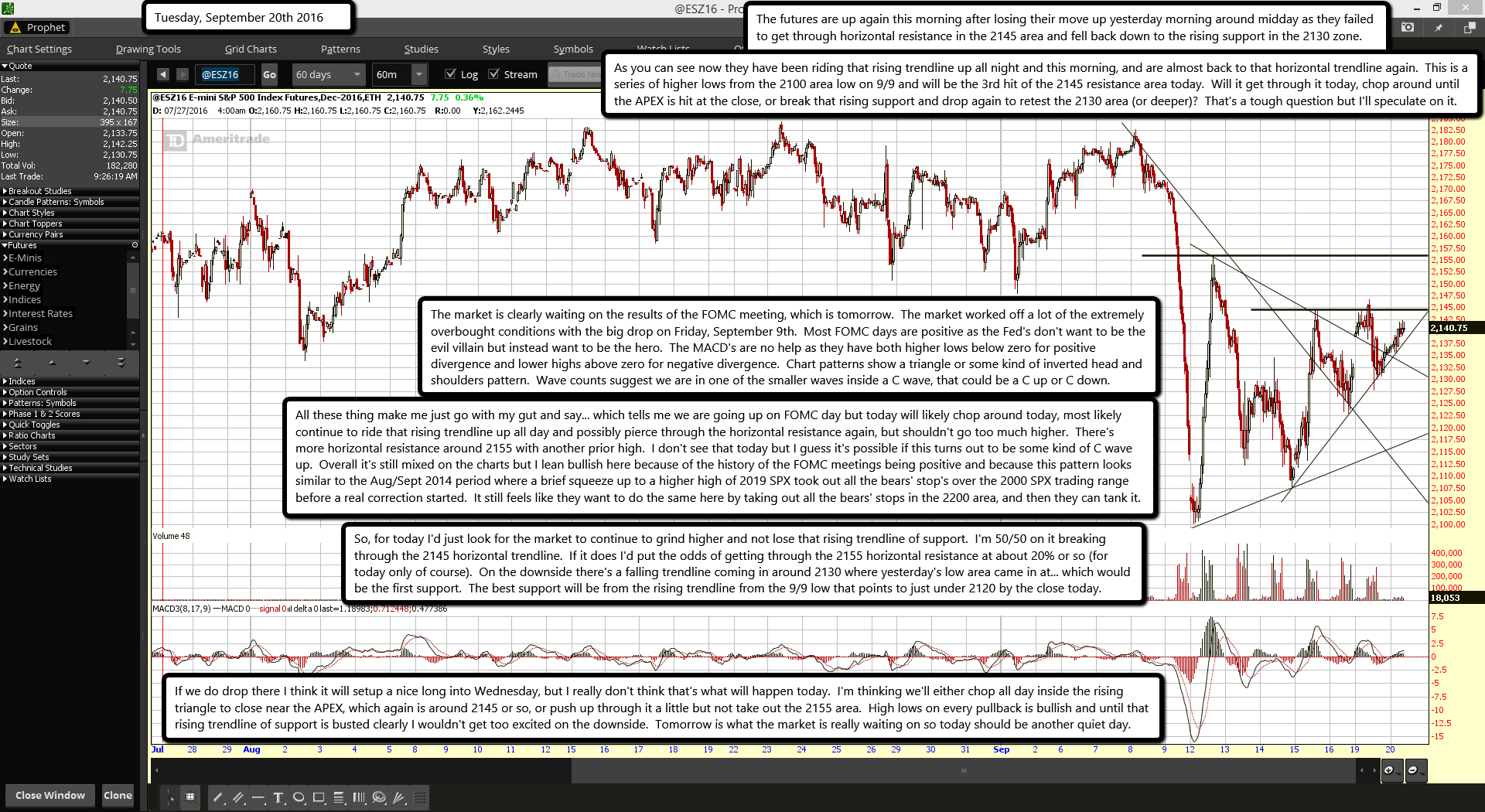
The futures are up again this morning after losing their move up yesterday morning around midday as they failed to get through horizontal resistance in the 2145 area and fell back down to the rising support in the 2130 zone.

As you can see now they have been riding that rising trendline up all night and this morning, and are almost back to that horizontal trendline again.  This is a series of higher lows from the 2100 area low on 9/9 and will be the 3rd hit of the 2145 resistance area today.  Will it get through it today, chop around until the APEX is hit at the close, or break that rising support and drop again to retest the 2130 area (or deeper)?  That's a tough question but I'll speculate on it.

The market is clearly waiting on the results of the FOMC meeting, which is tomorrow.  The market worked off a lot of the extremely overbought conditions with the big drop on Friday, September 9th.  Most FOMC days are positive as the Fed's don't want to be the evil villain but instead want to be the hero.  The MACD's are no help as they have both higher lows below zero for positive divergence and lower highs above zero for negative divergence.  Chart patterns show a triangle or some kind of inverted head and shoulders pattern.  Wave counts suggest we are in one of the smaller waves inside a C wave, that could be a C up or C down.

All these thing make me just go with my gut and say... which tells me we are going up on FOMC day but today will likely chop around today, most likely continue to ride that rising trendline up all day and possibly pierce through the horizontal resistance again, but shouldn't go too much higher.  There's more horizontal resistance around 2155 with another prior high.  I don't see that today but I guess it's possible if this turns out to be some kind of C wave up.  Overall it's still mixed on the charts but I lean bullish here because of the history of the FOMC meetings being positive and because this pattern looks similar to the Aug/Sept 2014 period where a brief squeeze up to a higher high of 2019 SPX took out all the bears' stop's over the 2000 SPX trading range before a real correction started.  It still feels like they want to do the same here by taking out all the bears' stops in the 2200 area, and then they can tank it.

So, for today I'd just look for the market to continue to grind higher and not lose that rising trendline of support.  I'm 50/50 on it breaking through the 2145 horizontal trendline.  If it does I'd put the odds of getting through the 2155 horizontal resistance at about 20% or so (for today only of course).  On the downside there's a falling trendline coming in around 2130 where yesterday's low area came in at... which would be the first support.  The best support will be from the rising trendline from the 9/9 low that points to just under 2120 by the close today.

If we do drop there I think it will setup a nice long into Wednesday, but I really don't think that's what will happen today.  I'm thinking we'll either chop all day inside the rising triangle to close near the APEX, which again is around 2145 or so, or push up through it a little but not take out the 2155 area.  High lows on every pullback is bullish and until that rising trendline of support is busted clearly I wouldn't get too excited on the downside.  Tomorrow is what the market is really waiting on so today should be another quiet day.

Hacked Colin Powell Email: Bohemian Grove Attendees Will Vote Against Trump, Some Support Third Party Candidate

0

NEW YORK – Conspiracy theorists are going to have a field day with this one.

Chip Somodevilla/Getty Images

An email hacked from Colin Powell’s Gmail account has him writing that he had just returned from the famed Bohemian Grove — a place the Washington Post once described as “where the rich and powerful go to misbehave” — and that most attendees there will not vote for Donald Trump and find him to be a “disaster.” Powell further reported that “quite a few will not vote for Hillary and will vote for a third party candidate.”

Here is Powell’s full July 24, 2016 email, which was hacked by DCLeaks and accessed by Breitbart News via a password provided to this reporter by the hacking group:

Peter, I am back from the Bohemian Grove. Surprise, surprise, I sat next
to Stephen Harper a couple of times and had a nice discussion.  Grove
attendees know that Trump is a disaster. Most will vote against, but quite
a few will not vote for Hillary and will vote for a third party candidate.
Strange doings down here. Otherwise all is well with the Powells. We’ll
sneak away for a few days in August. Of course I’d love to see you. Let me
know your dates.  I told Stephen that you seemed quite content in your new
place in life.

All the best, Colin

The email was addressed to Canadian politician and lawyer Peter Gordon MacKay, a former Canadian Member of Parliament, who also served as Minister of Justice and Attorney General, Minister of National Defense, and Minister of Foreign Affairs

Stephen Harper, referenced in the email, served as Canada’s prime minister from February 6, 2006 to November 4, 2015.

Bohemian Grove is a 2,700-acre campground in Monte Rio, Calif that has served as a meeting place for top politicians and businessmen.  The site’s major annual secretive meeting takes place for two weeks in July, with Powell writing that he was present at last July’s event.

In a previous email to MacKay, Powell wrote about the policy of not bringing communication devices to Bohemian Grove.

“I am racing out of town to the California Redwoods for the weekend,” Powell wrote, referring to the Grove. “No phones, email or even Kindles.”

In a 2011 profile, the Washington Post reported thusly on the annual July event:

Every July, some of the richest and most powerful men in the world gather at a 2,700 acre campground in Monte Rio, Calif., for two weeks of heavy drinking, super-secret talks, druid worship (the group insists they are simply “revering the Redwoods”), and other rituals.

Their purpose: to escape the “frontier culture,” or uncivilized interests, of common men.

The people that gather at Bohemian Grove — who have included prominent business leaders, former U.S. presidents, musicians, and oil barons — are told that “Weaving Spiders Come Not Here,” meaning business deals are to be left outside. One exception was in 1942, when a planning for the Manhattan Project took place at the grove, leading to the creation of the atom bomb.

Aaron Klein is Breitbart’s Jerusalem bureau chief and senior investigative reporter. He is a New York Times bestselling author and hosts the popular weekend talk radio program, “Aaron Klein Investigative Radio.” Follow him on Twitter @AaronKleinShow. Follow him on Facebook.

ES Morning Update September 19th 2016

0

f3af77b2-b3d2-4725-b81f-da48dc805346

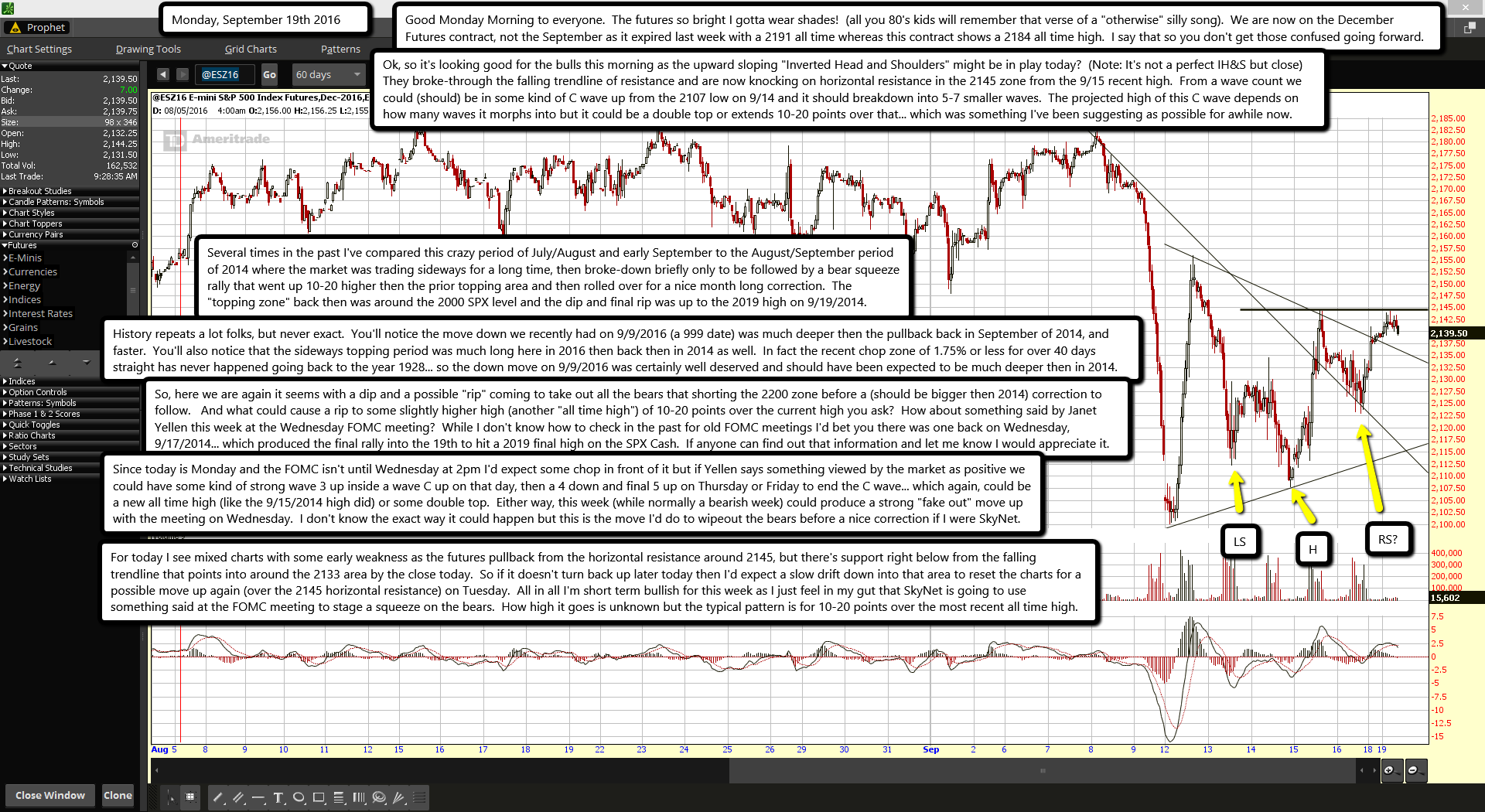
Good Monday Morning to everyone.  The futures so bright I gotta wear shades!  (all you 80's kids will remember that verse of a "otherwise" silly song).  We are now on the December Futures contract, not the September as it expired last week with a 2191 all time whereas this contract shows a 2184 all time high.  I say that so you don't get those confused going forward.

Ok, so it's looking good for the bulls this morning as the upward sloping "Inverted Head and Shoulders" might be in play today?  (Note: It's not a perfect IH&S but close)  They broke-through the falling trendline of resistance and are now knocking on horizontal resistance in the 2145 zone from the 9/15 recent high.  From a wave count we could (should) be in some kind of C wave up from the 2107 low on 9/14 and it should breakdown into 5-7 smaller waves.  The projected high of this C wave depends on how many waves it morphs into but it could be a double top or extends 10-20 points over that... which was something I've been suggesting as possible for awhile now.

Several times in the past I've compared this crazy period of July/August and early September to the August/September period of 2014 where the market was trading sideways for a long time, then broke-down briefly only to be followed by a bear squeeze rally that went up 10-20 higher then the prior topping area and then rolled over for a nice month long correction.  The "topping zone" back then was around the 2000 SPX level and the dip and final rip was up to the 2019 high on 9/19/2014.

History repeats a lot folks, but never exact.  You'll notice the move down we recently had on 9/9/2016 (a 999 date) was much deeper then the pullback back in September of 2014, and faster.  You'll also notice that the sideways topping period was much long here in 2016 then back then in 2014 as well.  In fact the recent chop zone of 1.75% or less for over 40 days straight has never happened going back to the year 1928... so the down move on 9/9/2016 was certainly well deserved and should have been expected to be much deeper then in 2014.

So, here we are again it seems with a dip and a possible "rip" coming to take out all the bears that shorting the 2200 zone before a (should be bigger then 2014) correction to follow.   And what could cause a rip to some slightly higher high (another "all time high") of 10-20 points over the current high you ask?  How about something said by Janet Yellen this week at the Wednesday FOMC meeting?  While I don't know how to check in the past for old FOMC meetings I'd bet you there was one back on Wednesday, 9/17/2014... which produced the final rally into the 19th to hit a 2019 final high on the SPX Cash.  If anyone can find out that information and let me know I would appreciate it.

Since today is Monday and the FOMC isn't until Wednesday at 2pm I'd expect some chop in front of it but if Yellen says something viewed by the market as positive we could have some kind of strong wave 3 up inside a wave C up on that day, then a 4 down and final 5 up on Thursday or Friday to end the C wave... which again, could be a new all time high (like the 9/15/2014 high did) or some double top.  Either way, this week (while normally a bearish week) could produce a strong "fake out" move up with the meeting on Wednesday.  I don't know the exact way it could happen but this is the move I'd do to wipeout the bears before a nice correction if I were SkyNet.

For today I see mixed charts with some early weakness as the futures pullback from the horizontal resistance around 2145, but there's support right below from the falling trendline that points into around the 2133 area by the close today.  So if it doesn't turn back up later today then I'd expect a slow drift down into that area to reset the charts for a possible move up again (over the 2145 horizontal resistance) on Tuesday.  All in all I'm short term bullish for this week as I just feel in my gut that SkyNet is going to use something said at the FOMC meeting to stage a squeeze on the bears.  How high it goes is unknown but the typical pattern is for 10-20 points over the most recent all time high.

ES Morning Update September 16th 2016

0

9bbf22fe-d1e8-4a79-bb0a-f9f7ec6e84ad

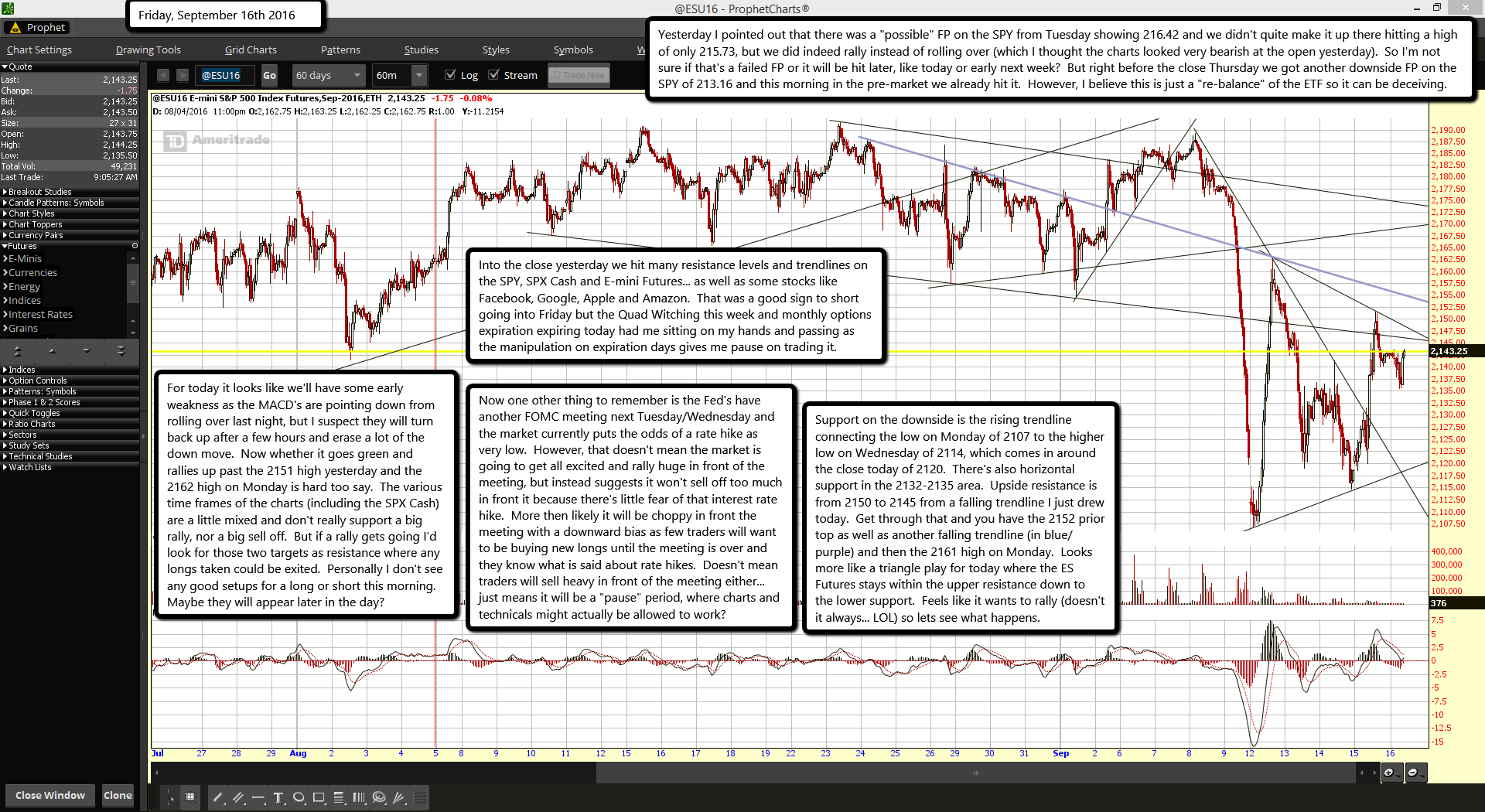
Yesterday I pointed out that there was a "possible" FP on the SPY from Tuesday showing 216.42 and we didn't quite make it up there hitting a high of only 215.73, but we did indeed rally instead of rolling over (which I thought the charts looked very bearish at the open yesterday).  So I'm not sure if that's a failed FP or it will be hit later, like today or early next week?  But right before the close Thursday we got another downside FP on the SPY of 213.16 and this morning in the pre-market we already hit it.  However, I believe this is just a "re-balance" of the ETF so it can be deceiving.

Into the close yesterday we hit many resistance levels and trendlines on the SPY, SPX Cash and E-mini Futures... as well as some stocks like Facebook, Google, Apple and Amazon.  That was a good sign to short going into Friday but the Quad Witching this week and monthly options expiration expiring today had me sitting on my hands and passing as the manipulation on expiration days gives me pause on trading it.

For today it looks like we'll have some early weakness as the MACD's are pointing down from rolling over last night, but I suspect they will turn back up after a few hours and erase a lot of the down move.  Now whether it goes green and rallies up past the 2151 high yesterday and the 2162 high on Monday is hard too say.  The various time frames of the charts (including the SPX Cash) are a little mixed and don't really support a big rally, nor a big sell off.  But if a rally gets going I'd look for those two targets as resistance where any longs taken could be exited.  Personally I don't see any good setups for a long or short this morning.  Maybe they will appear later in the day?

Now one other thing to remember is the Fed's have another FOMC meeting next Tuesday/Wednesday and the market currently puts the odds of a rate hike as very low.  However, that doesn't mean the market is going to get all excited and rally huge in front of the meeting, but instead suggests it won't sell off too much in front it because there's little fear of that interest rate hike.  More then likely it will be choppy in front the meeting with a downward bias as few traders will want to be buying new longs until the meeting is over and they know what is said about rate hikes.  Doesn't mean traders will sell heavy in front of the meeting either... just means it will be a "pause" period, where charts and technicals might actually be allowed to work?

Support on the downside is the rising trendline connecting the low on Monday of 2107 to the higher low on Wednesday of 2114, which comes in around the close today of 2120.  There's also horizontal support in the 2132-2135 area.  Upside resistance is from 2150 to 2145 from a falling trendline I just drew today.  Get through that and you have the 2152 prior top as well as another falling trendline (in blue/purple) and then the 2161 high on Monday.  Looks more like a triangle play for today where the ES Futures stays within the upper resistance down to the lower support.  Feels like it wants to rally (doesn't it always... LOL) so lets see what happens.

ES Morning Update September 15th 2016

0

a60200c0-5048-42fe-9271-f9c59c6cc902

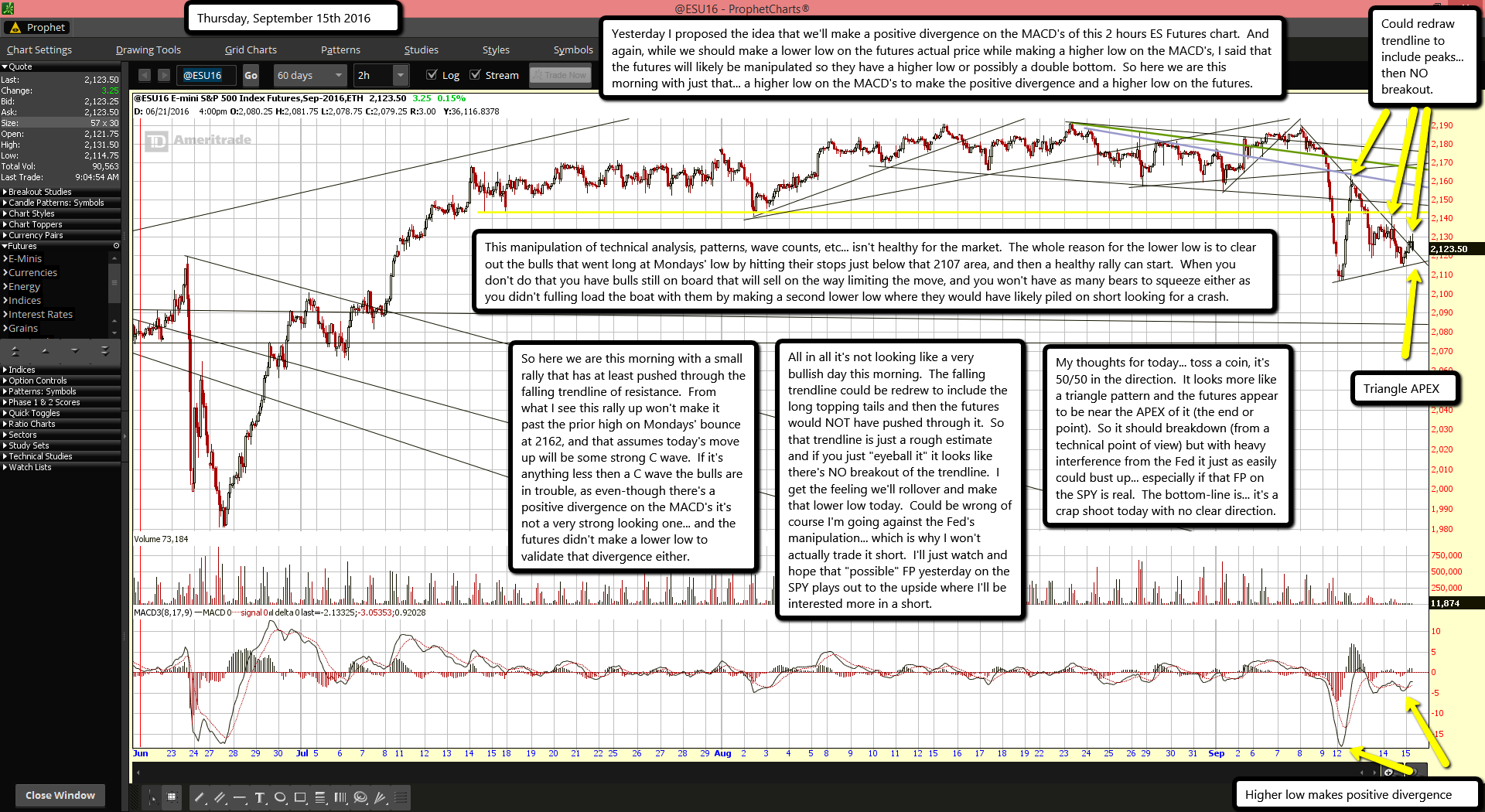
Yesterday I proposed the idea that we'll make a positive divergence on the MACD's of this 2 hours ES Futures chart.  And again, while we should make a lower low on the futures actual price while making a higher low on the MACD's, I said that the futures will likely be manipulated so they have a higher low or possibly a double bottom.  So here we are this morning with just that... a higher low on the MACD's to make the positive divergence and a higher low on the futures.

This manipulation of technical analysis, patterns, wave counts, etc... isn't healthy for the market.  The whole reason for the lower low is to clear out the bulls that went long at Mondays' low by hitting their stops just below that 2107 area, and then a healthy rally can start.  When you don't do that you have bulls still on board that will sell on the way limiting the move, and you won't have as many bears to squeeze either as you didn't fulling load the boat with them by making a second lower low where they would have likely piled on short looking for a crash.

So here we are this morning with a small rally that has at least pushed through the falling trendline of resistance.  From what I see this rally up won't make it past the prior high on Mondays' bounce at 2162, and that assumes today's move up will be some strong C wave.  If it's anything less then a C wave the bulls are in trouble, as even-though there's a positive divergence on the MACD's it's not a very strong looking one... and the futures didn't make a lower low to validate that divergence either.

All in all it's not looking like a very bullish day this morning.  The falling trendline could be redrew to include the long topping tails and then the futures would NOT have pushed through it.  So that trendline is just a rough estimate and if you just "eyeball it" it looks like there's NO breakout of the trendline.  I get the feeling we'll rollover and make that lower low today.  Could be wrong of course I'm going against the Fed's manipulation... which is why I won't actually trade it short.  I'll just watch and hope that "possible" FP yesterday on the SPY plays out to the upside where I'll be interested more in a short.

My thoughts for today... toss a coin, it's 50/50 in the direction.  It looks more like a triangle pattern and the futures appear to be near the APEX of it (the end or point).  So it should breakdown (from a technical point of view) but with heavy interference from the Fed it just as easily could bust up... especially if that FP on the SPY is real.  The bottom-line is... it's a crap shoot today with no clear direction.

Dodd-Frank reversal bill has something for everyone, even progressive reformers

0

The House Financial Service Committee met Tuesday to debate Jeb Hensarling’s Financial Creating Hope and Opportunity for Investors, Consumers and Entrepreneurs Act, a bill unlikely to become law, but one that gives almost everyone, including reformers on both sides of the aisle, something to think about after the November election.

Although not a complete rewrite of Dodd-Frank, the legislation advocates for significant revisions or outright reversals of many of the financial crisis reform law’s most contentious provisions.

K& L Gates partner Dan Crowley says the so-called Financial Choice Act is, instead, a “political exercise” that sets the stage for potential financial reform legislation before the election and for discussions that will occur in the next Congress. “If Donald Trump is elected president, those discussions will happen pretty fast.”

In June, K&L Gates wrote clients that the proposal is not expected to advance as stand-alone legislation this year, but “it is likely to inform Dodd-Frank Act reform efforts going forward.”

Crowley said the most important reform contained in Dodd-Frank was Title 7, the section that creates a framework for the regulation of swap markets and limits counterparty risk by imposing centralized clearing on swaps. “This bill attempts to revise or reverse almost everything but Dodd-Frank’s swaps regulation.”

The bill will please behemoth banks by repealing the Volcker Rule, which restricts trading activities at banks. Plans to substitute simple leverage ratios for the Basel risk-weighted assets method for determining bank capital requirements has strong bipartisan political support from everyone but the banks.

“The banking lobby,” the Cato Institute’s Kevin Dowd wrote in May, “hate the leverage ratio because it is less easy to game” than Basel-based capital rules.

The House committee says that the Basel regime is “a highly politicized, deeply unreliable risk-based approach to measuring capital adequacy” with an almost mind-numbing level of complexity” that has resulted in the largest banks becoming “almost entirely opaque to their investors, creditors, and regulators.”

Leverage ratios measure funds available to absorb losses against the total balance sheet and some off-balance sheet assets. An election by a bank to take the “off-ramp” from the Dodd-Frank risk-based regulatory requirements would be available under the bill to financial institutions that maintain a leverage ratio of at least 10% and have a composite CAMELS rating, the regulatory measure based on inspections, of 1 or 2.

Dowd’s Cato colleague Mark Calabria, a former staffer to Sen Richard Shelby, a Republican of Alabama and ranking member of the Committee on Banking, Housing, and Urban Affairs, told MarketWatch in an interview that support for higher equity capital for banks has gained momentum. “In practice the risk-weighted Basel approach has not gone well,” said Calabria. “If you got rid of all the safety nets the biggest banks enjoy, the market would demand closer to 20% equity capital.”

The opportunity to use leverage ratios to measure capital adequacy in exchange for higher equity capital plays into the hands of reformers whose politics cross party lines, such as Stanford University’s Anat Admati. Admati has been pushing this approach since a 2010 letter to the Financial Times signed by her and 19 others that suggested a minimum required leverage ratio of at least 15% — at least five times greater than what’s required under Basel III.

Starting January 1, 2018, the Federal Reserve will impose a 5% minimum leverage ratio requirement on the 8 U.S. globally systemically important banks, or G-SIBs, and a 6% minimum leverage ratio on their federally insured subsidiaries.

The bill also eliminates the authority of the Financial Stability Oversight Council to designate risky non-banks and “financial market utilities” such as clearinghouses as “systemically important financial institutions”. The FSOC was created by the Dodd-Frank Act to review the systemic risk to the capital markets presented by large, global financial institutions. This provision is also popular with the financial services community and may have staying power after the November election.

MetLife Inc. MET, +0.09% recently beat federal regulators in court who sought to classify the insurer as too “systemically important” to fail. The designation would have subjected the organization to closer scrutiny by regulators and also give it access to the Federal Reserve discount window in case of financial stress. The bill retroactively repeals any previous SiFi designations of non-bank financial companies like MetLife. The Wall Street Journal reported that MetLife’s two main rivals, Prudential Financial Inc. PRU, +0.46% and American International Group Inc. AIG, +0.36% , which have also been designated systemically important, are expected to consider challenging their designation.

The bill also repeals the FSOC’s authority to break up a large financial institution if the Federal Reserve finds that the firm “poses a grave threat to the financial stability of the United States.” The Treasury’s Office of Financial Research, created by Dodd-Frank to support the FSOC, would also disappear.

Hensarling wants to restructure the Consumer Financial Protection Bureau and other agencies as bipartisan commissions and subject them to congressional appropriations. The CFPB would also be required to have a cost-benefit analysis performed by the Office of Economic Analysis to support all new rules. Although the CFPB has been the target of unrelenting criticism from the Republicans in the House and Senate, its recent largest ever fine against Wells Fargo & Co. for creating fraudulent bank and credit card accounts could generate the support it needs to withstand this latest challenge.

The bill also steps on recent rule-making by the Department of Labor regarding fiduciary standards of conduct for brokers-dealers who advise retirees. The Clinton Administration is expected to continue to strongly support this rule, if elected, and the Securities and Exchange Commission is readying its version of the rules that go beyond protection for retirees.

Hensarling’s bill also shuts down what the committee’s summary calls “two of the most misguided” Dodd-Frank provisions — regulations regarding limits of bank incentive-based compensation and public company CEO-to-worker pay ratio disclosures. Although the SEC has proposed final rules in both cases, they have yet to be approved and are vulnerable, especially if still pending after the election.

The bill’s most controversial provision is a reversal of the Durbin Amendment to Dodd-Frank that imposed a cap on “interchange fees”, the fees charged by a customer’s bank to a merchant’s bank when the customer uses a debit card. The banking lobby is strongly for going back to unrestricted fees, but consumer groups and the industry group representing convenience and fuel retailers says repealing debit fee reform “would allow the credit card Goliaths to resume price-fixing of debit-card fees and block smaller card networks from competing with them for business.

The Financial Choice Act also reaches back to the Sarbanes-Oxley Act of 2002 when it repeals provisions of that law that deny Congress access to information and keep disciplinary proceedings against auditors secret. That secrecy was built into the rules governing the Public Company Accounting Oversight Board, the audit regulator established by the law after the Enron scandal. Attempts to repeal these secrecy provisions of the Sarbanes-Oxley Act regarding auditors will continue to be proposed by those pushing for accountability and transparency, despite having been introduced jointly in 2011, 2013, and again in 2015 by Democrats and Republicans and subsequently dying after lobbying pressure from the accounting industry giants.

New CFTC proposal could jeopardize the IP lifeblood of many businesses

0

Countless companies around the world have developed and perfected sophisticated and multifaceted algorithms which are the intellectual property (IP) lifeblood of their business. Imagination and innovation have enabled thousands of these companies to conquer the free market and be prosperous. In the US, however, that extremely valuable commodity—intellectual property—could be jeopardized if a government agency (ironically, the Commodity Futures Trading Commission—CFTC) succeeds in doing what they propose.

Just think about how our world has changed with technology making our lives more efficient and effective due to sophisticated technological IP used every single day. Things we take for granted like a simple Google search use these proprietary algorithms—the underlying heart which is based upon something called “source code”. It is that source code (developed, many times, over years and costing millions of dollars) which makes things like weather forecasting and traffic predictions possible. It makes on-line shopping more convenient and expedient, and it provides health and safety protection to our citizens. Going into the future, source code will be utilized in digital currencies and block chain applications, drones, self-driving cars and many other facets of contemporary life.

Source code is also used in financial markets, which is where this little commodity agency that not many people know, comes into play. The CFTC has proposed that proprietary source code (even if protected by intellectual property and trade secret rights) be given to the government upon request as part of the regular books and records available for inspection. Source code is not only used by traders, banks and others to implement their many market methodologies, but by trading venues like the Chicago Mercantile Exchange (CME) and the New York Stock Exchange (NYSE) which provide the intensely intricate and important backbone fundamentals of our modern financial system.

The major problem with the government getting a hold of this highly-sensitive, proprietary source code IP is that it could be stolen or otherwise compromised in some fashion. Such a risky policy prescription could place at precarious peril the essence and basic existence of a company.

Why should companies trust government with such sensitive source code IP data? They should not. We have witnessed many cyber-attacks, hacks and the outright stealing of sensitive information from our government.

Even after repeated warnings of persistent system vulnerabilities and/or failings, last year the US Office of Personnel Management (OPM) was hacked and the criminals accessed 21.5 million records. I am, unfortunately, one of them. And, it wasn’t just simple DOB and Social Security data that was accessed. Those in highly-sensitive and national security-related jobs (like the one I had) file a Standard Form (SF)-86. The hackers had access to the SF-86s which include deets about financial holdings, family members and friends. No matter, the government offered a free credit score checking service (how nice!).

The OPM hack wasn’t the only security breach, of course. In fact, even the very Agency—the CFTC—which seeks to have access to source code was hacked in 2012. I was lucky, yet again. As a CFTC Commissioner at the time, criminals had access to my personal and sensitive private deets. At the time, we believed the data breach was limited to the roughly 700 CFTC employees, but we all knew that it would not have been a far fetch for the hackers to gain data and details on traders or exchanges. That is exactly why the CFTC’s current source code proposal is fundamentally fatally flawed.

Image result for Federal Deposit Insurance Corporation

Oh, and by the way, in recent months the Federal Reserve, Federal Deposit Insurance Corporation and even the Internal Revenue Service were all hacked. Can government keep data safe and secure? Sure. Not!

The adoption of the CFTC regulation would set a horrendous precedent for all company IP. After 30 years in government, one thing I know for sure is that if one department or agency institutes a policy (like having access to source code IP)…watch the heck out! Another, and another and another…will soon follow.

If companies want to ensure their source code IP is protected, they may take notice of this seemingly small, innocuous proposal. If there is an opportunity (which there might be) they may seek to have their voices heard.

ES Morning Update September 14th 2016

0

a6ecf79f-27c2-4c2e-8805-589086b5cc8f

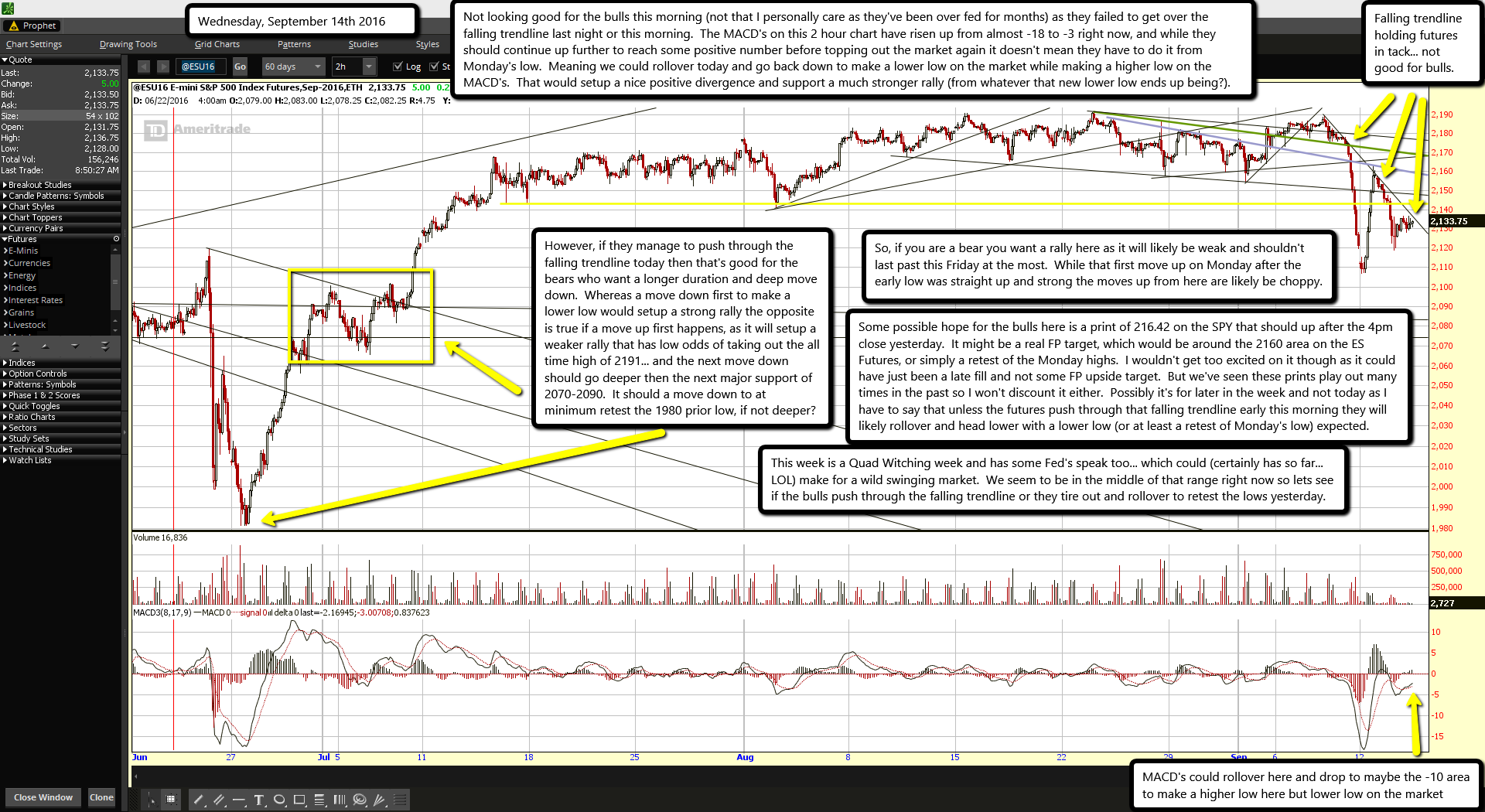
Falling trendline holding futures  in tack... not good for bulls.

MACD's could rollover here and drop to maybe the -10 area to make a higher low here but lower low on the market

Not looking good for the bulls this morning (not that I personally care as they've been over fed for months) as they failed to get over the falling trendline last night or this morning.  The MACD's on this 2 hour chart have risen up from almost -18 to -3 right now, and while they should continue up further to reach some positive number before topping out the market again it doesn't mean they have to do it from Monday's low.  Meaning we could rollover today and go back down to make a lower low on the market while making a higher low on the MACD's.  That would setup a nice positive divergence and support a much stronger rally (from whatever that new lower low ends up being?).

However, if they manage to push through the falling trendline today then that's good for the bears who want a longer duration and deep move down.  Whereas a move down first to make a lower low would setup a strong rally the opposite is true if a move up first happens, as it will setup a weaker rally that has low odds of taking out the all time high of 2191... and the next move down should go deeper then the next major support of 2070-2090.  It should a move down to at minimum retest the 1980 prior low, if not deeper?

So, if you are a bear you want a rally here as it will likely be weak and shouldn't last past this Friday at the most.  While that first move up on Monday after the early low was straight up and strong the moves up from here are likely be choppy.

Some possible hope for the bulls here is a print of 216.42 on the SPY that should up after the 4pm close yesterday.  It might be a real FP target, which would be around the 2160 area on the ES Futures, or simply a retest of the Monday highs.  I wouldn't get too excited on it though as it could have just been a late fill and not some FP upside target.  But we've seen these prints play out many times in the past so I won't discount it either.  Possibly it's for later in the week and not today as I have to say that unless the futures push through that falling trendline early this morning they will likely rollover and head lower with a lower low (or at least a retest of Monday's low) expected.

This week is a Quad Witching week and has some Fed's speak too... which could (certainly has so far... LOL) make for a wild swinging market.  We seem to be in the middle of that range right now so lets see if the bulls push through the falling trendline or they tire out and rollover to retest the lows yesterday.

Senators urge ‘immediate’ hearings on Wells Fargo sales practices

0

Wells Fargo is taking more heat over revelations its employees opened millions of fraudulent customer accounts to meet sales goals, with a group of U.S. senators calling Monday for “immediate” hearings to investigate the matter.

ES Morning Update September 13th 2016

0

d3918ba4-dc6b-41d5-994d-11fa3fce9674

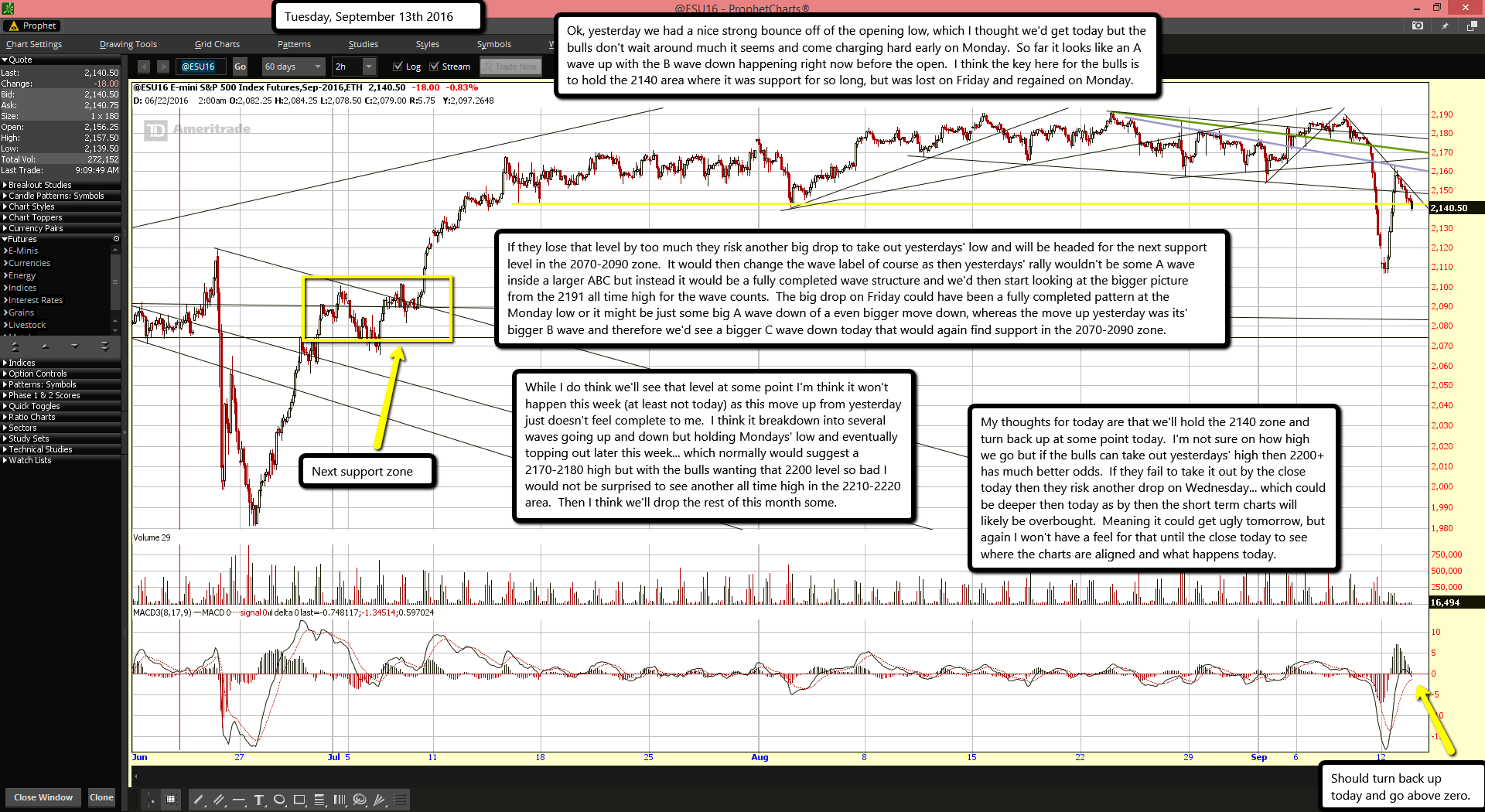
Ok, yesterday we had a nice strong bounce off of the opening low, which I thought we'd get today but the bulls don't wait around much it seems and come charging hard early on Monday.  So far it looks like an A wave up with the B wave down happening right now before the open.  I think the key here for the bulls is to hold the 2140 area where it was support for so long, but was lost on Friday and regained on Monday.

If they lose that level by too much they risk another big drop to take out yesterdays' low and will be headed for the next support level in the 2070-2090 zone.  It would then change the wave label of course as then yesterdays' rally wouldn't be some A wave inside a larger ABC but instead it would be a fully completed wave structure and we'd then start looking at the bigger picture from the 2191 all time high for the wave counts.  The big drop on Friday could have been a fully completed pattern at the Monday low or it might be just some big A wave down of a even bigger move down, whereas the move up yesterday was its' bigger B wave and therefore we'd see a bigger C wave down today that would again find support in the 2070-2090 zone.

While I do think we'll see that level at some point I'm think it won't happen this week (at least not today) as this move up from yesterday just doesn't feel complete to me.  I think it breakdown into several waves going up and down but holding Mondays' low and eventually topping out later this week... which normally would suggest a 2170-2180 high but with the bulls wanting that 2200 level so bad I would not be surprised to see another all time high in the 2210-2220 area.  Then I think we'll drop the rest of this month some.

My thoughts for today are that we'll hold the 2140 zone and turn back up at some point today.  I'm not sure on how high we go but if the bulls can take out yesterdays' high then 2200+ has much better odds.  If they fail to take it out by the close today then they risk another drop on Wednesday... which could be deeper then today as by then the short term charts will likely be overbought.  Meaning it could get ugly tomorrow, but again I won't have a feel for that until the close today to see where the charts are aligned and what happens today.

Wells Fargo Exec Who Headed Phony Accounts Unit Collected $125 Million

0

Months ago, CEO John Stumpf praised the executive in hot water as “a standard-bearer” for the bank.

Wells Fargo & Co’s WFC -0.37% “sandbagger”-in-chief is leaving the giant bank with an enormous pay day—$124.6 million.

In fact, despite beefed-up “clawback” provisions instituted by the bank shortly after the financial crisis, and the recent revelations of massive misconduct, it does not appear that Wells Fargo is requiring Carrie Tolstedt, the Wells Fargo executive who was in charge of the unit where employees opened more than 2 million largely unauthorized customer accounts—a seemingly routine practice that employees internally referred to as “sandbagging”—to give back any of her nine-figure pay.

On Thursday, Wells Fargo WFC -0.37% agreed to pay $185 million, including the largest penalty ever imposed by the Consumer Financial Protection Bureau, to settle claims that that it defrauded its customers. The bank’s shareholders will ultimately have to swallow the cost of that settlement. The bank also said it had fired 5,300 employees over five years related to the bad behavior.

Tolstedt, however, is walking away from Wells Fargo with a very full bank account—and praise. In the July announcement of her exit, which made no mention of the soon-to-be-settled case, Wells Fargo’s CEO John Stumpf said Tolstedt had been one of the bank’s most important leaders and “a standard-bearer of our culture” and “a champion for our customers.”

On Thursday, Richard Cordray, the head of the CFPB, had a different take, “It is quite clear that [the actions of Tolstedt’s unit] are unfair and abusive practices under federal law,” said Cordray. “They are a violation of trust and an abuse of trust.”

A spokesperson for Wells Fargo said that the timing of Tolstedt’s exit was the result of a “personal decision to retire after 27 years” with the bank. The spokesperson declined to comment on whether the bank was considering clawing back Tolstedt’s back pay.

In a statement following the settlement, Wells Fargo said, “Wells Fargo reached these agreements consistent with our commitment to customers and in the interest of putting this matter behind us. Wells Fargo is committed to putting our customers’ interests first 100% of the time, and we regret and take responsibility for any instances where customers may have received a product that they did not request.”

Shortly after the financial crisis, big banks in the nation, including Wells Fargo, promised that their top bankers would not be able to keep large paydays if it was found that those rewards were gained through harmful conduct. It was supposed to be the stick to the carrot of Wall Street bonuses. But the latest example of fraud at Wells Fargo shows that the big banks are unwilling to wield those sticks, especially when it comes to their top executives.

It is not clear how closely, or at all, Tolstedt was responsible for or even aware of the widespread abusive tactics at the bank. Neither the CFPB nor the Los Angeles City Attorney’s office, which sued the bank, named Tolstedt directly. Wells Fargo said the 5,300 firings happened over five years, and included managers as well as employees. It’s likely that Tolstedt managed as least part of that purge. But in bringing the charges, an official from the CFPB said Wells Fargo was aware of the behavior for longer than it should have, without putting a stop to it.

What’s more, Tolstedt ran the community banking division of the bank, which included its retail banking and credit card divisions, during the entire period in which the customer abuse was alleged, which goes back to 2011. The CFPB said about three quarters of the unauthorized accounts opened by employees of Wells Fargo were bank deposit accounts. Another 565,000 were unauthorized credit card applications. Tolstedt took over the division in 2008, after Wells Fargo merged with Wachovia during the financial crisis.

Tolstedt was a regular on Fortune‘s Most Powerful Women list. She was replaced on this year’s list by Mary Mack, who is taking over her job at the bank.

Tolstedt was regularly praised for her unit’s ability to get customers to open numerous accounts. For a number of years, Wells Fargo’s proxy statement, which details executive pay, cited high “cross-selling ratios” as a reason that Tolstedt had earned her roughly $9 million in annual pay. For instance, in Wells Fargo’s 2015 proxy statement, the company said that its compensation committee had authorized Tolstedt’s $7.3 million stock and cash bonus that year, because “under her leadership, Community Banking achieved a number of strategic objectives, including continued strong cross-sell ratios, record deposit levels, and continued success of mobile banking initiatives.”

Later that year, the L.A. City Attorney’s office sued the bank because of its sales tactics, saying that many of the abusive practices came from intense pressure on Wells Fargo’s employees to get customers to open up numerous accounts. A separate class action of former employees alleges they were fired for not meeting cross-selling goals, or going along with the aggressive sales tactics.

Earlier this year when Wells Fargo released its annual proxy statement, it once again said that in order to justify her multimillion dollar bonus, Tolstedt’s division had “achieved a number of strategic objectives.” But this time, for the first time in years, cross-selling wasn’t listed as one of them.

When Tolstedt leaves Wells Fargo later this year, on top of the $1.7 million in salary she has received over the past few years, she will be walking away with $124.6 million in stock, options, and restricted Wells Fargo shares. Some of that hasn’t vested yet. But Tolstedt gets to keep all of it because she technically retired. Had she been fired, Tolstedt would have had to forfeit at least $45 million of that exit payday, and possibly more.

Wells Fargo’s proxy statement says that the bank has “strong recoupment and clawback policies,” and that the bank will revoke bonus pay if it is found that the conduct of an executive resulted in representational harm to the bank, or that the executive was not able to “identify or manage” risks in his or her division. But there is no sign that Wells Fargo is going to ask Tolstedt to return even a sliver of her stock jackpot.

“This appears to be exactly the situation that clawback provisions were created for,” says Dennis Kelleher, president of Better Markets, a group that lobbies for more regulation of the big banks. “If they don’t apply here, when will they apply.”

On Wall Street, the carrots are still widely handed out. The sticks, however, remain out of sight.


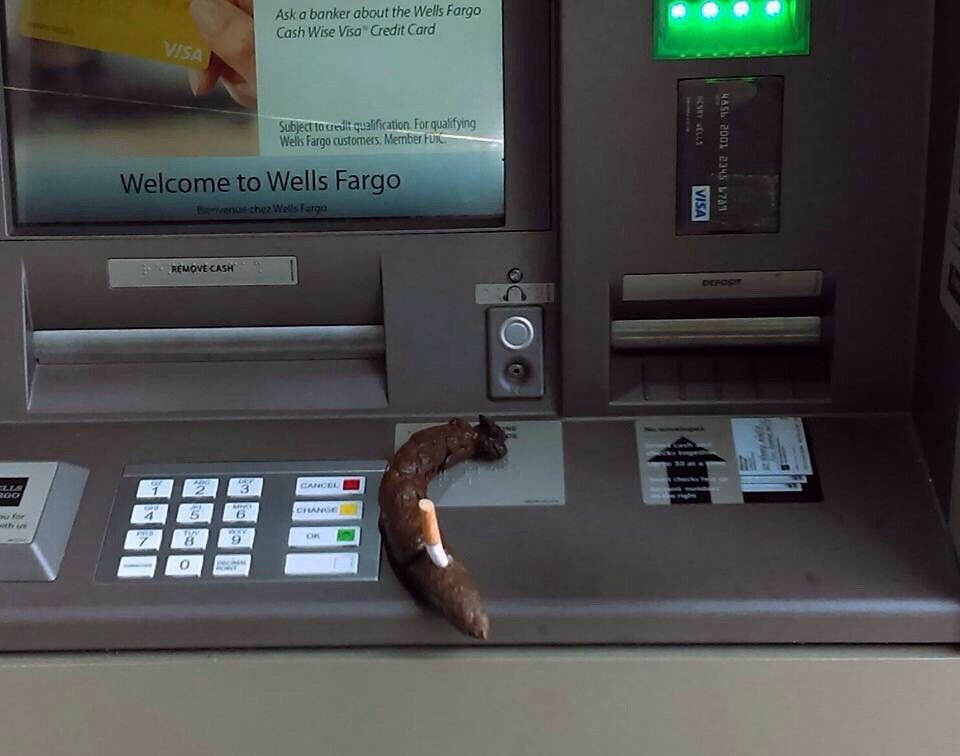
And how does the public feel about this you ask?  I'd say this photo says it all..

wells-fargo-shit

Red

ES Morning Update September 12th 2016

0

cfb3d35d-26b9-46bd-a8f0-475b5bbaa1dd

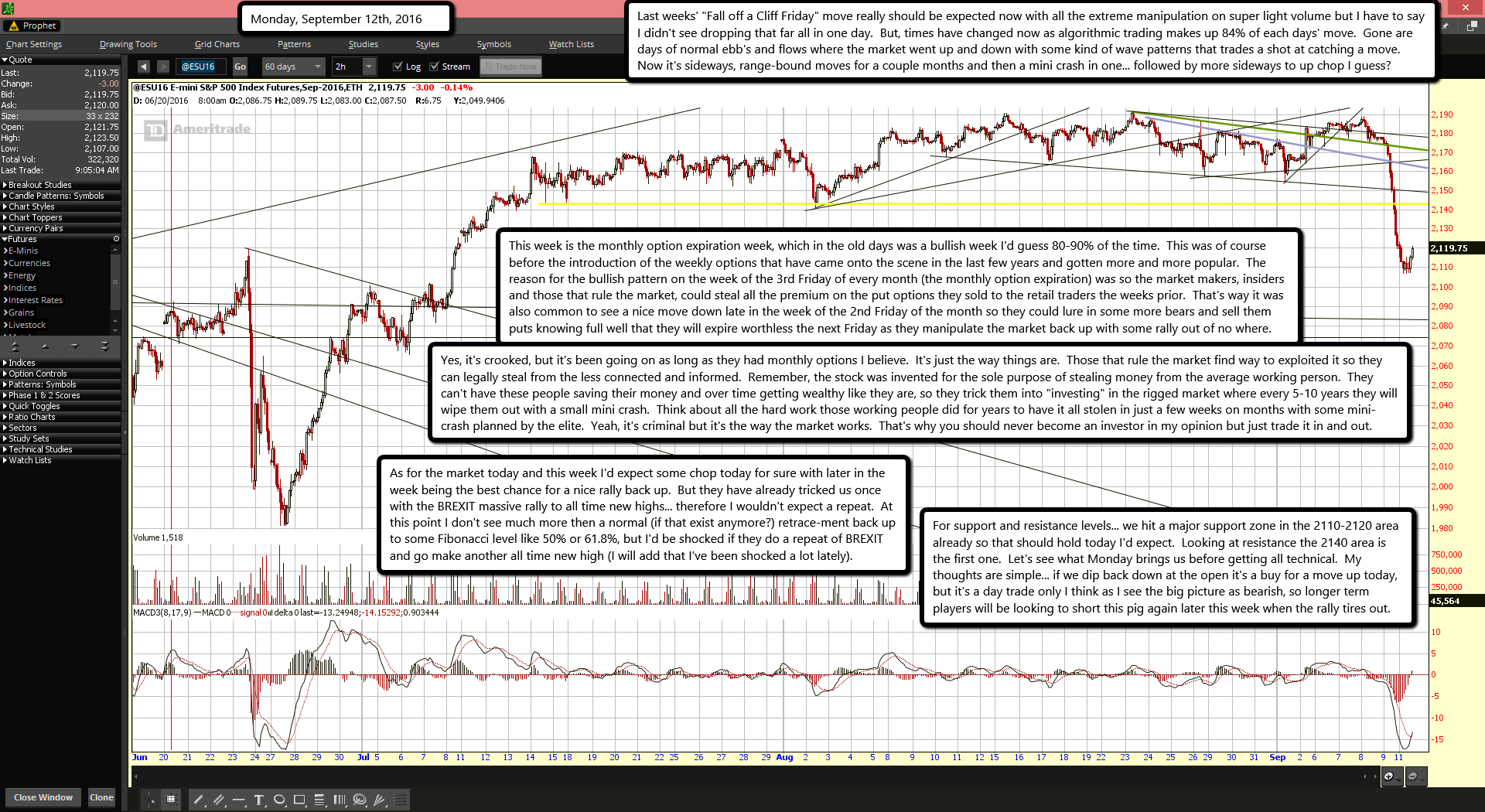
Last weeks' "Fall off a Cliff Friday" move really should be expected now with all the extreme manipulation on super light volume but I have to say I didn't see dropping that far all in one day.  But, times have changed now as algorithmic trading makes up 84% of each days' move.  Gone are days of normal ebb's and flows where the market went up and down with some kind of wave patterns that trades a shot at catching a move.  Now it's sideways, range-bound moves for a couple months and then a mini crash in one... followed by more sideways to up chop I guess?

This week is the monthly option expiration week, which in the old days was a bullish week I'd guess 80-90% of the time.  This was of course before the introduction of the weekly options that have came onto the scene in the last few years and gotten more and more popular.  The reason for the bullish pattern on the week of the 3rd Friday of every month (the monthly option expiration) was so the market makers, insiders and those that rule the market, could steal all the premium on the put options they sold to the retail traders the weeks prior.  That's way it was also common to see a nice move down late in the week of the 2nd Friday of the month so they could lure in some more bears and sell them puts knowing full well that they will expire worthless the next Friday as they manipulate the market back up with some rally out of no where.

Yes, it's crooked, but it's been going on as long as they had monthly options I believe.  It's just the way things are.  Those that rule the market find way to exploited it so they can legally steal from the less connected and informed.  Remember, the stock was invented for the sole purpose of stealing money from the average working person.  They can't have these people saving their money and over time getting wealthy like they are, so they trick them into "investing" in the rigged market where every 5-10 years they will wipe them out with a small mini crash.  Think about all the hard work those working people did for years to have it all stolen in just a few weeks on months with some mini-crash planned by the elite.  Yeah, it's criminal but it's the way the market works.  That's why you should never become an investor in my opinion but just trade it in and out.

As for the market today and this week I'd expect some chop today for sure with later in the week being the best chance for a nice rally back up.  But they have already tricked us once with the BREXIT massive rally to all time new highs... therefore I wouldn't expect a repeat.  At this point I don't see much more then a normal (if that exist anymore?) retrace-ment back up to some Fibonacci level like 50% or 61.8%, but I'd be shocked if they do a repeat of BREXIT and go make another all time new high (I will add that I've been shocked a lot lately).

For support and resistance levels... we hit a major support zone in the 2110-2120 area already so that should hold today I'd expect.  Looking at resistance the 2140 area is the first one.  Let's see what Monday brings us before getting all technical.  My thoughts are simple... if we dip back down at the open it's a buy for a move up today, but it's a day trade only I think as I see the big picture as bearish, so longer term players will be looking to short this pig again later this week when the rally tires out.

5,300 Wells Fargo employees fired over 2 million phony accounts

0

Everyone hates paying bank fees. But imagine paying fees on a ghost account you didn't even sign up for.

That's exactly what happened to Wells Fargo customers nationwide.

On Thursday, federal regulators said Wells Fargo (WFC) employees secretly created millions of unauthorized bank and credit card accounts -- without their customers knowing it -- since 2011.

The phony accounts earned the bank unwarranted fees and allowed Wells Fargo employees to boost their sales figures and make more money.

"Wells Fargo employees secretly opened unauthorized accounts to hit sales targets and receive bonuses," Richard Cordray, director of the Consumer Financial Protection Bureau, said in a statement.

Wells Fargo confirmed to CNNMoney that it had fired 5,300 employees over the last few years related to the shady behavior. Employees went so far as to create phony PIN numbers and fake email addresses to enroll customers in online banking services, the CFPB said.

The scope of the scandal is shocking. An analysis conducted by a consulting firm hired by Wells Fargo concluded that bank employees opened over 1.5 million deposit accounts that may not have been authorized.

The way it worked was that employees moved funds from customers' existing accounts into newly-created ones without their knowledge or consent, regulators say. The CFPB described this practice as "widespread." Customers were being charged for insufficient funds or overdraft fees -- because there wasn't enough money in their original accounts.

Additionally, Wells Fargo employees also submitted applications for 565,443 credit card accounts without their customers' knowledge or consent. Roughly 14,000 of those accounts incurred over $400,000 in fees, including annual fees, interest charges and overdraft-protection fees.

The CFPB said Wells Fargo will pay "full restitutions to all victims."

Wells Fargo is being slapped with the largest penalty since the CFPB was founded in 2011. The bank agreed to pay $185 million in fines, along with $5 million to refund customers.

"We regret and take responsibility for any instances where customers may have received a product that they did not request," Wells Fargo said in a statement.

Wells Fargo has the highest market valuation among any bank in America, worth just north of $250 billion. Berkshire Hathaway (BRKA), the investment firm run legendary investor Warren Buffett, is the company's biggest shareholder.

Of the total fines, $100 million will go toward the CFPB's Civil Penalty Fund, $35 million will go to the Office of the Comptroller of the Currency, and another $50 million will be paid to the City and County of Los Angeles.

"One wonders whether (the CFPB) penalty of $100 million is enough," said David Vladeck, a Georgetown University law professor and former director of the Federal Trade Commission's Bureau of Consumer Protection. "It sounds like a big number, but for a bank the size of Wells Fargo, it isn't really."

Wells Fargo confirmed to CNNMoney that the 5,300 firings took place over several years. The bank listed 265,000 employees as of the end of 2015.

"At Wells Fargo, when we make mistakes, we are open about it, we take responsibility, and we take action," the bank said in a memo to employees on Thursday.

wells-fargo

The CFPB declined to comment on when the investigation began and what sparked it, citing agency policy. "We don't comment on how we uncover these matters," a spokesman said.

As part of the settlement, Wells Fargo needs to make changes to its sales practices and internal oversight.

Customers are fuming. Brian Kennedy, a Maryland retiree, told CNNMoney he detected an unauthorized Wells Fargo account had been created in his name about a year ago. He asked Wells Fargo about it and the bank closed it, he said.

"I didn't sign up for any bloody checking account," Kennedy, who is 57 years old, told CNNMoney. "They lost me as a banking customer and I have warned family and friends."

"Consumers must be able to trust their banks," said Mike Feuer, the Los Angeles City Attorney who joined the settlement.

Feuer's office sued Wells Fargo in May 2015 over allegations of unauthorized accounts. After filing the suit, his office received more than 1,000 calls and emails from customers as well as current and former Wells Fargo employees about the allegations.

Wells Fargo declined to say when it hired a consulting firm to investigate the allegations. However, a person familiar with the matter told CNNMoney the bank launched the review after the L.A. lawsuit was filed.

Even though the Wells Fargo scandal took place nationally, the settlement with L.A. requires the bank to specifically alert all its California customers to review their accounts and shut down ones they don't recognize or want.

"How does a bank that is supposed to have robust internal controls permit the creation of over a half-million dummy accounts?" asked Vladeck. "If I were a Wells Fargo customer, and fortunately I am not, I'd think seriously about finding a new bank."

The market is doing something it’s never done before

0

The S&P 500 just set a mild milestone.

Over the 40 days through Wednesday, the S&P 500's highest and lowest closes have been just 1.75 percent apart. It's the first time that has ever happened in the history of S&P data, which goes back to 1928, according to Paul Hickey, co-founder of Bespoke Investment Group.

"It's been one of the deadest summers ever, and that's what the numbers are showing," Hickey said Thursday on CNBC's "Trading Nation."

The summer didn't start out dull, what will the United Kingdom's shocking vote in June to leave the European Union. This led to a profound market dip, followed by a comeback that was just as profound, before a more recent period of intense quiescence began.

"Since early summer, we've seen three different extremes," Hickey noted.

While some have seen the market's quiet as a source of concern, history appears to show something different.

"A lack of volatility in the market is usually accompanied by positive returns," he said. "One of the periods that was closest to this narrow [in terms of the market range] was in the mid-1960s; the market did very well in the '60s, and that was a good period of calm."

Of course, since stocks tend to drop faster than they rise, this may not properly state the causation. It may simply be that positively trending markets tend to be quiet ones.

Either way, Hickey warns that "eventually that period of calm will end, and it will be followed by a short-term sell-off than a spike higher," simply because that is what has always happened in the past.

"But it is what it is, and it's nice to enjoy it while it lasts."

ES Morning Update September 9th 2016

0

94f500fb-278b-43a0-a63c-47325cdbbe63

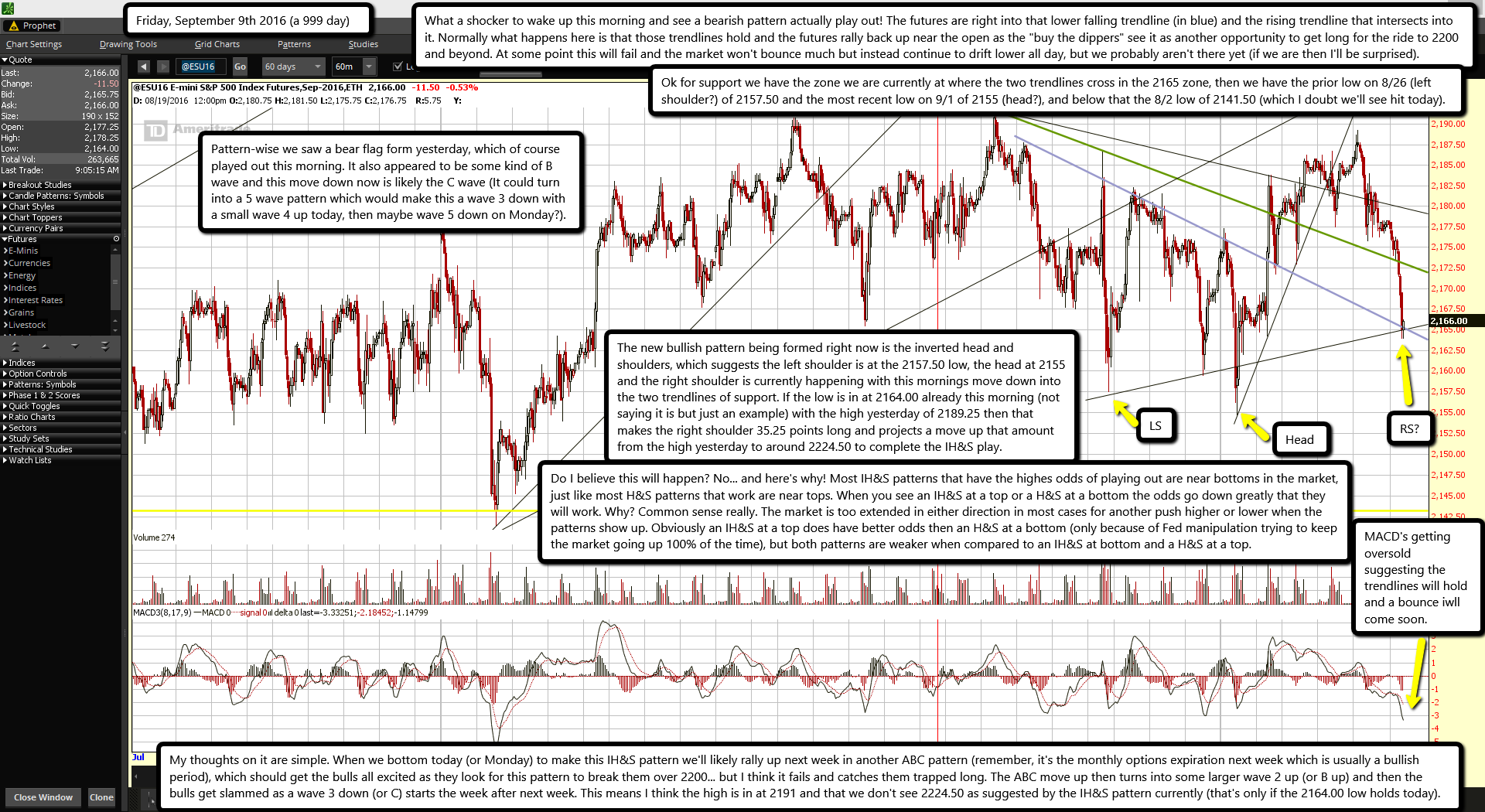
What a shocker to wake up this morning and see a bearish pattern actually play out! The futures are right into that lower falling trendline (in blue) and the rising trendline that intersects into it. Normally what happens here is that those trendlines hold and the futures rally back up near the open as the "buy the dippers" see it as another opportunity to get long for the ride to 2200 and beyond. At some point this will fail and the market won't bounce much but instead continue to drift lower all day, but we probably aren't there yet (if we are then I'll be surprised).

Ok for support we have the zone we are currently at where the two trendlines cross in the 2165 zone, then we have the prior low on 8/26 (left shoulder?) of 2157.50 and the most recent low on 9/1 of 2155 (head?), and below that the 8/2 low of 2141.50 (which I doubt we'll see hit today).

Pattern-wise we saw a bear flag form yesterday, which of course played out this morning. It also appeared to be some kind of B wave and this move down now is likely the C wave (It could turn into a 5 wave pattern which would make this a wave 3 down with a small wave 4 up today, then maybe wave 5 down on Monday?).

The new bullish pattern being formed right now is the inverted head and shoulders, which suggests the left shoulder is at the 2157.50 low, the head at 2155 and the right shoulder is currently happening with this mornings move down into the two trendlines of support. If the low is in at 2164.00 already this morning (not saying it is but just an example) with the high yesterday of 2189.25 then that makes the right shoulder 35.25 points long and projects a move up that amount from the high yesterday to around 2224.50 to complete the IH&S play.

Do I believe this will happen? No... and here's why! Most IH&S patterns that have the highes odds of playing out are near bottoms in the market, just like most H&S patterns that work are near tops. When you see an IH&S at a top or a H&S at a bottom the odds go down greatly that they will work. Why? Common sense really. The market is too extended in either direction in most cases for another push higher or lower when the patterns show up. Obviously an IH&S at a top does have better odds then an H&S at a bottom (only because of Fed manipulation trying to keep the market going up 100% of the time), but both patterns are weaker when compared to an IH&S at bottom and a H&S at a top.

My thoughts on it are simple. When we bottom today (or Monday) to make this IH&S pattern we'll likely rally up next week in another ABC pattern (remember, it's the monthly options expiration next week which is usually a bullish period), which should get the bulls all excited as they look for this pattern to break them over 2200... but I think it fails and catches them trapped long. The ABC move up then turns into some larger wave 2 up (or B up) and then the bulls get slammed as a wave 3 down (or C) starts the week after next week. This means I think the high is in at 2191 and that we don't see 2224.50 as suggested by the IH&S pattern currently (that's only if the 2164.00 low holds today).

San Antonio Mattress Store Unleashes Fury Over Its 9/11’Twin Tower Sale’

0

SAN ANTONIO, TX -- Perhaps more than any other tragedy that has befallen the U.S., as it relates to 9/11 it will always be too soon -- too soon to make a joke, mock or exploit the tragedy for commercial gain.

San Antonio Mattress Store Unleashes Fury Over Its 9/11'Twin Tower Sale' [VIDEO]

Yet in Texas, one retailers didn't get the memo, shilling mattresses while depicting the fallen towers with pillows to advertise its 9/11 sale. The Sept. 11 date falls on a Sunday this year, prompting the retailer to tie its weekend sale to the remembrance.

The Miracle Mattress store in San Antonio, near the Leon Valley suburb, has unleashed a storm of protest over its commercial ahead of the sale. One Facebook user posted a video of the commercial, sharing it with television station KENS 5.

The commercial shows a pitch woman raving about the firm's planned "Twin Tower Sale," alerting customers they can buy any size mattress on the day of remembrance at a twin-mattress price.

As the commercial spot winds to an end, two men behind her -- seemingly excited that even a king-sized mattress can be purchased at a twin-mattress price -- tumble on an adjacent bed, knocking over two towers made of pillows in the process.

"We will never forget," the pitch woman says in mock solemnity.

Reaction to the commercial was swift. "This is beyond disgusting and disrespectful," one person posted on the Facebook thread. Another predicted the backlash might have the company back in the airwaves soon, for a going-out-of-business sale.

Company officials have since reportedly apologized.

This year marks the 15th anniversary on the Sept. 11, 2001 attack by terrorists. A series of four coordinated attacks by the Islamic extremist group al-Qaeda -- including the flying of passenger jets into the World Trade Center towers -- killed 2,996 people and injured 6,000 others.

Former CFO of real estate fund charged with fraud

0

AP ASSEMBLY SPEAKER ARREST A USA NY

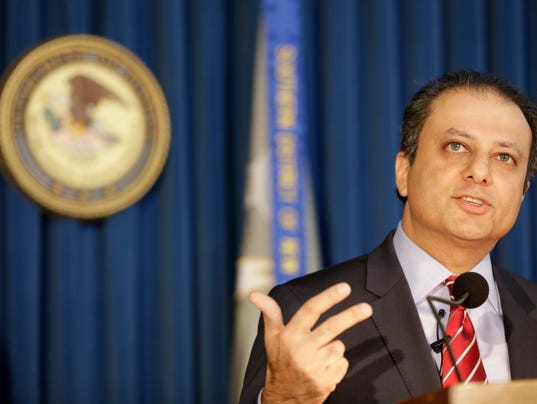
U.S. Attorney Preet Bharara said former executives of Real estate investment trust VEREIT were charged with accounting fraud.(Photo: Mary Altaffer, AP)

The former chief financial officer of VEREIT has been charged with falsely inflating the financial results of the real estate investment trust by about $13 million to meet its guidance in 2014, Manhattan US Attorney Preet Brahrara said Thursday.

Brian Block, 44, was charged with securities fraud, conspiracy to commit securities fraud and making false filings and certifications with the Securities and Exchange Commission.

Also charged was Lisa McAlister, 52, the company’s former chief accounting officer who pled guilty on June 29 and is cooperating with the government. Each executive faces securities fraud and false filing charges that carry a maximum prison term of 20 years, and conspiracy and false statement charges that each carry a maximum term of five years.

The fraud allegedly occurred in 2014, when VEREIT was called American Realty Capital Partners.

Before filing the company’s first-quarter earnings, Block and McAlister learned from another employee that they had used a method that erroneously inflated the firm’s income before non-cash depreciation and amortization and excluding certain one-time charges, according to an indictment unsealed in federal court.

After the first-quarter filing, the employee told Block and McAlister that the income was overstated by about 3 cents a share. But Block did not advise the company’s audit committee of the error, which put the company on track to meet its full-year guidance. The executives then used the same “misleading calculations” to calculate the second quarter measure of income, the U.S. Attorney’s office said.

In  total, their actions overstated American Realty Capital’s income by $13 for the first six months of 2014, the indictment said.

“All market investors are entitled to be told the truth from publicly traded companies when those investors are making decisions about where to invest their funds,” Bharara said in a statement.


Corruption is just normal business in this world I guess...

Why do I get the feeling nothing will really be done here?

Red

ES Morning Update September 8th 2016

0

69f79485-f41f-4edd-8cfa-76eb9c3149a6

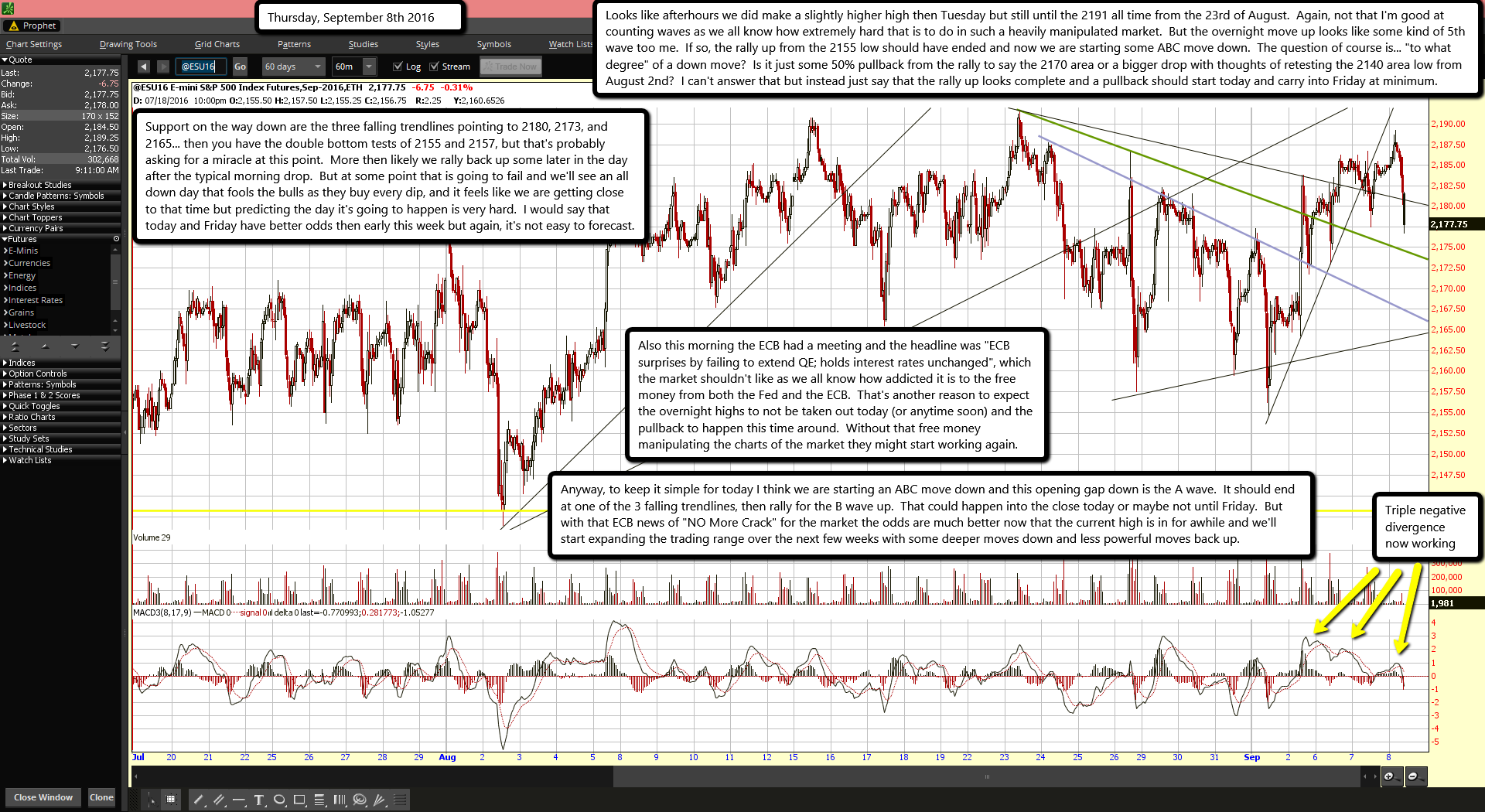
Looks like afterhours we did make a slightly higher high then Tuesday but still until the 2191 all time from the 23rd of August.  Again, not that I'm good at counting waves as we all know how extremely hard that is to do in such a heavily manipulated market.  But the overnight move up looks like some kind of 5th wave too me.  If so, the rally up from the 2155 low should have ended and now we are starting some ABC move down.  The question of course is... "to what degree" of a down move?  Is it just some 50% pullback from the rally to say the 2170 area or a bigger drop with thoughts of retesting the 2140 area low from August 2nd?  I can't answer that but instead just say that the rally up looks complete and a pullback should start today and carry into Friday at minimum.

Support on the way down are the three falling trendlines pointing to 2180, 2173, and 2165... then you have the double bottom tests of 2155 and 2157, but that's probably asking for a miracle at this point.  More then likely we rally back up some later in the day after the typical morning drop.  But at some point that is going to fail and we'll see an all down day that fools the bulls as they buy every dip, and it feels like we are getting close to that time but predicting the day it's going to happen is very hard.  I would say that today and Friday have better odds then early this week but again, it's not easy to forecast.

Also this morning the ECB had a meeting and the headline was "ECB surprises by failing to extend QE; holds interest rates unchanged", which the market shouldn't like as we all know how addicted it is to the free money from both the Fed and the ECB.  That's another reason to expect the overnight highs to not be taken out today (or anytime soon) and the pullback to happen this time around.  Without that free money manipulating the charts of the market they might start working again.

Anyway, to keep it simple for today I think we are starting an ABC move down and this opening gap down is the A wave.  It should end at one of the 3 falling trendlines, then rally for the B wave up.  That could happen into the close today or maybe not until Friday.  But with that ECB news of "NO More Crack" for the market the odds are much better now that the current high is in for awhile and we'll start expanding the trading range over the next few weeks with some deeper moves down and less powerful moves back up.

s2Member®