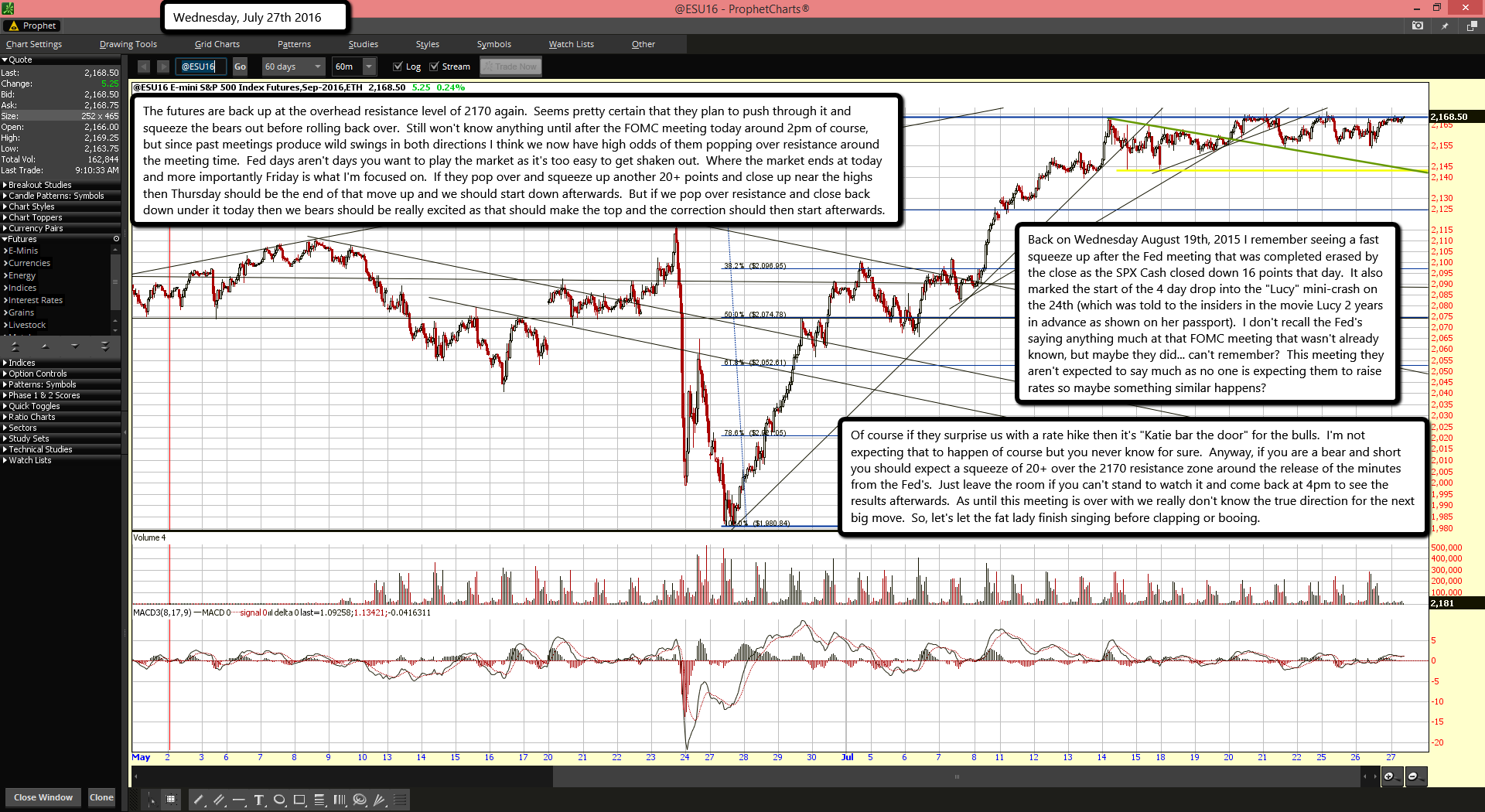
The futures are back up at the overhead resistance level of 2170 again. Seems pretty certain that they plan to push through it and squeeze the bears out before rolling back over. Still won't know anything until after the FOMC meeting today around 2pm of course, but since past meetings produce wild swings in both directions I think we now have high odds of them popping over resistance around the meeting time. Fed days aren't days you want to play the market as it's too easy to get shaken out. Where the market ends at today and more importantly Friday is what I'm focused on. If they pop over and squeeze up another 20+ points and close up near the highs then Thursday should be the end of that move up and we should start down afterwards. But if we pop over resistance and close back down under it today then we bears should be really excited as that should make the top and the correction should then start afterwards.
Back on Wednesday August 19th, 2015 I remember seeing a fast squeeze up after the Fed meeting that was completed erased by the close as the SPX Cash closed down 16 points that day. It also marked the start of the 4 day drop into the "Lucy" mini-crash on the 24th (which was told to the insiders in the movie Lucy 2 years in advance as shown on her passport). I don't recall the Fed's saying anything much at that FOMC meeting that wasn't already known, but maybe they did... can't remember? This meeting they aren't expected to say much as no one is expecting them to raise rates so maybe something similar happens?
Of course if they surprise us with a rate hike then it's "Katie bar the door" for the bulls. I'm not expecting that to happen of course but you never know for sure. Anyway, if you are a bear and short you should expect a squeeze of 20+ over the 2170 resistance zone around the release of the minutes from the Fed's. Just leave the room if you can't stand to watch it and come back at 4pm to see the results afterwards. As until this meeting is over with we really don't know the true direction for the next big move. So, let's let the fat lady finish singing before clapping or booing.
Ray Kroc's original McDonald's in Des Plaines, Illinois had arches on both sides of the building.
McDonald's golden arches have come a long way over the years.
The now iconic logo had its start in 1952, when the McDonald’s brothers were interviewing architects to design the first McDonald's location,reports The Daily Meal.
The first three architects were skeptical of the brother's plan to construct a restaurant with two arches, shaped like semicircles, on each side.
Then, they foundStanley Clark Meston. Meston designed the McDonald's location to stand out amongst the surrounding buildings, grabbing the attention of hungry drivers who could be convinced to pull over and buy a quick burger. Two golden arches, one on each side of the building, did just that.
Originally, the two arches were not meant to form an "M," as they do today in the chain's logo. However, as the building design became famous, the chain created a logo intended to be a minimalist view of a McDonald's location, with a slanted roof and two arches lining up to form an M.
McDonalds
By the late 1960s, McDonald's had ditched the two-arch design, with the golden arches appearing instead on signs. This is the era in which Ray Kroc had taken over the business and was swiftly franchising McDonald’s across the US, using the golden arches as a logo, not as an architectural instruction.
There was, at this point in time, reportedly some discussion regarding the need for a new logo. However, the change was rejected by a marketing expert for a somewhat bizarre psychological reason, reports the BBC.
The McDonald's Restaurant USA #1 Store Museum is seen in Des Plaines, Illinois.
Apparently, design consultant LouisCheskin convinced McDonald's to maintain its branding with the argument that with the golden arches carried the "Freudian symbolism of a pair of
nourishing breasts."
Since Cheskin's reported pro-golden arch argument in the '60s, there have been a few
tweaks to the logo as it has traveled around the world.
As the arches have become immediately recognizable, there have been instances in which
McDonald's has allowed differences in color at local restaurants. In Sedona, Arizona, the arches areturquoise,to avoid clashing with the surrounding environment. In Monterey, California, the arches are black, as part of a compromise with the city to create a more "sophisticated"look.
There have been small aesthetic shifts over the years, to make the arches taller or thicker, or to change the shading, but for the most part the arches have remained the same. Across the world, the golden arches mean one thing: McDonald's.
Someone apparently stole a radioactive device from a parked car in Connecticut on Tuesday morning, and local, state and federal law enforcement officers are investigating.
The HAKS Material Testing Group owns the nuclear gauge, which is used to measure soil density at construction sites. It was chained up inside a technician’s vehicle outside his home, Bridgeport police said.
“The reason that we’re so concerned, from a law enforcement angle, is that if this piece of equipment is manipulated a certain way, it could cause a danger to the pubic,” Bridgeport Police Captain Brian Fitzgerald said at an afternoon press conference.
#NRC News: A #nuclear gauge has been reported stolen from
a technician’s vehicle in Connecticut. https://t.co/9HfFPmMWp8
— NRC (@NRCgov) July 26, 2016
The device features a yellow base and a black “plunger-type handle,” according to the U.S. Nuclear Regulatory Commission.
“The handle is used to extend and then retract the radioactive sources from the shielded position,” the NRC said. “When not in use, the handle is normally locked, with the sources in the retracted, safely shielded position.”
The NRC said the gauge contains small, sealed amounts of radioactive isotopes americium-241 and cesium-137.
Americium-241, or Am-241, is commonly used to measure density and thickness in certain medical, industrial and commercial devices, according to the Centers for Disease Control and Prevention.
“When Am-241 powder is swallowed, absorbed through a wound, or inhaled it can stay in the body for decades,” the CDC states on its website.
Bridgeport PD Police have released surveillance footage of a possible suspect who was seen apparently using the technician's debit card.
The CDC says cesium-137, or Cs-137, is commonly used in medical radiation therapy devices for treating cancer, as well as in industrial devices that detect material thickness and liquid movement. External exposure can cause burns, acute radiation sickness and death.
Exposure to either Am-241 or Cs-137 may increase a person’s risk of developing cancer, according to the CDC.
The thief also stole the employee’s debit card, Fitzgerald said.
The card was used at two locations on Tuesday morning. Surveillance video captured it being used at a Walgreens Redbox, police said.
Anyone who finds the device is urged to leave it alone and report its location to the NRC’s Operations Center at (301) 816-5100.
Twitter today reported Q2 earnings, and the woe that is its poor user growth continues, with its 313 million monthly active users up just 3% on a year ago, and up less than 1% on its previous quarter.
The company reported revenues of $602 million with adjusted earnings per share of $0.13. While revenues are up 20% on a year ago, the numbers were a miss on sales and a beat on EPS: analysts were expecting $606.8 million in revenue and adjusted earnings of $0.10 per share.
It also reported a Q2 GAAP net loss of $107 million; non-GAAP net income was $93 million.
And Twitter has also published Q3 guidance that also does not speak of big growth ahead: it expects revenues in the range of $590 million and $610 million.
The market is not happy with the numbers: the stock is now down 10% in after-hours trading.
Last quarter, the company reported revenues of $595 million with 310 million MAUs and weak guidance. In other words, sequentially, user growth in terms of MAUs was just under 1%.
This graphic provided by Twitter clearly illustrates the problem: the company — despite its various efforts — has hardly moved in the last quarter, and excepting Q4 has had nearly identical quarters for the last year.
Advertising revenue totalled $535 million, an increase of 18% year-over-year, Twitter said. Mobile advertising revenue continues to lead the way, accounting for 89% of total advertising revenue.
Mobile was also 82% of total MAUs.
While growth was not great overall, in the U.S. it was especially bad: U.S. MAUs were 66 million for Q2, Twitter said, up a mere 1% year-over-year and up only 1 million on the 65 million of the previous quarter.
Internationally, things were slightly better, with MAUs of 247 million for Q2, up 4% year-over-year and up 2 million on the 245 million of Q1. The issue is that generally speaking, if you compare Twitter to other social platforms like Facebook that pick up users abroad to offset some saturation in its home market, international and developing markets should be a much bigger growth engine for Twitter than it is.
Twitter has consistently disappointed the market with its poor user growth, which all but stalled earlier this year. Yesterday, the company seemed to be trying to head off today’s news at the pass by announcing yet another marketing effort to better explain the company and what it’s purpose is for the world at large.
This is something that came up in the shareholder letter, too:
“Twitter is what’s happening now,” CEO Jack Dorsey writes. “Whether it’s breaking news, entertainment, sports, or other everyday topics, seeing what’s happening and watching live events unfold with the conversations around them; that’s the power of Twitter.”
He also noted five priorities for the year: “refining our core service, live-streaming video, creators and influencers, safety, and developers,” and the company believes it has made “meaningful progress” across each of these in the past quarter.
There certainly have been some changes: Twitter has tweaked its basic format by instituting algorithmic changes in the timeline to surface more “sticky” Tweets rather than chronological Tweets; and it has contemplated ways of extending its 140-character limit: these are examples of how the company has tried to address some of the complaints.
The company has also been making a big effort to sign a lot of content deals, specifically around sports, to stream events live on its own platform. It’s still very early days, and one initial effort covering Wimbledon was nearly impossible to find on the site, but it’s an interesting turn for a company that had up until now positioned itself as a place to share links to things, not consume things directly. Whether it works to keep people around for longer is the big question.
And it’s trying to make more headway into new areas like the currently trendy area of VR and AR, such as with its recent acquisition of Magic Pony Technologies.
But the challenges remain. One of the biggies that we’ll be listening for on the call is whether the issue of harassment comes up at all. The company is still working through ways of dealing with so-called trolls who bully others on the platform, trying to walk the fine line between the free speech that Twitter in theory celebrates, and shutting down bad actors.
Barack Obama’s half-brother Malik, once a longtime Democrat, says he is now a Republican who will vote for Donald Trump in the upcoming presidential election because “he speaks from the heart.”
Speaking to the NY Post from Kenya, he said the final straw came when the FBI announced they would not prosecute Hillary Clinton for her use of a private email server, forcing him to side with “the party of Lincoln.”
“Make America Great Again is a great slogan. I would like to meet him,” Malik said, praising Donald Trump. “I feel like a Republican now because they don’t stand for same-sex marriage, and that appeals to me,” he said.
If Malik Obama does get his wish and meets Trump, he’ll have to ask him what the Republican Party’s views are on polygamy. In 2010, Malik was reported to have married his third wife, a 19-year-old.
Trump tweeted his delight at Malik Obama’s announcement, saying he was “probably treated badly by president-like everybody else!”
According to the NY Post, public records show Malik as eligible to vote in Maryland, where he worked for several years. He claims he will travel to the US to cast his ballot.
The 58-year-old said he felt “deep disappointment” in his brother's administration after Muammar Gaddafi was removed from power in Libya. He called Gaddafi one of his best friends and dedicated his 2012 biography of Barak Obama Sr to him for “making this world a better place.”
Ties were once close between the siblings after they first met in 1985. Once best men at each other’s weddings their relationship now seems to have gone sour, with Malik claiming he hasn’t spoken to his presidential brother for a year.
He told the NY Post that Barack did not support his failed attempt to run for governor of Siaya, his home county in Kenya, and said he would be happy when his brother is out of office.
“I will finally be out of the limelight and be able to live like a human being,” he said.
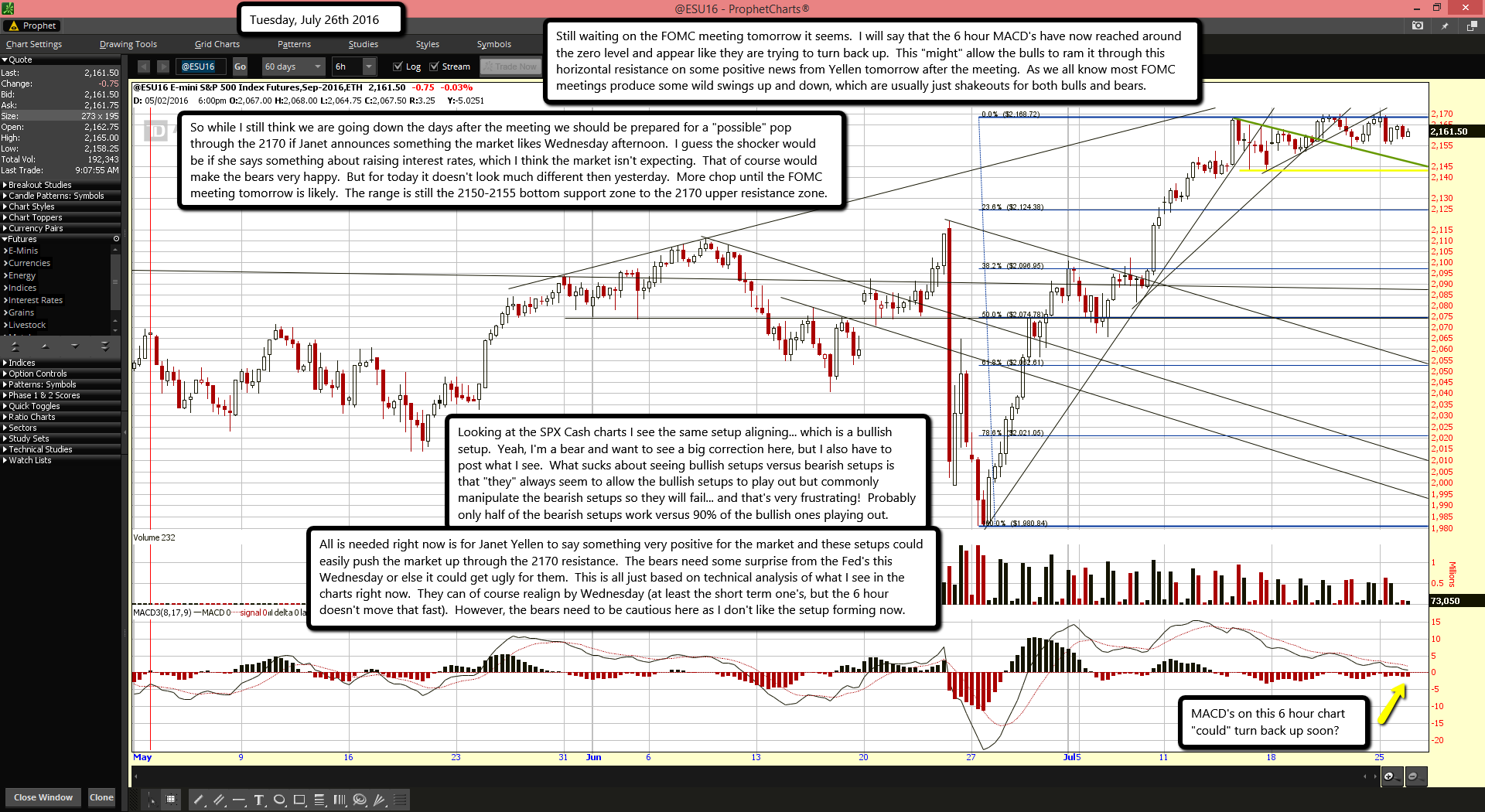
MACD's on this 6 hour chart "could" turn back up soon?
Still waiting on the FOMC meeting tomorrow it seems. I will say that the 6 hour MACD's have now reached around the zero level and appear like they are trying to turn back up. This "might" allow the bulls to ram it through this horizontal resistance on some positive news from Yellen tomorrow after the meeting. As we all know most FOMC meetings produce some wild swings up and down, which are usually just shakeouts for both bulls and bears.
So while I still think we are going down the days after the meeting we should be prepared for a "possible" pop through the 2170 if Janet announces something the market likes Wednesday afternoon. I guess the shocker would be if she says something about raising interest rates, which I think the market isn't expecting. That of course would make the bears very happy. But for today it doesn't look much different then yesterday. More chop until the FOMC meeting tomorrow is likely. The range is still the 2150-2155 bottom support zone to the 2170 upper resistance zone.
Looking at the SPX Cash charts I see the same setup aligning... which is a bullish setup. Yeah, I'm a bear and want to see a big correction here, but I also have to post what I see. What sucks about seeing bullish setups versus bearish setups is that "they" always seem to allow the bullish setups to play out but commonly manipulate the bearish setups so they will fail... and that's very frustrating! Probably only half of the bearish setups work versus 90% of the bullish ones playing out.
All is needed right now is for Janet Yellen to say something very positive for the market and these setups could easily push the market up through the 2170 resistance. The bears need some surprise from the Fed's this Wednesday or else it could get ugly for them. This is all just based on technical analysis of what I see in the charts right now. They can of course realign by Wednesday (at least the short term one's, but the 6 hour doesn't move that fast). However, the bears need to be cautious here as I don't like the setup forming now.
William Baer, the Justice Department’s antitrust chief, on lawsuits to block two mergers involving four of the nation’s five largest health insurance companies.
Within a three-week span last summer, four of the five biggest health insurers announced two mergers totaling $85 billion. Suddenly, what was five would be three, reshaping the industry.
But on Thursday, antitrust regulators said, Not so fast.
United States Attorney General Loretta E. Lynch announced that the government had filed lawsuits to block the deals, between Aetna and Humana and Anthem and Cigna.
The proposed mergers, she said, “would leave much of the multitrillion-dollar health insurance industry in the hands of three mammoth insurance companies.”
“If these mergers were to take place, the competition among insurers that has pushed them to provide lower premiums, higher-quality care and better benefits would be eliminated,” she said.
The companies responded by vowing, in varying degrees, to fight the government’s challenge. Aetna, which had hoped to gain an advantage by being the first to reach a deal, aggressively defended its proposed merger, which it contended was different from the larger Anthem-Cigna deal that followed.
“I like my chances in front of a judge,” Mark T. Bertolini, chief executive of Aetna, said in an interview.
In a statement, Anthem said the Justice Department’s “action is based on a flawed analysis and misunderstanding of the dynamic, competitive and highly regulated health care landscape.”
The company said it was “fully committed” to challenging the lawsuit.
But Cigna, which has appeared to be a somewhat reluctant partner in the merger, said only that it was evaluating its options within the confines of the merger agreement but did not expect the transaction to close anytime soon, “if at all.” Anthem and Cigna declined to comment beyond their statements.
The health insurers have been concerned for a few years about how the government would respond to consolidation.
Anthem had mulled a merger with Cigna in 2014 but ultimately dropped the idea. They were forced to revive the combination after Humana put itself up for sale in early 2015 and “sparked a bidding frenzy in the industry,” according to the government’s lawsuit. The big five, including UnitedHealth Group, were desperate not to be left out of any potential deal-making.
After the passage of the Affordable Care Act, the Obama administration’s signature piece of legislation, federal officials have kept a close eye on the sweeping changes taking place in health care. One of the major provisions of the federal law was to encourage more competition among insurers to provide people with more choices and more affordable policies.
The health insurers were seeking to merge during an administration that has not been shy about quashing deals — especially in health care.
The government has blocked mergers among large hospital systems, as well as contributed to the scrapping of the $152 billion deal between Pfizer and Allergan for tax reasons. Large deals in the energy and retail industry were also abandoned this year over antitrust.
If both health insurance deals are withdrawn, 2016 would set a record for the volume of abandoned deals, according to data from Dealogic.
An Anthem office in Los Angeles. The health insurer said it would fight a Justice Department lawsuit to block its merger with Cigna “but will remain receptive to any efforts to reach a settlement.”
“The Obama administration has had robust antitrust enforcement in the realm of mergers, particularly in health care,” said Matthew L. Cantor, a partner who focuses on antitrust issues at the law firm Constantine Cantor. “Anyone who’s going to attempt a horizontal merger should take note of that and particularly consider the antitrust merits of the deal.”
Mr. Bertolini of Aetna, however, had a much more skeptical view on Thursday.
“There are a lot of politics in this,” he said.
From the moment they were announced, the proposed mergers were met with an outcry from critics, who said the deals would lead to higher prices for consumers and would stunt innovation by the companies.
Congress held hearings, and there was a concerted push by consumer advocates and others to stop the mergers.
“The level of consumer opposition was impressive,” said David A. Balto, a lawyer and former antitrust official who helped lead the effort to oppose the mergers.
Erik Gordon, a professor of business and law at the University of Michigan, said the lawsuits suggested that the Justice Department looked at the two mergers together in the context of the whole industry, instead of more specific markets, making it harder to justify both deals.
Professor Gordon pointed to the broad statements about the health insurers contained in the suit, saying the government went beyond the typical legal arguments.
It is the “most politicized antitrust case I’ve seen,” he said.
The Justice Department declined to comment on whether there was any political aspect to their decisions.
By looking at the deals in combination, the Justice Department makes a stronger case, said Thomas L. Greaney, the co-director of the Center for Health Law Studies at Saint Louis University and a former Justice Department lawyer.
“There is a tactical advantage to having both cases go on at the same time,” he said, adding that the case against one merger “poisons the other.”
The insurers may not have many options to push their deals through. At its news conference on Thursday, the Justice Department made it clear that the companies’ proposals had not assuaged their concerns about competition.
“There are some mergers that can be solved through divestitures, but we’ve seen nothing to suggest they can,” said William J. Baer, assistant attorney general for the Justice Department’s antitrust division.
As a result, the companies’ best bet may be to persuade a federal judge that they should be viewed as very different in nature.
The Aetna and Humana deal raises concerns largely in the private Medicare market. Those companies may have an easier time divesting themselves of assets to appease regulators.
The larger deal, between Anthem and Cigna, is more vulnerable because of its size and overlap nationally, where large employers have fewer options when they pick plans for their workers.
“There were substantial risks and they took risks,” said Mr. Cantor of Constantine Cantor. “The risks were very real.”
Yahoo has become a very different company from the one that first conquered the web.
After a remarkable 110-year run as an independent company, Yahoo is being acquired by Verizon.
What? Oh, sorry, those are internet years. In human years, Yahoo is 22.
Yahoo was once Silicon Valley’s brightest star, but its luster has faded over the years, as lusters are prone to do. Valued at more than $100 billion at its 2000 peak, the company turned down a $45 billion offer from Microsoft in 2008, only to sell to Verizon this week for less than $5 billion. Which suggests that “star” was the wrong term; in retrospect, Yahoo was more like a meteorite.
Now that the company is crashing into Verizon, it’s worth looking at what’s left of Yahoo, and what impact it might have.
First, one thing Verizon won’t be getting: Yahoo’s stakes in Alibaba and Yahoo Japan, which together accounted for the vast majority of its value. Yahoo’s board plans to spin those off into a separate holding company, where they’ll be unencumbered by Yahoo’s sprawling, declining core business.
“Core business” might be a misnomer. Yahoo today is an agglomeration of tenuously related properties that include Tumblr, Flickr, and a bunch of sites and services whose names start with Yahoo: Mail, Search, News, Groups, Finance, and Fantasy Sports, to name a few.
These are not worthless properties. Many have large, loyal audiences and provide real value. At one time, collectively they would have amounted to a coherent internet company. But that was back when people “browsed the web” beginning from a single, default home page, such as Yahoo.com, and often expected to find most of their favorite online utilities there, in addition to a wide variety of content like journalism, weather forecasts, and sports scores. Such a home page makes less sense in a world of highly differentiated sites and services such as Google search, Amazon, and the Facebook News Feed. And it’s virtually useless in a world where people do most of their computing via the small screens and discrete apps of mobile devices.
Thus Yahoo has become a very different company from the one that first conquered the web—not because Yahoo has changed, but because it stayed largely the same while the world around it changed. Acquisitions such as Flickr and Tumblr, meant to help Yahoo keep up with the times, seemed to languish under the company’s ownership rather than pulling it forward. A parade of CEOs, most recently Marissa Mayer, tried under enormous shareholder pressure to rapidly turn the company around by focusing on one aspect or another, before getting dumped. The result was that it veered from one priority to the next without ever settling on a long-term course.
“It’s a beautiful example of a company that has a lot of indispensable pieces, but they don’t add up to an indispensable whole,” says Rita McGrath, professor of management at Columbia Business School. Yahoo’s problems, she believes, stemmed from “a fundamental unwillingness to choose” what kind of company it wanted to be.
Yahoo’s window to make that choice has expired. Now Verizon will choose which parts of Yahoo to keep and which to jettison.
More specifically, it seems at least some of those choices may fall to Tim Armstrong, the hard-charging CEO of fellow Verizon acquisition AOL. His own company was in many ways Yahoo’s predecessor as the early consumer internet’s defining force, and it suffered a similar slide over the years, for similar reasons. But Armstrong is credited with making some tough but needed cuts, and with refocusing AOL around content and advertising technology while Yahoo continued to vacillate between those and other priorities.
A merged Yahoo–AOL makes intuitive sense. Their combined traffic would make them the largest digital media company in the United States, ahead of Google, according to Comscore. That scale alone gives Verizon a chance to establish itself as a viable rival to Facebook and Google, at least when it comes to advertising.
And here is where Verizon’s own assets could come into play. Scale helps in the advertising business, but it isn’t everything. Crucial to Google and Facebook’s dominance are those companies’ ability to target advertisements based on the data they collect on their users’ interests, search and browsing histories, and personal connections. Verizon, by virtue of owning the infrastructure that hundreds of millions of people rely on to connect to the internet, has the ability to track users’ online behavior perhaps even more broadly than Google and Facebook do—including their location. Combine Verizon’s tracking abilities with Yahoo and AOL’s audience and ad technology, and you have the makings of a potential powerhouse.
That potential comes with pitfalls, however. Federal privacy regulators have already cracked down on Verizon and may continue to constrain its ability to track people on their mobile devices. And it’s not clear that producing reams of online content is the path to long-term success in online advertising. Google and Facebook are so profitable precisely because they produce so little content of their own. Instead, they build algorithms to organize content that’s produced by others.
For Verizon, buying AOL and now Yahoo represents a bid to stave off its own fall to earth. As Wired’s Brian Barrett points out, internet service is increasingly regulated like a utility by the federal government, and probably rightly so. Faced with a future in which data infrastructure is a commodity, Verizon and others are looking to stay relevant by not only building and maintaining the proverbial pipes, but by creating the content (and advertising) that passes through them.
And yet, in its quest to avoid a Yahoo-like decline, Verizon risks repeating one of its key mistakes. Yahoo, too, sought to fight irrelevance through diversification. But in the process of tacking on acquisitions, it lost sight of its identity.
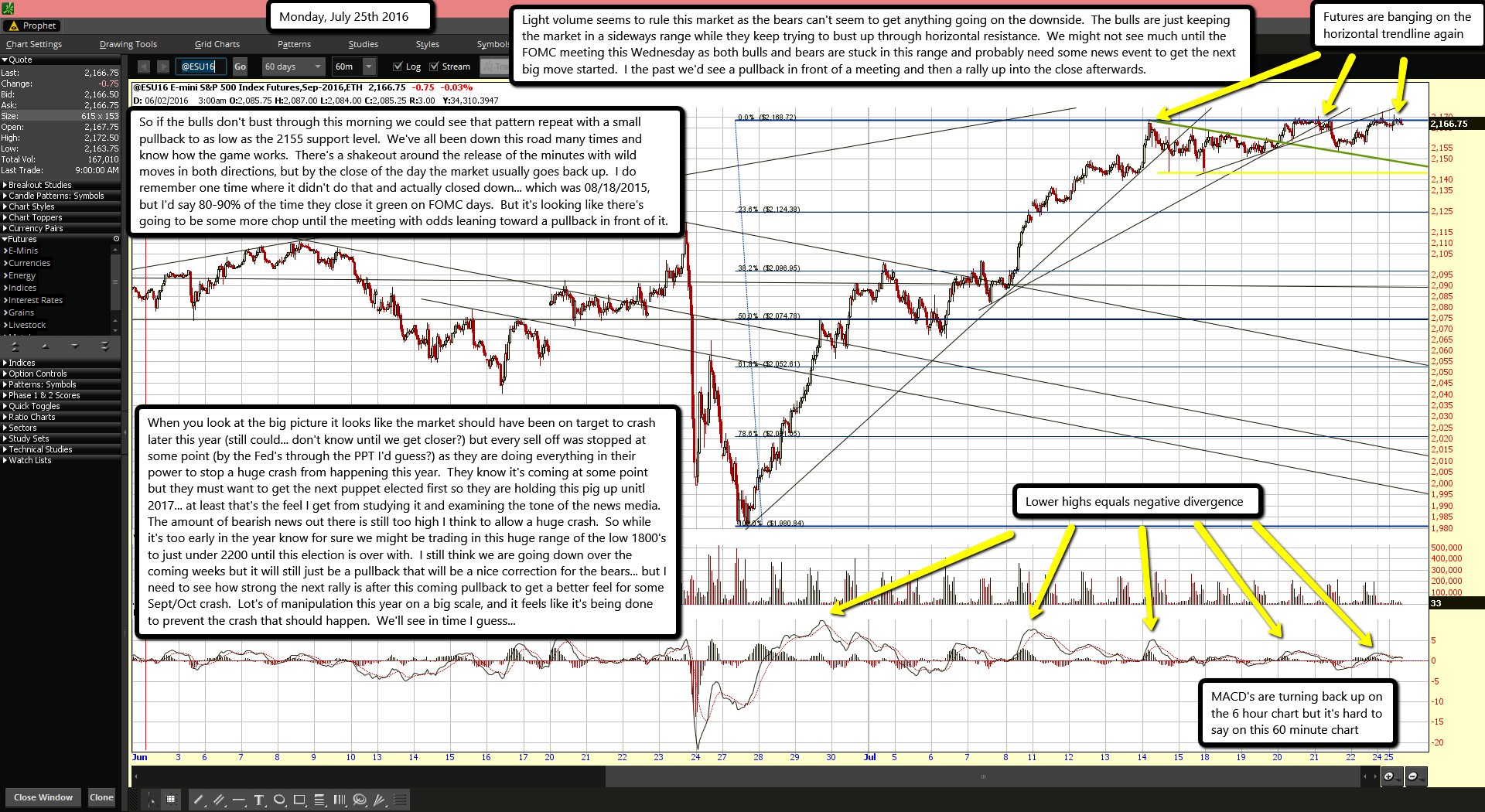
Futures are banging on the horizontal trendline again
MACD's are turning back up on the 6 hour chart but it's hard to say on this 60 minute chart
Light volume seems to rule this market as the bears can't seem to get anything going on the downside. The bulls are just keeping the market in a sideways range while they keep trying to bust up through horizontal resistance. We might not see much until the FOMC meeting this Wednesday as both bulls and bears are stuck in this range and probably need some news event to get the next big move started. I the past we'd see a pullback in front of a meeting and then a rally up into the close afterwards.
So if the bulls don't bust through this morning we could see that pattern repeat with a small pullback to as low as the 2155 support level. We've all been down this road many times and know how the game works. There's a shakeout around the release of the minutes with wild moves in both directions, but by the close of the day the market usually goes back up. I do remember one time where it didn't do that and actually closed down... which was 08/18/2015, but I'd say 80-90% of the time they close it green on FOMC days. But it's looking like there's going to be some more chop until the meeting with odds leaning toward a pullback in front of it.
When you look at the big picture it looks like the market should have been on target to crash later this year (still could... don't know until we get closer?) but every sell off was stopped at some point (by the Fed's through the PPT I'd guess?) as they are doing everything in their power to stop a huge crash from happening this year. They know it's coming at some point but they must want to get the next puppet elected first so they are holding this pig up unitl 2017... at least that's the feel I get from studying it and examining the tone of the news media. The amount of bearish news out there is still too high I think to allow a huge crash. So while it's too early in the year know for sure we might be trading in this huge range of the low 1800's to just under 2200 until this election is over with. I still think we are going down over the coming weeks but it will still just be a pullback that will be a nice correction for the bears... but I need to see how strong the next rally is after this coming pullback to get a better feel for some Sept/Oct crash. Lot's of manipulation this year on a big scale, and it feels like it's being done to prevent the crash that should happen. We'll see in time I guess...
There’s no doubt the economy perked up in the second quarter after limping the previous six months. But by how much? And is its mixed revival enough to prompt a wary Federal Reserve to raise interest rates in September? A report on economic growth in the April-June period and a Federal Reserve meeting highlight this week’s economic news and could help answer both questions.
Consumer confidence bounced back in June, but that survey was taken before the United Kingdom’s “Brexit” vote to leave the European Union, a decision that shook markets. Stocks have more than rebounded, reaching record highs. But the economic and market fallout from the referendum is still uncertain. As a result, economists expect the Conference Board to report Tuesday that its closely watched measure of consumers’ outlook gave back some of the recent gains in July but still clocked a solid reading.
Those generally optimistic consumers have supported the recovering housing market. And a limited supply of existing homes for sale has bolstered housing starts and new-home sales. After surging in April, new-home sales dipped in May. But single-family construction permits have trended higher, a good sign for new-home sales, says Nomura economist Lewis Alexander. Economists reckon sales of newly built homes rose 1.6% in June to a solid seasonally adjusted annual rate of 560,000.
Business investment has languished on the negative side of the economy’s ledger, with a key measure falling 0.7% in May and 3.6% so far this year. A strong dollar, weak global economy and oil industry slump have constrained exports and spending. A generally weaker dollar and rising oil prices this year have kindled hopes that company outlays should stabilize, though the U.K.’s Brexit vote has muddied the outlook. Economists expect the Commerce Department to announce Wednesday that non-defense capital goods orders excluding aircraft — a proxy for business investment — rose a modest 0.2% in June.
Federal Reserve policymakers are likely to struggle to make sense of the economy’s jumbled picture. Consumer spending has been strong and employers added 287,000 jobs in June, easing concerns after two weak showings. But Fed officials have indicated they want to see a few payroll reports to confirm the labor market has not lost momentum. Policymakers also are still worried about further market fallout from the Brexit vote. As a result, economists don’t expect the Fed to raise its benchmark interest rate. And while officials will probably upgrade their outlook, they may not tip their hand about a September hike until they see jobs reports for July and August.
The Jekyll and Hyde economy persisted in the second quarter, but economists believe robust consumption more than outweighed sluggish business investment. Economists expect Commerce to report Friday that gross domestic product grew a solid 2.6% in the period.
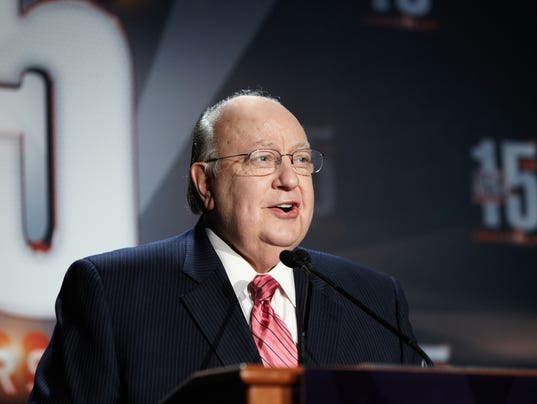
Roger Ailes, CEO of Fox News Channel, has resigned amidst sexual harassment allegations, including claims from broadcasters Gretchen Carlson and Megyn Kelly. USA TODAY
Roger Ailes is discussing a plan that would lead to his departure as chairman of 21st Century Fox.(Photo: 2011 photo by2MK Studio/Fox News via AP)
Roger Ailes, chairman and CEO of Fox News Channel, stepped down Thursday, a startling fall from grace for one of the most powerful figures in American journalism.
The resignation, effective immediately, was announced by the network's parent company, 21st Century Fox. Two weeks ago, Ailes was sued for sexual harassment by Gretchen Carlson, a former host of Fox & Friends who left the company last month when her contract wasn't renewed.
Carlson said her career was sabotaged after she refused Ailes' sexual advances. She “reported disparaging treatment in the newsroom,” including what she said was a "sexist and condescending" way her co-host, Steve Doocy, dealt with her, her lawsuit claimed.
Ailes has vigorously denied Carlson's claims. But 21st Century Fox immediately launched an internal investigation, interviewing other employees. Earlier this week, a lawyer for Megyn Kelly, the network's rising star, acknowledged that she spoke to the investigators from law firm Paul, Weiss. In the interview, she revealed that she was also sexually harassed by Ailes in the past, according to a report by New York magazine. Other women have also recently told New York magazine's Gabriel Sherman that they were sexually harassed by Ailes prior to his founding of Fox News in 1996.
With the scandal erupting rapidly, Fox executives began negotiating the 76-year old executive's departure. On Tuesday, Ailes' lawyer, Susan Estrich, confirmed his negotiation with 21st Century Fox for severance. The company didn't immediately comment on the severance package. But Sherman tweeted Thursday that it could be as much as $60 million, paid out over time and including fees for consulting Fox after Ailes' formal exit.
Twenty-first Century Fox and Fox News couldn't immediately be reached for comment.
"Within just two weeks of her filing a lawsuit against Roger Ailes, Gretchen Carlson's extraordinary courage has caused a seismic shift in the media world," Carlson's lawyers said in a statement Thursday. "We hope that all businesses now understand that women will no longer tolerate sexual harassment and reputable companies will no longer shield those who abuse women. We thank all the brave women who spoke out about this issue."
Rupert Murdoch, executive chairman of 21st Century Fox, will assume the role of chairman and acting CEO of Fox News Channel and Fox Business Network. He will be aided by three of Ailes' deputies in running the network: Bill Shine, Jay Wallace and Mark Kranz.
“Roger Ailes has made a remarkable contribution to our company and our country," Murdoch said. "Roger shared my vision of a great and independent television organization and executed it brilliantly over 20 great years."
Murdoch didn't directly address the sexual harassment scandal in his statement. But Murdoch's sons, who were negotiating closely with Ailes for his departure -- Lachlan Murdoch, 21st Century Fox's co-executive chairman, and James Murdoch, the company's CEO -- jointly issued a statement that said they continue their "commitment to maintaining a work environment based on trust and respect."
"We take seriously our responsibility to uphold these traditional, long-standing values of our company,” they said.
"It is always difficult to create a channel or a publication from the ground up and against seemingly entrenched monopolies," Murdoch said. "To lead a flourishing news channel, and to build Fox Business, Roger has defied the odds."
Murdoch said he's also "personally committed to ensuring that Fox News remains a distinctive, powerful voice."
Fox didn't issue a statement from Ailes Thursday. But in a letter Ailes wrote to Murdoch -- obtained by the Drudge Report -- Ailes said he was "proud" of building Fox News and Fox Business Channels into "powerful and lucrative news organizations."
"I take particular pride in the role that I have played advancing the careers of the many women I have promoted to executive and on-air positions," Ailes wrote. "Having spent 20 years building this historic business, I will not allow my presence to become a distraction from the work that must be done every day to ensure that Fox News and Fox Business continue to lead our industry."
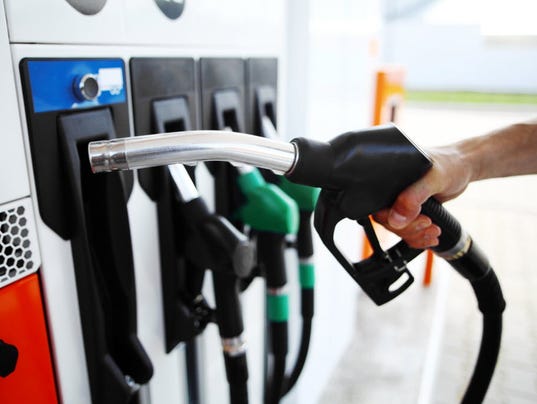
A photo from iStockphoto shows a gas station.(Photo: Thinkstock)
Even with the peak travel season in full swing, gasoline prices are stuck in reverse.
Gas prices have plunged to their lowest July level in 12 years, according to AAA, even as Americans are racking up more miles.
In fact, gas prices have dropped in 39 out of the last 40 days, lopping 20 cents a gallon off in total during that span, according to AAA.
"Gas is getting cheaper as we're moving into the busiest part of summer travel," AAA spokesman Michael Green said. "Those are real savings that add up...And we've seen that cheaper gas prices are motivating people to drive more and to take long trips this summer."
World "petro-politics" is the cause. Leaders in Saudi Arabia, one of the world's top oil producers, have held down prices to dampen production in other nations, including the resurgent oil industry in the U.S.. “It's their goal to maintain their market share and to have the price where it is now so that they can have long term success in the future,” Green said.
In the U.S, the outlook for the rest of 2016 is for even cheaper gas, partly because of the change in seasons. Prices typically fall as the summer wraps up and vacationers head for home.
Amid a global glut of oil inventories that has kept oil prices below $50 per barrel for most of 2016, the national average price of gas dropped to $2.19 on Thursday, marking its lowest average for this time of year since 2004, according to AAA. Making the difference even more profound, the numbers aren't adjusted for inflation. It's the cheapest average since April 28.
U.S. gas prices, which hit an all-time peak of $4.11 a gallon in July, 2008, are now about 57 cents cheaper per gallon than last year and $1.38 per gallon cheaper than in 2014.
That translates into savings of $15 to $35 per fill-up, compared to two years ago. Some 30% of U.S. gas stations are selling gas for less than $2 per gallon, says the AAA.
"It does make a difference," said Chris Carroll, a home remodeler from Lehigh Acres, Fla., when asked about regular unleaded gas prices hovering around $2 a gallon as he filled up. Every bit of savings helps, he says, especially since he uses premium in his big Ram work truck and logs 8,000 miles a month.
Demand for gasoline is among the highest it's been in recent years, said Patrick DeHaan, senior petroleum analyst for GasBuddy, a group that studies retail fuel pricing.
DeHaan projected that about 75% of the nation's 135,000 gas stations would be below $2 per gallon by Thanksgiving, barring any unexpectedly disruptive event.
With the lower prices, U.S. drivers are saving around $239 million per day on gas compared to last year, and $626 million per day compared to 2014, according to GasBuddy.
"Who knows where it's going in the economy, but there's a lot of money that is not being spent at the pump that was two years ago," DeHaan said.
That's in spite of increased gas taxes in the state of Washington and Maryland that took effect earlier this month.
The cheapest statewide average is South Carolina at $1.87, followed by Tennessee, Missouri and Alabama, as of Thursday, according to AAA. The three priciest states are California at an average of $2.83 per gallon, followed by Hawaii and Washington state.
Contributing: Casey Logan, Ft. Myers (Fla.) News-Press
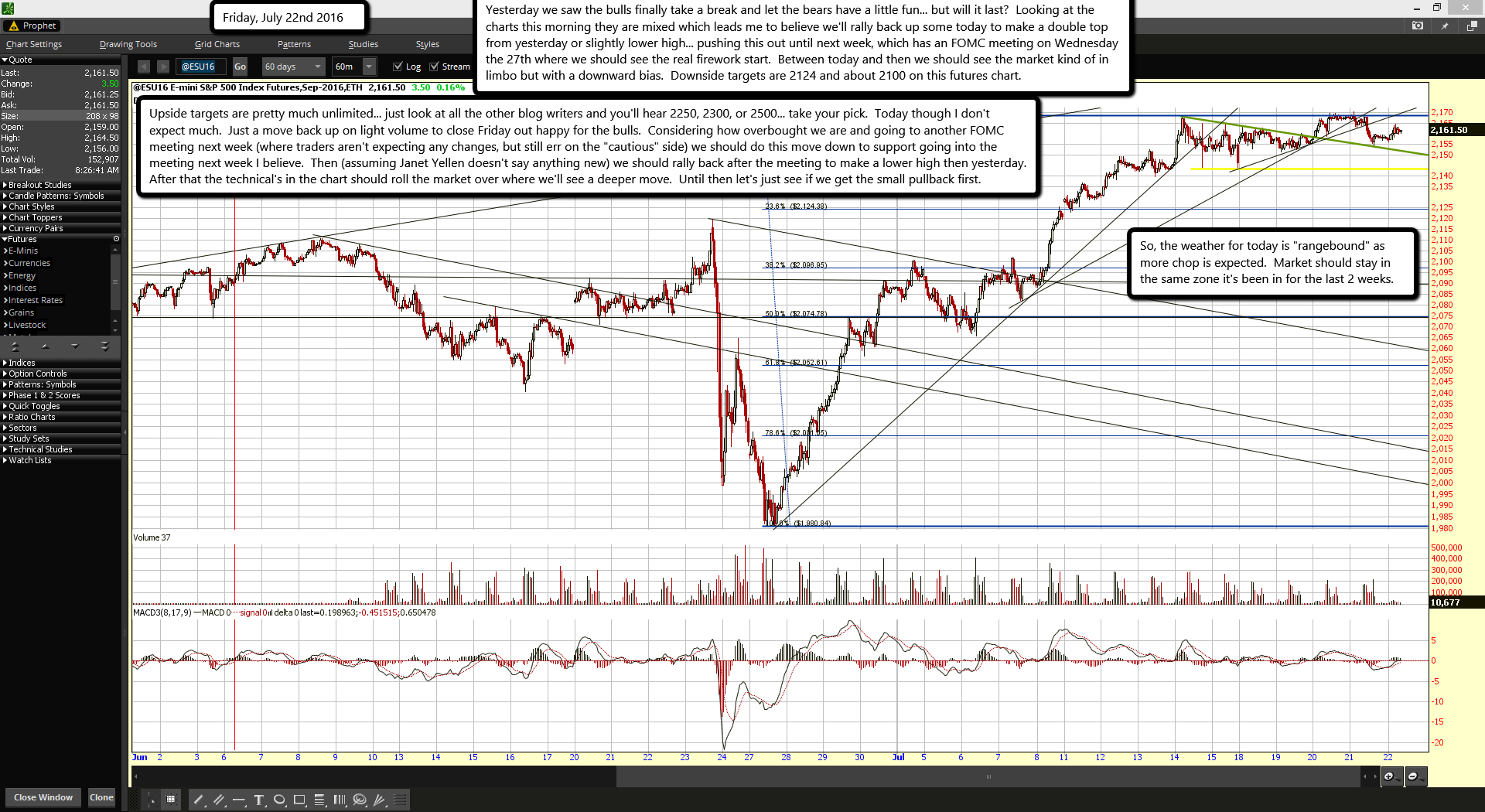
Yesterday we saw the bulls finally take a break and let the bears have a little fun... but will it last? Looking at the charts this morning they are mixed which leads me to believe we'll rally back up some today to make a double top from yesterday or slightly lower high... pushing this out until next week, which has an FOMC meeting on Wednesday the 27th where we should see the real firework start. Between today and then we should see the market kind of in limbo but with a downward bias. Downside targets are 2124 and about 2100 on this futures chart.
Upside targets are pretty much unlimited... just look at all the other blog writers and you'll hear 2250, 2300, or 2500... take your pick. Today though I don't expect much. Just a move back up on light volume to close Friday out happy for the bulls. Considering how overbought we are and going to another FOMC meeting next week (where traders aren't expecting any changes, but still err on the "cautious" side) we should do this move down to support going into the meeting next week I believe. Then (assuming Janet Yellen doesn't say anything new) we should rally back after the meeting to make a lower high then yesterday. After that the technical's in the chart should roll the market over where we'll see a deeper move. Until then let's just see if we get the small pullback first.
Papa John's has completed a major transition toward building a cleaner menu.
As of July 1, the pizza chain has completed its transition to poultry raised without antibiotics and fed a vegetarian diet for grilled-chicken pizza toppings and chicken poppers, the company told Business Insider.
This makes Papa John's the first national delivery-centric pizza chain to make such a switch.
"This transition is where the industry is going — consumers want raised-without-antibiotics chicken," Sean Muldoon, Papa John's chief ingredient officer, told Business Insider. "We're proud to be the first."
Papa John's announced plans to make the switch to antibiotic-free chicken last December because of growing consumer concerns regarding the practice of farmers' overreliance on the drugs.
The use of antibiotics is a hot topic in the pizza industry.
Take-and-bake pizza chain Papa Murphy's announced on Monday that it began serving chicken raised without antibiotics across its entire menu in late June, making it the first and currently only pizza chain to do so. Pizza Hut has pledged to cut chicken produced with antibiotics important to human medicine by March 2017.
Research, including a 2013 report from the US Centers for Disease Control and Prevention, offers evidence that antibiotic overdose is contributing to the rise of super-strong bacteria that no longer respond to antibiotics.
If the problem is allowed to continue, then it could mean a future in which we can no longer treat infections using antibiotics, thanks to the rise of superbugs.
Muldoon says that Papa John's focus on what the company calls its "clean label journey" is inspired by a mix of consumer demand and scientific research.
"We're a very consumer-centric company," says Muldoon, with Papa John's drawing from research on consumer trends and discussions with its supply chain. "We're not always just chasing the next shiny object ... but we try to be very clear in terms of how we define 'clean label' — what that means to us, and where those lines are."
The company reports that its "Better Ingredients, Better Pizza" promise costs the company $100 million a year. In January, Papa John's became the first national pizza chain to cut artificial ingredients from its food menu.
Next on the list: converting to cage-free eggs and completing the promise to cut 14 "unwanted" additives from the menu by the end of the year.
But at the core of any restaurant chain remains the question of taste, something that Papa John's says will not be compromised by changes. According to Muldoon, Papa John's conducted months of testing, including a side-by-side taste test, to ensure that the new chicken's flavor remained the same.
The chain's commitment to quality is paying off. In June, Papa John's was named the top pizza chain in the American Customer Satisfaction Index (ACSI), with a score of 82 out of 100. This is the 15th time out of the previous 17 years in which the chain has earned top marks in the pizza industry in overall customer satisfaction.
The probable departure of founder and Chief Executive Roger Ailes may not come at an ideal time for Fox News Channel, but the momentum of record ratings amid the most sensational U.S. presidential election in decades may give the cable network some breathing room to recover, media buyers and Wall Street analysts said.
However, Ailes' successor faces the twin challenges of retaining Fox News' established on-air stars such as Bill O'Reilly and Megyn Kelly, while making the network attractive to younger viewers, a demographic it has consistently missed.
Roger Ailes, chairman and CEO of Fox News and Fox Television Stations. REUTERS/Fred Prouser/File Photo REUTERS
"You have a few months right now where you are pretty much well assured that you won't have an audience issue, so it is a good time to lock up talent and make sure the course is corrected," said Brian Wieser, an analyst with Pivotal Research Group in New York.
Seventy-six-year-old Ailes, who in 20 years built Fox News into a highly profitable ratings juggernaut, is in negotiations over his departure with parent company Twenty-First Century Fox, a person briefed on the discussions told Reuters on Tuesday.
Twenty-First Century Fox declined comment.
Earlier this month Ailes was sued by former Fox News anchor Gretchen Carlson, who claimed he sexually harassed her. Ailes denies the charges. Fox News hired a law firm to conduct an internal investigation, which it says is not yet complete.
The scandal has brought unwelcome attention to Fox, but seems unlikely to dent viewer ratings in the middle of an unpredictable presidential campaign pitting outspoken businessman Donald Trump against former secretary of state Hillary Clinton, who would be the first female president.
Fox News, known for a lineup of politically conservative commentators, is the most-watched channel in basic cable television this year, with an average of 2.2 million prime-time viewers.
That gives some room for maneuver to Twenty-First Century Fox's top executives, James and Lachlan Murdoch, who last year took over from their father Rupert Murdoch, to make a management change without a big risk of losing viewers.
"Advertisers would have to see a drop in viewers before they would do anything," said Barry Lowenthal, president of the Media Kitchen, a media buyer. He said he has not heard from a single concerned client since reports surfaced on Monday that Ailes could be leaving the network.
Talent Exodus?
Whether Fox News can survive a leadership change without a drop in ratings is largely dependent on whether it can keep its top talent, analysts said. Network stars O'Reilly and Kelly's contracts are up in 2017, according to media reports.
"It would be a much bigger deal for advertisers if one of them left, because that is why viewers are tuning in," said a media buyer, who asked to remain anonymous because he is not permitted to speak to the media.
O'Reilly, Greta Van Susteren and Sean Hannity all have clauses in their contracts that allow them to leave the network if Ailes departs, according to a report in the Financial Times this week.
The next big challenge for Ailes' successor is its aging viewers. Fox News, like many of its peers, has an older audience, with a median age of over 65, higher than MSNBC and CNN, whose viewers are a median age of 64 and 60 respectively, according to Nielsen data. Advertisers generally seek out a much younger market.
That could mean adjusting its political outlook, said Media Kitchen's Lowenthal. "Fox News represents the former Republican establishment and they can use this as a way to reflect the modern American conservative view," he said.
Keeping Fox News relevant is important financially. It contributed $1.35 billion in earnings before interest, tax, depreciation and amortization (EBITDA), or 20 percent of parent Twenty-First Century Fox's total EBITDA in fiscal 2016, according to estimates by Anthony DiClemente, an analyst with Nomura.
No Clear Successor
There is no clear successor to Ailes within the network, industry insiders said, but possible contenders who have been mentioned in media circles include David Rhodes, a former Fox News staffer who now runs CBS News; Neil Cavuto, a senior vice president and anchor for both Fox News and Fox Business Network; and Bill Shine, senior executive vice president of programming at Fox Business.
Rhodes, Cavuto and Shine did not reply to requests for comment.
A former adviser to several U.S. Republican presidents, including George H.W. Bush, Ailes built Fox News into the most-watched U.S. cable news channel. He has been a confidant of media mogul and Twenty-First Century Fox Executive Chairman Rupert Murdoch, who named Ailes founding chief executive of Fox News in 1996.
Ailes positioned the network as an alternative to mainstream media that conservatives have long complained carries a liberal bias, promising "fair and balanced" coverage.
Nevertheless, analysts believe the channel will survive Ailes' departure.
"If this had happened 15 years ago, it would have a much greater impact," said John Janedis, an analyst with Jefferies. "At this point, Fox News' growth is beyond one person."
Transportation Security Administration agents examine a traveler’s luggage. (Andrew Burton/Reuters)
Relief might be on the way for hordes of travelers who have dealt with gargantuan security lines at major air hubs this summer.
New automated security lanes will soon serve customers at three major airports, the Transportation Security Administration said Wednesday. The robotic lanes — set to be installed at Newark Liberty, Chicago O’Hare and Los Angeles international airports later this year — promise to reduce wait times up to 30 percent by improving the flow of luggage and reducing the impact of holdups.
[TSA scrambling resources to deal with long lines of travelers]
Sadly, for D.C.-area travelers, Dulles International Airport is not among the airline’s hubs that will be part of the pilot program. But officials with the Metropolitan Washington Airports Authority, which manages Dulles and Reagan National said they are keenly aware that travelers in the nation’s capitol are also eager to find way to speed their trips.
Margaret McKeough, chief operating officer at the authority, said they will continue to work with the airlines and with their partners at TSA to find innovative ways to move passengers through security more quickly. She noted that Dulles and Reagan were not among the airports where passengers have been stuck in long security lines over the past few months. Even so, they are anxious to prevent that from happening during the busy summer and upcoming holiday travel season.
She added that they are interested in seeing if the pilot programs work and what lessons they can take from them.
Newark will receive the first of the new lanes this fall. When installation is finished, the airport’s C terminal will feature 17 automated lanes, according to United Airlines, who is partnering with TSA on the initiative. The security agency said the technology aims to improve safety.
“Our main priority is to protect the traveling public in an evolving threat environment,” TSA Administrator Peter Neffenger said in a statement. “We continue to test and deploy state-of-the-art technologies to ensure that we remain current.”
But the lanes will likely be a welcome innovation for air travelers if they can expedite the screening process. Mammoth security lines have sprouted at airports since spring as a consequence of a TSA staffing shortage, which has resulted in tens of thousands of missed flights.
The new lanes feature automated belts that feed bags into the X-ray machines, and send bins back into the queue after the screening concludes, the TSA said. Also, potentially threatening bags can be diverted so bins behind them can proceed along the conveyor without holding up lines.
[How long is the TSA line at my airport right now?]
As part of the enhancements, new, 25-percent-larger bins are equipped with radio tags so they can be tracked throughout the security lane. TSA says the bins will also be photographed.
United joins American and Delta as the only domestic carriers to host the modernized lanes, which allow up to five customers to fill their bins at the same time. United said lines will proceed faster even if TSA agents need to perform additional screening on customers further up the line.
Delta was the first domestic airline to install the technology. It opened two automated lanes at Hartsfield-Jackson Atlanta International Airport in May at a cost of $1 million, according to the Atlanta Journal-Constitution. American Airlines is adding the screening stations at O’Hare, Dallas/Fort Worth, Los Angeles and Miami airports this fall at a cost of $5 million, the Dallas Morning News reported.
United said its modernized lanes will be installed in Chicago and Los Angeles later this year, though it did not announce a specific date.
With the holiday frenzy about to begin, most people are afraid, or rather cautious of visiting the UK after their vote to leave the EU. Will the application process change? How do you apply for a trip to Europe after Brexit? Most people are wondering what will happen after Britain voted out of EU. Will this affect their occasional travels to the UK? Now that the pound has dropped, does this mean prices will hike up? This article will look at the effects of Brexit and what they mean to travelers.
Having voted to leave the EU, most Britons are wondering how that will affect their travel to other European countries. As of now, there will be no alteration to their trip since there have been no legislation of this put to law. Having said that, Britons can travel freely through Europe as they have always done before Brexit.
Below are some of the constituents you need to know when planning to travel around Europe.
Will holiday cost hike up?
Having mentioned the drop in the pound value to the lowest, we have seen in years; there will be a consequent rise in prices ranging from the smallest commodities like a glass of wine to a night out in Porsche restaurant.
With the drop in the pound, this means a consequent rise in the dollar since the pound is in proportion to the dollar. What does this indicate to people traveling across Europe? Since most commodities are priced in dollars, ranging from clothes to petroleum, the dollar will hike up, and that means there will be an increase in prices of goods and services across Europe.
Flight travel cost will rise after an increase in petrol price. What does this mean for travelers? If you have had a fixed, or recycled budget that you use for holidays across Europe, you will have to adjust that to the current market economy as the pound has dropped with a significant percentage.
What traveling documents do you need?
There have been many debates about a change of passports after Brexit. Do you need a Visa to travel to Europe? How do you apply for travel to Europe? Well, as we stated in the introduction, as of now, there has been no law put in place concerning travel visa and passports. So that should not be of worry as of now.
Another factor discouraging European countries from sidelining Britain after Brexit is due to its tourist export to other nations. Saying that the EU will force Britons to have special passports on arrival in their countries will significantly affect their tourism imports as Britain ranks among the highest tourist exporter in Europe.
Where across Europe can Britons visit?
Basically in the first two years after a state decides to leave the EU, all legislation remains the same. What does this mean? Good news for travelers, very little or nothing at all will change. You can travel across Europe without fear of being fined for trespassing without the required documents.
What about flights? Will Brexit reduce flight to and from Britain? In any case, Britain is a hub for both products and services. If a country chooses to reduce flight to and from Britain, they stand to lose more on their trade revenue.
How will the tourism industry in Britain be affected?
Brexit has benefitted the tourism sector in Britain, a bunch. How so? Well, with the drop in sterling, that means a rise in the dollar about the pound. People in other countries will exchange the pound sterling at a cheaper rate. What does this mean to Britons? They will have to pay more to trade pound for dollars when traveling to other European countries.
Trips to other countries for holidays will cost more than having your holiday in Britain. We will experience a reduction in the number of tourists Britain exports to Europe and significantly increase the domestic tourism across Britain. In this way, the tourism sector will be boosted high by local tourist.
In conclusion, we can see that Brexit in its entirety has affected the Britain tourism industry both positively and negatively. Britons have about two years before they can feel the total impact of Brexit despite the drop in sterling. According to Article 50, that is exacted, after a nation decides to exit the EU, every legislation should remain unchanged up to two years. After the two years have ended, Britain will have to strategize their law.
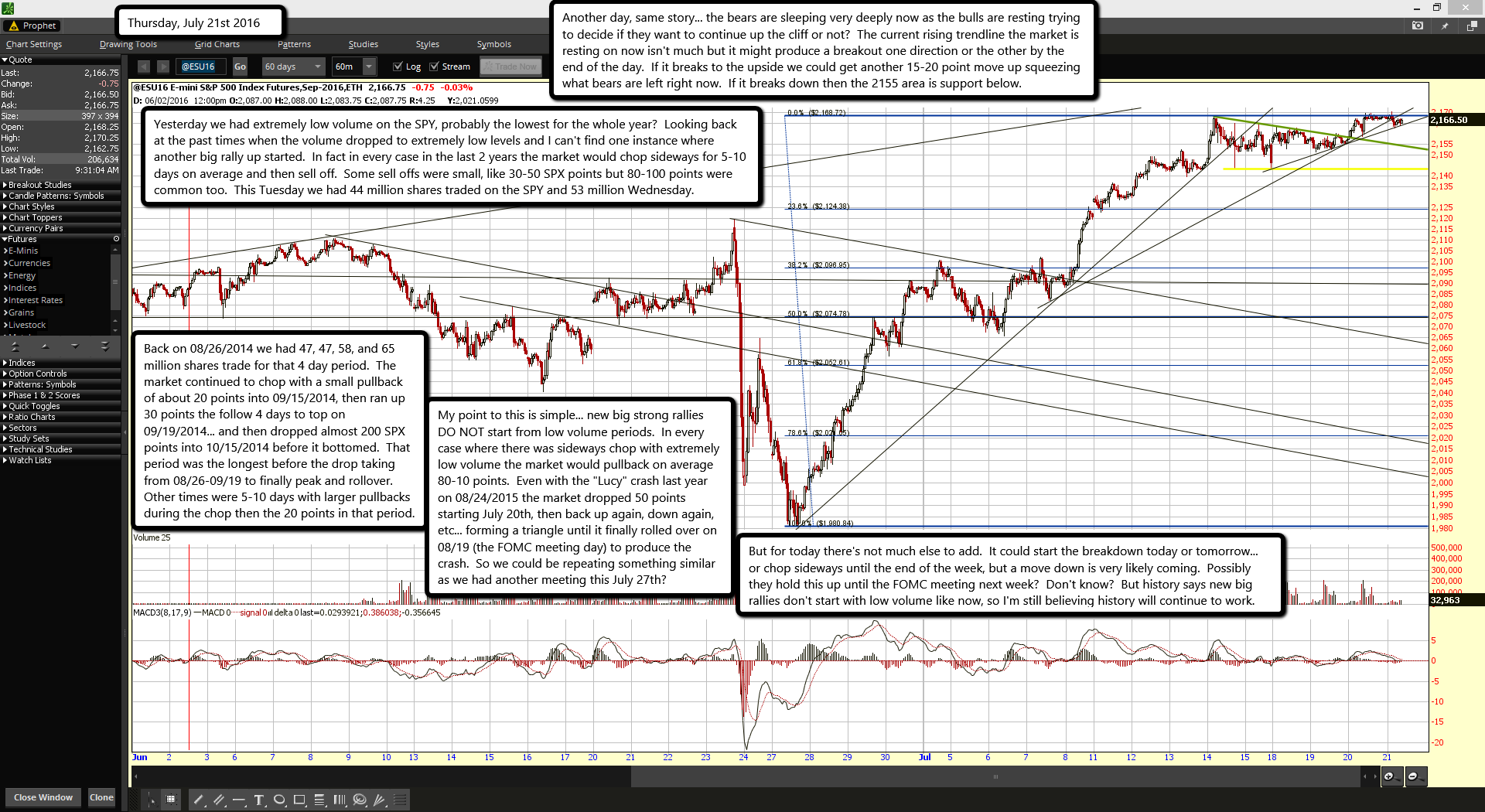
Another day, same story... the bears are sleeping very deeply now as the bulls are resting trying to decide if they want to continue up the cliff or not? The current rising trendline the market is resting on now isn't much but it might produce a breakout one direction or the other by the end of the day. If it breaks to the upside we could get another 15-20 point move up squeezing what bears are left right now. If it breaks down then the 2155 area is support below.
Yesterday we had extremely low volume on the SPY, probably the lowest for the whole year? Looking back at the past times when the volume dropped to extremely low levels and I can't find one instance where another big rally up started. In fact in every case in the last 2 years the market would chop sideways for 5-10 days on average and then sell off. Some sell offs were small, like 30-50 SPX points but 80-100 points were common too. This Tuesday we had 44 million shares traded on the SPY and 53 million Wednesday.
Back on 08/26/2014 we had 47, 47, 58, and 65 million shares trade for that 4 day period. The market continued to chop with a small pullback of about 20 points into 09/15/2014, then ran up 30 points the follow 4 days to top on 09/19/2014... and then dropped almost 200 SPX points into 10/15/2014 before it bottomed. That period was the longest before the drop taking from 08/26-09/19 to finally peak and rollover. Other times were 5-10 days with larger pullbacks during the chop then the 20 points in that period.
My point to this is simple... new big strong rallies DO NOT start from low volume periods. In every case where there was sideways chop with extremely low volume the market would pullback on average 80-10 points. Even with the "Lucy" crash last year on 08/24/2015 the market dropped 50 points starting July 20th, then back up again, down again, etc... forming a triangle until it finally rolled over on 08/19 (the FOMC meeting day) to produce the crash. So we could be repeating something similar as we had another meeting this July 27th?
But for today there's not much else to add. It could start the breakdown today or tomorrow... or chop sideways until the end of the week, but a move down is very likely coming. Possibly they hold this up until the FOMC meeting next week? Don't know? But history says new big rallies don't start with low volume like now, so I'm still believing history will continue to work.
More than $3.5 billion traveled a trail of fraud from Malaysia through a web of shell companies, with some fueling a spending binge on Monet paintings and luxury real estate and at least $700 million flowing back into accounts controlled by Malaysia’s prime minister.
Some of the money was handled by international banks including Goldman Sachs Group Inc., JPMorgan Chase & Co., Standard Chartered Plc and Deutsche Bank AG. A chunk of it funded a Hollywood blockbuster, “The Wolf of Wall Street.” More than $13 million of it was wired to an account at a Las Vegas casino by a stepson of Malaysia’s prime minister who gambled with an unidentified actor whose description matches that of Leonardo DiCaprio.
It’s all laid out in a dozen filings Wednesday by U.S. prosecutors who detailed an alleged scheme of international money laundering and misappropriation stretching from 2009 to 2015. The Justice Department is seeking to seize more than $1 billion worth of assets it says went through U.S. banks from Malaysian development fund 1Malaysia Development Berhad, known as1MDB, and was ultimately used to illegally acquire assets.
Timeline: Malaysia’s Spiraling 1MDB State Fund Controversy
The U.S. complaints lays the groundwork for tension with Malaysia, a longtime ally on issues including counterterrorism and trade. Prosecutors refer to a top Malaysian official who controlled accounts that received hundreds of millions of dollars. The official isn’t accused of wrongdoing.
The anonymous description lines up with that of Prime Minister Najib Razak, who until a few months ago served as the chairman of 1MDB’s advisory board.
It’s unclear how local law enforcement will respond in Malaysia, where officials have taken pains to keep criticisms from surfacing, have cleared Najib of any wrongdoing and closed its own investigations. U.S. prosecutors sought to recover assets they linked to Najib’s stepson, Riza Aziz, and other associates.
The prime minister didn’t immediately respond to a request for comment. He has consistently denied wrongdoing.
“Unfortunately and tragically, a number of corrupt officials treated this public trust as a personal bank account,” Attorney General Loretta Lynch said at a news conference in Washington. The civil action and asset seizures represent the “largest single action ever brought” by the Justice Department’s six-year-old Kleptocracy Asset Recovery Initiative, she said.
Lynch declined to comment on the identity of the unnamed top Malaysian official.
QuickTake Q&A: Malaysia’s 1MDB Fund Spawns Worldwide Probes
1MDB said in a statement that it will fully cooperate with investigators and had not been contacted by the Justice Department. It said it “is not a party to the civil suit, does not have any assets in the United States of America, nor has it benefited from the various transactions described in the civil suit.”
Also on Wednesday, Swiss authorities said U.S. prosecutors had sent them a request in May for information about bank accounts that might have been used to move money from the fund.
Web of Companies
The U.S. complaints also lay out how a handful of global banks, while not accused of wrongdoing, were ensnared as hundreds of millions bounced between a web of shell companies. Money was pilfered from the government fund based on false representations made by 1MDB officials and representatives of the shell companies, prosecutors said. Even when bank officials raised questions about the beneficiaries of various accounts, compliance departments were unable to detect or halt the alleged fraud.
The diverted cash was used to purchase a breathtaking catalog of loot that prosecutors moved on Wednesday to seize. There’s a stake in the Viceroy L’Ermitage Beverly Hills Hotel as well as homes, condos and penthouses from Los Angeles and Beverly Hills to Manhattan’s Central Park South to London’s Belgravia. There’s a $35 million Bombardier jet, as well as more than $200 million worth of art -- a pen-and-ink drawing by Vincent Van Gogh (“La Maison de Vincent a Arles”) and two Claude Monet paintings, including a pastel study of water lilies, “Nympheas Avec Reflets de Hautes Herbes.”
Hollywood Link
And in a twist worthy of Hollywood, the U.S. is also laying claim to profits and royalties from a movie about wealthy abandon: It says that more than $100 million in funds from 1MDB went to finance 2013’s “The Wolf of Wall Street,” by Red Granite Pictures Inc. -- a production company co-founded by Najib’s stepson, Riza.
1MDB in April said it had “never invested in nor transferred funds to Red Granite Pictures, whether directly or via intermediaries,” and has denied wrongdoing more broadly over its finances. Red Granite said in May that all money it received had been proper and from a variety of sources including top-tier U.S. commercial and investment banks.
Jho Low Coterie
At the heart of the scheme, the U.S. alleges, was a small coterie of Malaysians led by a Malaysian financier named Low Taek Jho. They diverted money from 1MDB into personal accounts disguised to look like legitimate businesses, the U.S. said, and kicked back some of those funds to officials. Low, who has been linked socially with Paris Hilton and is a close friend of Riza, has said he provided consulting to 1MDB that didn’t break any laws.
In one of the complaints filed in federal court in California, running 136 pages, federal prosecutors alleged the unnamed top official whose description matches Najib’s received payments of $20 million in 2011, $30 million in late 2012 and then $681 million in March 2013. In August 2013, prosecutors said, some $620 million was transferred out of the top official’s account and back into an account controlled by one of the defendants in the U.S. actions.
Najib stepped down from his role as chairman of 1MDB’s advisory board when it wasdissolved in May. He is also the country’s finance minister. The Ministry of Finance is the sole shareholder of 1MDB.
The Malaysian attorney general said this year that the $681 million that appeared in Najib’s accounts before the 2013 election was a personal contribution from the Saudi royal family and that most was later returned. He cleared Najib of wrongdoing. Saudi Foreign Minister Adel Al-Jubeir said in April that the large donation to Najib was “genuine,” and Saudi authorities were aware of the gift which came without strings.
The Justice Department account contradicts that statement. The $681 million came from Tanore, an entity controlled by a friend and associate of Low’s. Najib paid the money back to Tanore, according to the complaint.
Three Phases
The Malaysia fund is at the center of several international investigations into alleged corruption and money laundering by public officials. Prosecutors in at least four countries -- Singapore, Switzerland, Luxembourg and the U.S. -- are looking into money flows from the investment vehicle, which was established for national development.
The suspected fraud occurred in three phases in which money was laundered through bank accounts in Singapore, Switzerland, Luxembourg and the U.S., prosecutors said.
In 2009, after 1MDB was set up to pursue development projects, officials of 1MDB and others, under the pretense of investing in a joint venture between 1MDB and a Saudi oil company, transferred more than $1 billion to a Swiss bank account, according to the Justice Department.
In 2012, 1MDB officials and others diverted proceeds raised through two separate bond offerings arranged by Goldman Sachs Group Inc., according to the Justice Department. More than 40 percent of the proceeds, or $1.4 billion, were transferred to a Swiss bank account belonging to a British Virgin Islands entity. More than $1 billion was diverted from another bond offering arranged by Goldman Sachs in 2013.
Goldman Ties
Goldman Sachs, which enjoyed a lucrative relationship with 1MDB, did the bidding for fund officials even as many Goldman employees questioned whether Low was involved, prosecutors said. The bank also circulated misleading offering statements when raising money for 1MDB, though the complaint doesn’t indicate that Goldman employees were aware of whether the statements were misleading.
Goldman Sachs said in a statement: “We helped raise money for a sovereign wealth fund that was designed to invest in Malaysia. We had no visibility into whether some of those funds may have been subsequently diverted to other purposes.”
Compliance ‘Overkill’
E-mails and recorded phone calls between 1MDB and several banks show how billions of dollars were siphoned out of 1MDB accounts under false pretenses, according to the complaints, underscoring the weaknesses of bank compliance systems.
A handful of global banks were used to shift money improperly without confirming who the recipients were, other than information provided by 1MDB, according to the complaint. At times, when compliance officers raised questions, they were brushed aside and the transfers were eventually approved.
In one phone call cited in the documents, prosecutors say a 1MDB employee pressed a Deutsche Bank supervisor to approve transfers into Swiss accounts, complaining he was “under tremendous pressure” to get the deal done.
“Let me must convince my compliance person,” the Deutsche Bank employee said, according to prosecutors. ”It’s a little bit sticky with this.”
”They cannot wait for this, you know,” the 1MDB official added. ”If they’re going to overkill on the compliance thing, uh, they have to be responsible, you know.”
The transaction went through.
Deutsche Bank declined to comment as did JPMorgan, which was also mentioned in the documents. Standard Chartered said it is cooperating with all relevant investigations and declined to comment further.
Art Purchases
Low or his associates used some of the misappropriated funds to buy artworks, the complaint alleges. Low then used part of his collection -- which he valued at more than $300 million, according to an e-mail cited in the complaint -- as collateral for a loan from Sotheby’s Financial Services, a unit of Sotheby’s.
He used 17 pieces, including the two Monets and the Van Gogh, to secure a loan of $107 million loan that went to a company owned by Low, according to the complaint.
By May 2016, Sotheby’s had recovered enough from the sale of several works pledged as collateral to cover the outstanding balance of the loan, according to the complaint. Then Sotheby’s released its security interest in the artwork, it said. As of June 7, Sotheby’s still had the three works in its possession, according to the complaint.
Sotheby spokeswoman Lauren Gioia said the company always cooperates with government investigations. “As set forth in the complaint, Sotheby’s has no continuing security interest or relationship to the three works that are the subject of the action, and is not in a position to comment on any potential seizure,” she said.
Vegas Trip
Low and Riza were also at the center of a gambling spree in Las Vegas in July 2012, using money that had come through 1MDB, according to prosecutors. A few weeks after Riza wired $41 million from a Red Granite account to one controlled by an associate, Eric Tan, the two of them went to Vegas, where over several days they wired $13 million into an account maintained by Las Vegas Sands Corp., the parent of the Venetian Casino.
Sands, which hasn’t been accused of wrongdoing, declined to comment.
The two of them -- joined by Low and a producer of the “Wolf of Wall Street” -- gambled at the Venetian for three days. They were joined on July 15 by what the complaint identifies as a lead actor in the film, who it noted ultimately won a Golden Globe award for his performance.
That actor is DiCaprio, who isn’t accused of wrongdoing. His publicist, Shawn Sachs, didn’t immediately respond to a request for comment.
The case is U.S. v. “Wolf of Wall Street,” 16-05362, U.S. District Court for the Central District of California.



 Bridgeport PD Police have released surveillance footage of a possible suspect who was seen apparently using the technician's debit card.


 ck
ck